ARCHIPEL
Protected Area
Les Ecrehous
Why dive here
With 176+ marine species recorded in the area - including blue sharks, dolphins, dwarf minke whales, humpback whales and ocean sunfish (mola mola) - ARCHIPEL offers some of Cornwall & Devon's richest wreck diving. Water ranges 10-18°C, warmest July, August, September.
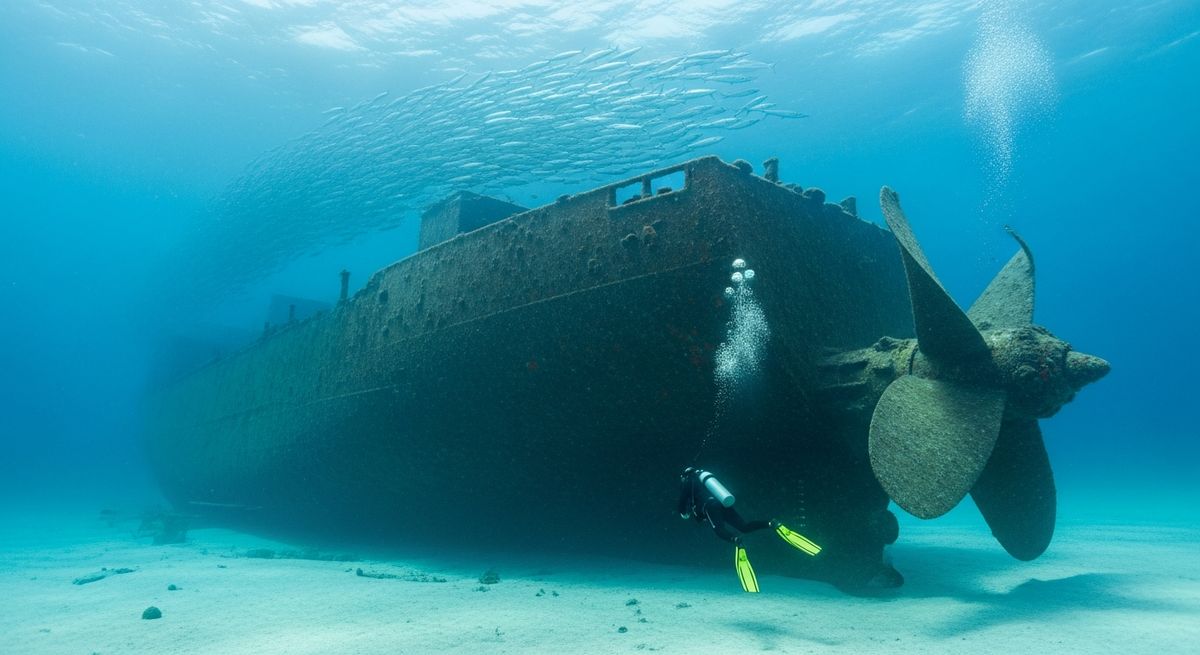
Okay, so you’re looking at Archipel, and we'll be straight with you: forget your typical wreck dive. This isn't about penetration or deep exploration. Archipel is something else entirely, a stark, often dramatic, reminder of the sea’s power. The trawler went down in '73, and what's left is now a dangerous wreck – a classification that actually makes it fascinating, if you approach it right. What we love about Archipel is its raw, untamed nature. This is a wreck utterly reclaimed by the elements. You're not looking at a preserved vessel; you're looking at history being eroded, piece by piece, by the Cornish swells. We've seen it on calmer days, the skeletal ribs just breaking the surface, and on rougher days, completely swallowed, only to reappear with the tide. It’s a powerful spot, not for the faint of heart or those seeking a gentle bimble. This is an exposed, often wild, coastal experience. You’ll spend more time observing from above, feeling the spray, and really understanding the relentless forces at play. It's a dive that makes you feel connected to the sea in a primal way, a true testament to the unforgiving nature of the Cornish coast.
Typical ARCHIPEL Dive Profile
Illustrative profile based on site depth and type. Actual dive profiles vary - always follow your dive computer and training.
Safety Notes
Wreck site - avoid penetration without wreck diving certification. Watch for sharp metal and entanglement hazards.
ARCHIPEL Wreck History
Year Sunk
1973
Vessel Type
fishing vessel
Cause
grounding
Tonnage
147 GRT
The Archipel was a French-registered trawler built in 1959 that spent its career fishing the waters of the English Channel. Its working life came to an abrupt end on December 2nd, 1973, when it ran into trouble and stranded on the coast of the Cotentin Peninsula in Normandy, France. Unable to be refloated, the vessel was abandoned to the sea and declared a total loss.
Today, the remains of the Archipel lie in extremely shallow water, with parts of the wreck exposed at low tide. At a depth of just 1 meter, it's not a traditional scuba dive but rather an excellent site for snorkelers or those looking for a shore-based exploration. The wreck is heavily broken up due to the constant action of the surf and surge. Divers can expect to find scattered steel plates, sections of the hull, and engine components strewn across the seabed. Its classification as a 'Dangerous Wreck' means it is a navigational hazard, but for in-water explorers, it offers a fascinating and accessible look at the skeleton of a modern fishing vessel.
Reviews for ARCHIPEL
Conditions
Ocean conditions, forecast and tides for ARCHIPEL
ARCHIPEL Ocean Conditions
Monthly averages for ARCHIPEL, sourced from Open-Meteo marine data - nearest station: Open-Meteo marine grid (50.44, -2.73) (3km away)
October Averages
Sea Temperature
17°C
62°F · Range: 15.1–17.5°C
Air Temperature
13°C
56°F
Wind Speed
8.14 m/s
15.8 knots
Atmospheric Pressure
1011 hPa
Based on 4 years of monitoring data · Data sources: Open-Meteo marine data
Plan & book
Ways to dive Cornwall & Devon, from day trips to liveaboards.
Day trips & courses
via GetYourGuideGuided dives, courses and snorkel trips with instant booking.
Find dive trips in Cornwall & DevonPlaces to stay
via Booking.comHotels and dive resorts near Cornwall & Devon.
Search stays in Cornwall & DevonDive insurance
Most travel insurance excludes or limits scuba. Check what you need before you go.
Dive insurance explainedPartner links: we may earn a commission if you book, at no extra cost to you. How we make money
Where to Stay near ARCHIPEL
Prices from Booking.com. We may earn a commission at no extra cost to you.