ARCTIC EXPLORER
Protected Area
Plymouth Sound Shores and Cliffs
Why dive here
With 176+ marine species recorded in the area - including blue sharks, dolphins, dwarf minke whales, humpback whales and ocean sunfish (mola mola) - ARCTIC EXPLORER offers some of Cornwall & Devon's richest wreck diving. Water ranges 10-18°C, warmest July, August, September.
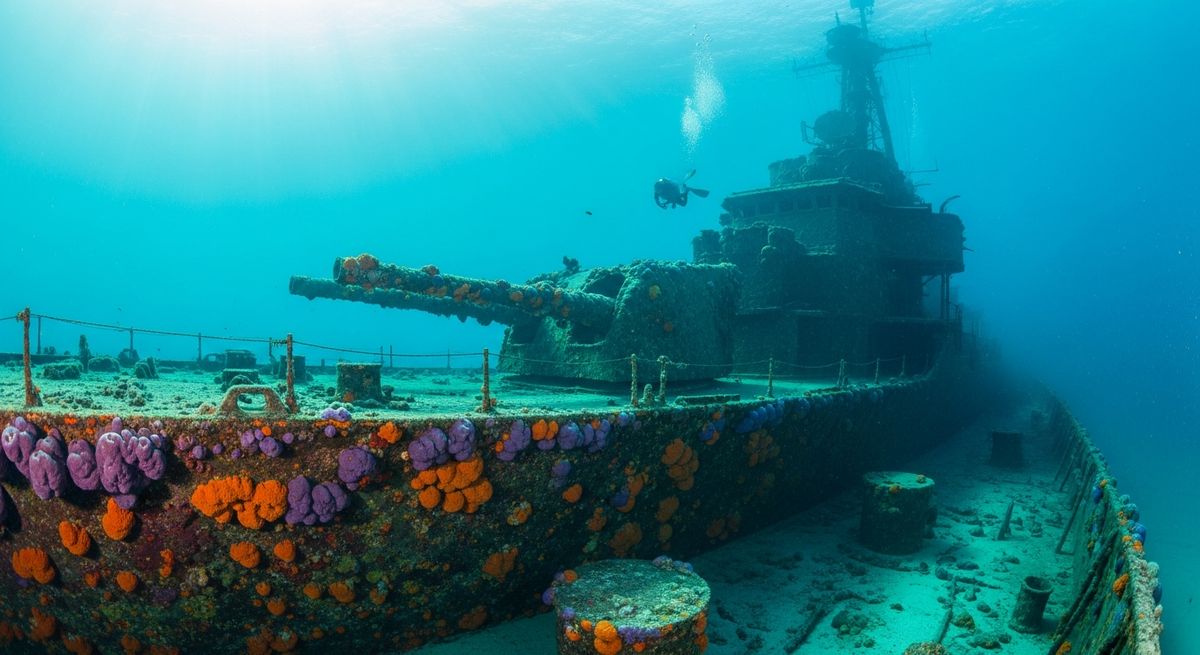
We love the Arctic Explorer for its sheer accessibility. This isn't some deep, dark, technical wreck, it's a giant playground right on your doorstep, sitting pretty at a maximum depth of 5m. Sunk at its moorings in 1979, this 36m fishing vessel offers a real sense of history. You can still make out the superstructure, some of the deck machinery, and even the occasional porthole, all encrusted now with anemones and soft corals. Our favourite part is the penetration opportunities – nothing too challenging, but enough to feel like a real explorer. You can fin gently through the holds where fish, like pollack and wrasse, dart in and out of the shadows. Even better, on a sunny day, the light filters through the water, illuminating the wreck in a way that’s almost ethereal. We'd suggest timing your dive for slack water to avoid any surge, which can kick up the silt inside. It's a perfect spot for newer wreck divers or photographers wanting to practice in calm, shallow conditions. Keep an eye out for dogfish tucked under plating; they love the shelter.
Typical ARCTIC EXPLORER Dive Profile
Illustrative profile based on site depth and type. Actual dive profiles vary - always follow your dive computer and training.
Safety Notes
Wreck site - avoid penetration without wreck diving certification. Watch for sharp metal and entanglement hazards.
ARCTIC EXPLORER Wreck History
Year Sunk
1979
Vessel Type
fishing vessel
Cause
unknown
Tonnage
298 GRT
The Arctic Explorer, a 36-meter trawler built in 1952, met a quiet and undramatic end. Unlike vessels lost to storms or wartime action, it succumbed to an unknown issue while secured in a seemingly safe location. On February 10th, 1979, the ship simply sank at its moorings in the sheltered waters of Sutton Harbour, Plymouth. The specific cause, whether a sudden leak, equipment failure, or simple neglect, was not widely recorded, leaving its final moments a minor mystery.
For divers, the Arctic Explorer's mundane sinking provides a fantastic and highly accessible wreck site. Resting in just 5 meters of water, it is an ideal location for novice divers, training exercises, or a long, relaxed second dive. Because it sank in a protected harbour, the wreck is surprisingly intact, with its hull, deck, and superstructure still clearly recognizable. It has become a thriving artificial reef, providing a home for crabs, lobsters, and a variety of small fish and invertebrates that are common to the harbour environment. It's a perfect example of how even a simple wreck can transform into a vibrant underwater habitat.
Nearest Dive Centres to ARCTIC EXPLORER
Dive shops near ARCTIC EXPLORER
Sound Diving Limited
Plymouth Diving Centre
Dive Looe
Scuba 2000
Viewpoint Diving Centre
Teign Diving Centre
Reviews for ARCTIC EXPLORER
Conditions
Ocean conditions, forecast and tides for ARCTIC EXPLORER
ARCTIC EXPLORER Ocean Conditions
Monthly averages for ARCTIC EXPLORER, sourced from Open-Meteo marine data - nearest station: Open-Meteo marine grid (50.44, -2.73) (3km away)
October Averages
Sea Temperature
17°C
62°F · Range: 15.1–17.5°C
Air Temperature
13°C
56°F
Wind Speed
8.14 m/s
15.8 knots
Atmospheric Pressure
1011 hPa
Based on 4 years of monitoring data · Data sources: Open-Meteo marine data
Plan & book
Ways to dive Cornwall & Devon, from day trips to liveaboards.
Day trips & courses
via GetYourGuideGuided dives, courses and snorkel trips with instant booking.
Find dive trips in Cornwall & DevonPlaces to stay
via Booking.comHotels and dive resorts near Cornwall & Devon.
Search stays in Cornwall & DevonDive insurance
Most travel insurance excludes or limits scuba. Check what you need before you go.
Dive insurance explainedPartner links: we may earn a commission if you book, at no extra cost to you. How we make money
Where to Stay near ARCTIC EXPLORER
Prices from Booking.com. We may earn a commission at no extra cost to you.