ARMENIER
Protected Area
East Head West Wittering
Why dive here
With 176+ marine species recorded in the area - including blue sharks, dolphins, dwarf minke whales, humpback whales and ocean sunfish (mola mola) - ARMENIER offers some of Cornwall & Devon's richest wreck diving. Water ranges 10-18°C, warmest July, August, September.
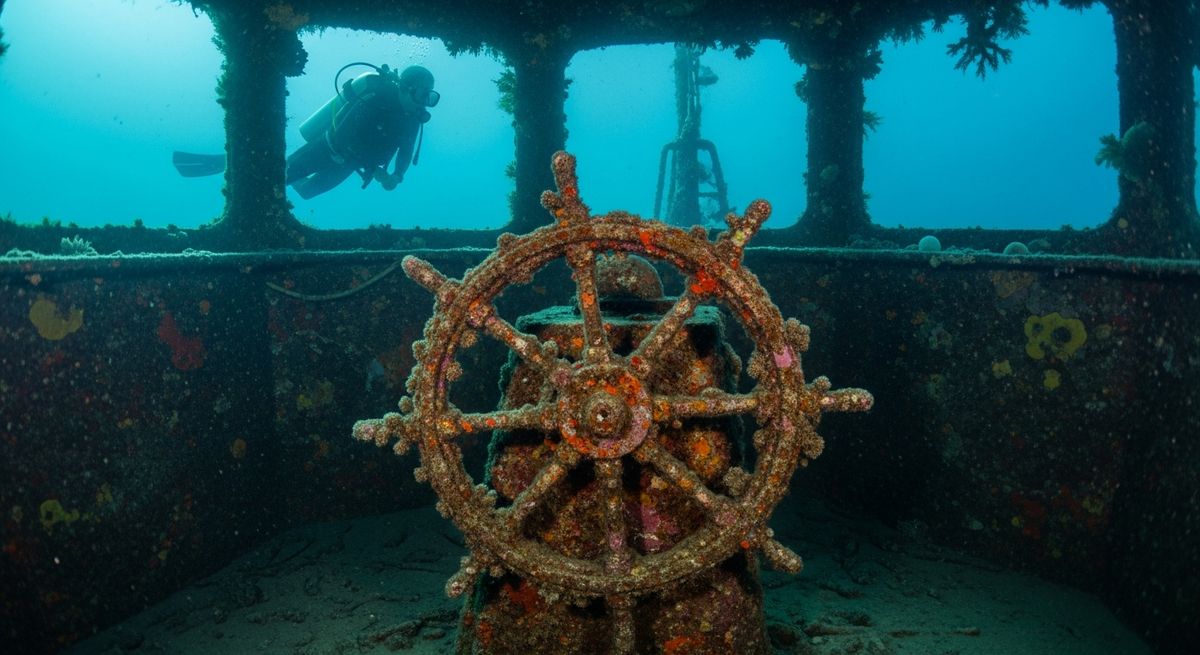
The Armenier is a curious beast, a coastal steamer that met its end not by German U-boat, but courtesy of the RAF, used as target practice for their bombing range. We think that’s a pretty unique backstory for a wreck. She sits in incredibly shallow water, barely a metre deep at high tide, which means you’re often diving this one on snorkel or very shallow SCUBA, perhaps even a freedive if you’re quick. What you get here is a proper wreck skeleton. Her ribs poke up through the surface on lower tides, stark against the sky. We love finning over the remains of her hull, picking out plates and beams, imagining her steaming along the coast before her rather explosive retirement. Look closely in the nooks and crannies – the shallow water and strong currents mean you’ll find plenty of crabs, small wrasse, and often a flurry of silver fish darting through the rusted metalwork. It’s a site that really comes alive when the sun is out, dappling light through the water and illuminating the wreck’s structure. We’d suggest going at slack tide for the clearest views, though even with a bit of movement, the sheer history here makes it worthwhile. It's not about big pelagics, it's about intimacy with a piece of history.
Typical ARMENIER Dive Profile
Illustrative profile based on site depth and type. Actual dive profiles vary - always follow your dive computer and training.
Safety Notes
Wreck site - avoid penetration without wreck diving certification. Watch for sharp metal and entanglement hazards.
ARMENIER Wreck History
Year Sunk
1945
Vessel Type
cargo ship
Cause
scuttled
Tonnage
380 GRT
The SS Armenier, a small Belgian coastal steamer, had a history intertwined with the turmoil of World War II. In 1940, she fell victim to a German mine, which ripped a hole in her hull. The crew managed to beach the crippled vessel, saving it from being lost entirely. However, her life as a cargo ship was over. The damaged hulk was later acquired by the British Air Ministry for a very different purpose.
In April 1945, as the war in Europe neared its conclusion, the Armenier was towed out to the RAF bombing range in the Exe Bight. There, she was used as a practice target for bombers, and after sustaining numerous hits, she was finally sunk. Today, her remains lie in just one metre of water, with parts of the hull exposed at low tide. While not a scuba dive in the traditional sense, the wreck is a fascinating and accessible piece of history for snorkelers, kayakers, and coastal explorers, its scarred and rusted plates a stark testament to its final, explosive role.
Nearest Dive Centres to ARMENIER
Dive shops near ARMENIER
Sussex Diving & Leisure
Mulberry Marine Experiences CIC
In2 Diving
Abyss Scuba School
Andark Diving
Ocean View
Reviews for ARMENIER
Conditions
Ocean conditions, forecast and tides for ARMENIER
ARMENIER Ocean Conditions
Monthly averages for ARMENIER, sourced from Open-Meteo marine data - nearest station: Open-Meteo marine grid (50.44, -2.73) (3km away)
October Averages
Sea Temperature
17°C
62°F · Range: 15.1–17.5°C
Air Temperature
13°C
56°F
Wind Speed
8.14 m/s
15.8 knots
Atmospheric Pressure
1011 hPa
Based on 4 years of monitoring data · Data sources: Open-Meteo marine data
Plan & book
Ways to dive Cornwall & Devon, from day trips to liveaboards.
Day trips & courses
via GetYourGuideGuided dives, courses and snorkel trips with instant booking.
Find dive trips in Cornwall & DevonPlaces to stay
via Booking.comHotels and dive resorts near Cornwall & Devon.
Search stays in Cornwall & DevonDive insurance
Most travel insurance excludes or limits scuba. Check what you need before you go.
Dive insurance explainedPartner links: we may earn a commission if you book, at no extra cost to you. How we make money
Where to Stay near ARMENIER
Prices from Booking.com. We may earn a commission at no extra cost to you.