ARNO (POSSIBLY)
Protected Area
Selsey Bill and the Hounds
Why dive here
With 176+ marine species recorded in the area - including blue sharks, dolphins, dwarf minke whales, humpback whales and ocean sunfish (mola mola) - ARNO (POSSIBLY) offers some of Cornwall & Devon's richest wreck diving. Water ranges 10-18°C, warmest July, August, September.
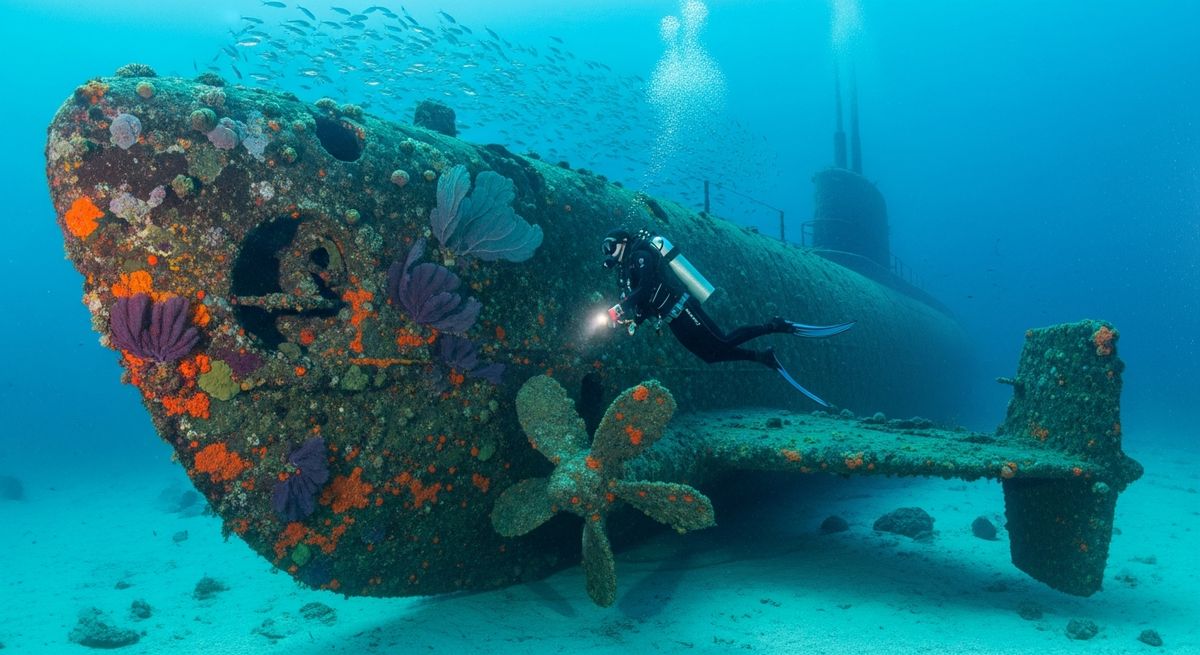
Forget your preconceptions of UK diving when it comes to the Arno. This isn't a deep, silty trudge; it’s a vibrant, shallow playground. We love it because it’s a perfect shore dive, easy to access, and feels like you've stumbled onto a secret garden. The Arno sits right in the shallows, barely a few metres deep at high tide, so your bottom time is practically unlimited. The wreck itself is well broken, scattered across the seabed, but that’s its charm. You’ll find bits of hull plating, ribs poking up, and the impressive boiler still largely intact, covered in an explosion of colour. Look closely, and you’ll see plumose anemones, dahlia anemones, and a surprising number of wrasse darting in and out of the crevices. The light penetration here is often fantastic, especially on a sunny day with a gentle swell, making the reds and oranges of the anemones truly pop. It’s a photographer’s dream and a perfect site for newer divers or those who just want a relaxed potter without the pressure of depth. We’d suggest going at slack high water for the best visibility.
Typical ARNO (POSSIBLY) Dive Profile
Illustrative profile based on site depth and type. Actual dive profiles vary - always follow your dive computer and training.
Safety Notes
Wreck site - avoid penetration without wreck diving certification. Watch for sharp metal and entanglement hazards.
ARNO (POSSIBLY) Wreck History
Year Sunk
1899
Vessel Type
cargo ship
Cause
unknown
The vessel identified as possibly being the Arno is a classic late-Victorian steamship, built in the renowned shipbuilding hub of Sunderland in 1871. It was lost in February 1899 while on a passage from Shields to Portsmouth, a common route for coastal traders and colliers of the era. Lying in a mere 4 metres of water, this wreck is extremely accessible, offering a glimpse into 19th-century maritime technology.
Due to its shallow depth and more than a century of exposure to the coastal environment of Cornwall and Devon, the Arno is a very broken-up site. The dive is a scavenger hunt across the seabed, searching for the tell-tale signs of a steamship. The most prominent feature is often the boiler, too solid to be easily destroyed by the sea. Divers can also find scattered hull plating, ribs, and parts of the 98-horsepower engine, all heavily encrusted and providing a habitat for local marine creatures. It's a perfect dive for a sunny day and is even explorable by snorkelers.
Nearest Dive Centres to ARNO (POSSIBLY)
Dive shops near ARNO (POSSIBLY)
Sussex Diving & Leisure
Mulberry Marine Experiences CIC
Abyss Scuba School
In2 Diving
Ocean View
Andark Diving
Reviews for ARNO (POSSIBLY)
Conditions
Ocean conditions, forecast and tides for ARNO (POSSIBLY)
ARNO (POSSIBLY) Ocean Conditions
Monthly averages for ARNO (POSSIBLY), sourced from Open-Meteo marine data - nearest station: Open-Meteo marine grid (50.44, -2.73) (3km away)
October Averages
Sea Temperature
17°C
62°F · Range: 15.1–17.5°C
Air Temperature
13°C
56°F
Wind Speed
8.14 m/s
15.8 knots
Atmospheric Pressure
1011 hPa
Based on 4 years of monitoring data · Data sources: Open-Meteo marine data
Plan & book
Ways to dive Cornwall & Devon, from day trips to liveaboards.
Day trips & courses
via GetYourGuideGuided dives, courses and snorkel trips with instant booking.
Find dive trips in Cornwall & DevonPlaces to stay
via Booking.comHotels and dive resorts near Cornwall & Devon.
Search stays in Cornwall & DevonDive insurance
Most travel insurance excludes or limits scuba. Check what you need before you go.
Dive insurance explainedPartner links: we may earn a commission if you book, at no extra cost to you. How we make money
Where to Stay near ARNO (POSSIBLY)
Prices from Booking.com. We may earn a commission at no extra cost to you.