ASHANTI (POSSIBLY)
Protected Area
Wight-Barfleur Reef
Why dive here
With 176+ marine species recorded in the area - including blue sharks, dolphins, dwarf minke whales, humpback whales and ocean sunfish (mola mola) - ASHANTI (POSSIBLY) offers some of Cornwall & Devon's richest wreck diving. Water ranges 10-18°C, warmest July, August, September.
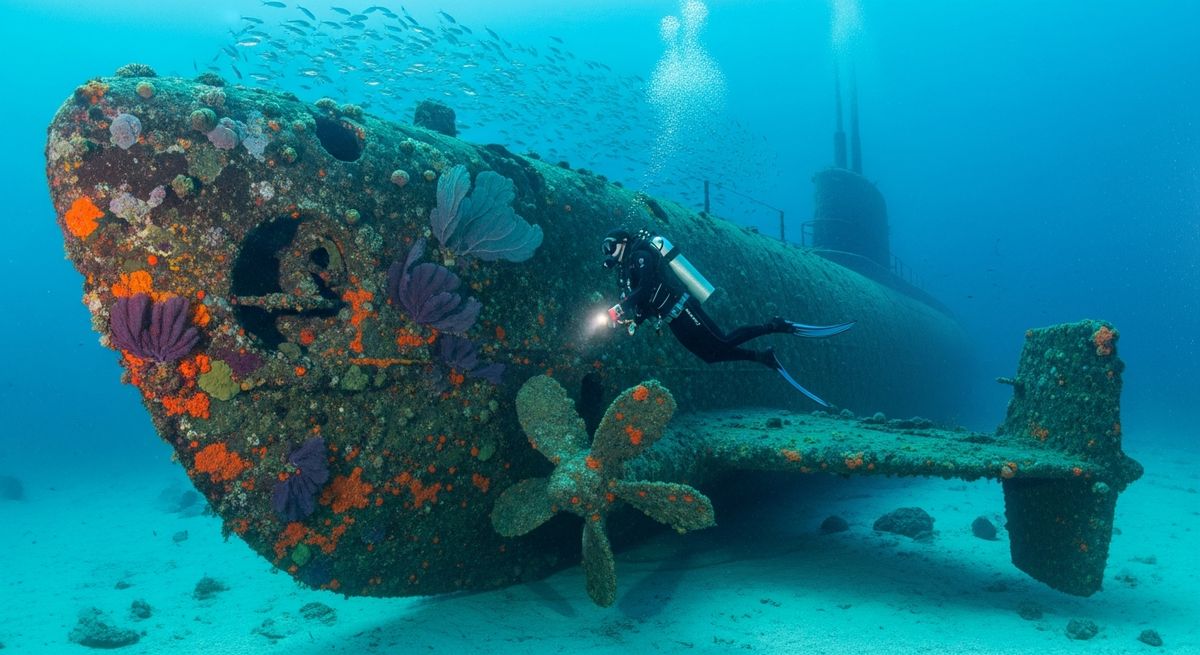
The Ashanti, or what we strongly suspect is the Ashanti, off the Cornish coast, is one of those dives that feels like proper exploration. Dropping onto the deck at 35 metres, you’re met with a strong, imposing silhouette. It's a deep dive, definitely one for experienced cold-water wreckies who appreciate history over coral. We've spent a fair few deco stops here, just taking it all in. She's an upright wreck, surprisingly intact for her age, with a decent amount of superstructure still standing. You can trace her lines, picturing her working life before she met her end in 1940. There’s a certain solemnity down there, a quiet hum you get from these older wrecks. Inside, if you're comfortable with careful penetration, the engine room is a highlight. We’ve had some fantastic encounters with conger eels tucked into every nook and cranny, and the resident pollack are bolder here than on most other Cornish wrecks. We'd suggest aiming for slack water, always, and be prepared for that classic temperate visibility – sometimes it's twenty metres and glorious, sometimes it’s more intimate, but always rewarding. It’s a genuine piece of maritime history, brought to life by the current and the marine life that has made it home.
Typical ASHANTI (POSSIBLY) Dive Profile
Illustrative profile based on site depth and type. Actual dive profiles vary - always follow your dive computer and training.
Safety Notes
Deep dive (35m) - monitor air consumption closely. Advanced certification recommended.
Wreck site - avoid penetration without wreck diving certification. Watch for sharp metal and entanglement hazards.
Always perform a 3-minute safety stop at 5m before surfacing.
ASHANTI (POSSIBLY) Wreck History
Year Sunk
1944
Vessel Type
cargo ship
Cause
torpedo
Tonnage
534 GRT
Often mistaken for the famous destroyer of the same name, this wreck is the MV Ashanti, a civilian motor coaster built in 1936. With the outbreak of World War II, she was requisitioned for service by the Royal Navy to transport vital supplies. In June 1944, the war was reaching its climax. Just four days after the successful D-Day landings in Normandy, the Ashanti was steaming through the English Channel, likely carrying materials to support the Allied invasion force. On June 10th, she tragically struck a German mine off the Lizard, Cornwall. The explosion was devastating, and the small coaster sank quickly, a stark reminder of the immense dangers that persisted in the waters around Britain.
Today, the MV Ashanti rests upright and remarkably intact at a depth of 35 meters. This depth makes it a dive for more experienced divers, but the reward is a beautifully preserved WWII-era wreck. Divers can explore her open holds, the wheelhouse, and the engine room, getting a clear sense of what this small but vital vessel looked like. The wreck is often draped in fishing nets, which have become a substrate for marine growth like jewel anemones and dead man's fingers. It serves as a poignant memorial to the merchant mariners who played a crucial, and often perilous, role in the Allied victory.
Nearest Dive Centres to ASHANTI (POSSIBLY)
Dive shops near ASHANTI (POSSIBLY)
View all dive centres in Cornwall & DevonReviews for ASHANTI (POSSIBLY)
Conditions
Ocean conditions, forecast and tides for ASHANTI (POSSIBLY)
ASHANTI (POSSIBLY) Ocean Conditions
Monthly averages for ASHANTI (POSSIBLY), sourced from Open-Meteo marine data - nearest station: Open-Meteo marine grid (50.44, -2.73) (3km away)
October Averages
Sea Temperature
17°C
62°F · Range: 15.1–17.5°C
Air Temperature
13°C
56°F
Wind Speed
8.14 m/s
15.8 knots
Atmospheric Pressure
1011 hPa
Based on 4 years of monitoring data · Data sources: Open-Meteo marine data
Plan & book
Ways to dive Cornwall & Devon, from day trips to liveaboards.
Day trips & courses
via GetYourGuideGuided dives, courses and snorkel trips with instant booking.
Find dive trips in Cornwall & DevonPlaces to stay
via Booking.comHotels and dive resorts near Cornwall & Devon.
Search stays in Cornwall & DevonDive insurance
Most travel insurance excludes or limits scuba. Check what you need before you go.
Dive insurance explainedPartner links: we may earn a commission if you book, at no extra cost to you. How we make money
Where to Stay near ASHANTI (POSSIBLY)
Prices from Booking.com. We may earn a commission at no extra cost to you.