AVALANCHE
Protected Area
South of Portland
Why dive here
With 176+ marine species recorded in the area - including blue sharks, dolphins, dwarf minke whales, humpback whales and ocean sunfish (mola mola) - AVALANCHE offers some of Cornwall & Devon's richest wreck diving. Water ranges 10-18°C, warmest July, August, September.
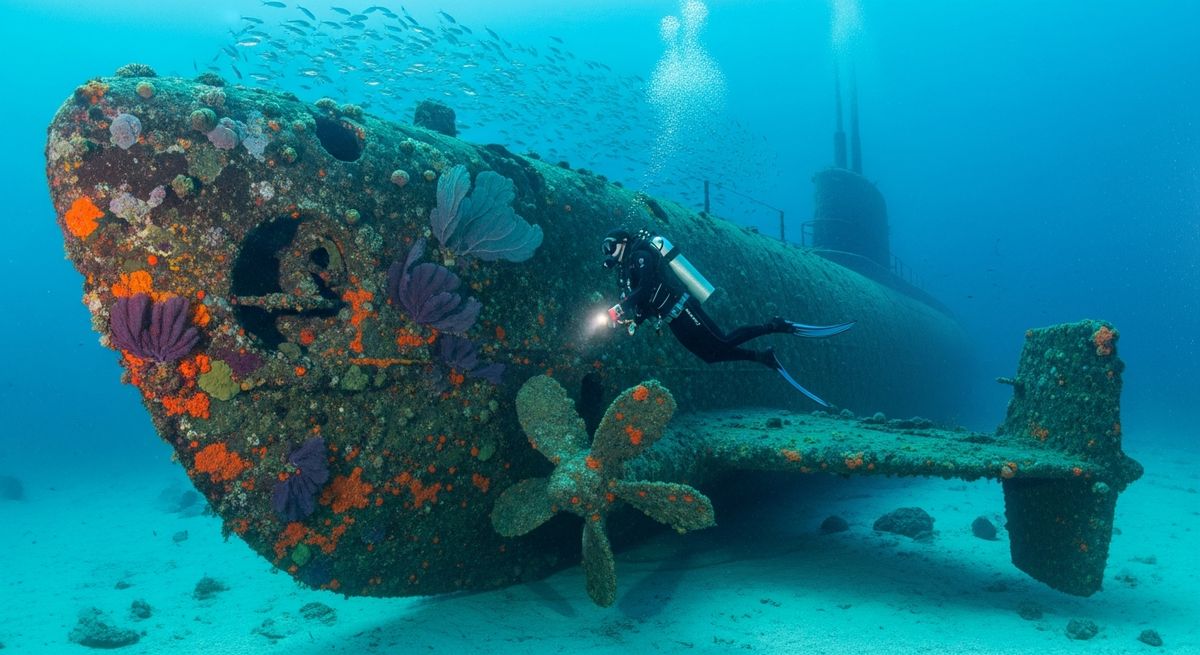
The Avalanche, oh, she’s a proper dive. Lying deep at 55 metres off the Lizard, this isn't one for a quick splash. We're talking serious planning, proper gas, and a good buddy team. But put in the work, and you're rewarded with a majestic iron sailing ship, remarkably intact for her 1877 sinking. Dropping down, the light fades quickly, and the sheer scale of her suddenly appears from the gloom. The masts lie collapsed across the deck, creating fascinating swim-throughs if you're careful and properly trained for overhead environments. We love tracing the deck, noting the massive anchor chains still in place. Keep an eye out for the resident conger eels, some of them are huge, lurking in the darker recesses of the holds. The stern, in particular, is captivating; you can really imagine her sailing days. This is a dive for experienced wreck enthusiasts who appreciate the history and the silent, cold embrace of the deep. Visibility can be hit or miss, typical for the Channel, but on a good day, it’s truly spectacular, with schools of pouting swarming the structure. Expect currents; slack water is your friend here.
Typical AVALANCHE Dive Profile
Illustrative profile based on site depth and type. Actual dive profiles vary - always follow your dive computer and training.
Safety Notes
Maximum depth 55m exceeds recreational limits (40m). Technical diving certification and equipment required.
Wreck site - avoid penetration without wreck diving certification. Watch for sharp metal and entanglement hazards.
Always perform a 3-minute safety stop at 5m before surfacing.
AVALANCHE Wreck History
Year Sunk
1877
Vessel Type
passenger ship
Cause
collision
The Avalanche was a 65-metre iron clipper ship built in 1874 for the renowned Shaw, Savill & Co. line, tasked with carrying emigrants on the arduous journey from London to New Zealand. On September 11, 1877, shortly after departing London, the ship was navigating the English Channel off Portland Bill in hazy conditions. In the darkness, she tragically collided with a Canadian vessel, the SV Forest. The Avalanche was struck with such force that she sank in under five minutes, a disaster so swift that only three of her crew managed to survive. In total, 106 passengers and crew lost their lives in the frigid water, marking one of the worst maritime disasters of the era in the Channel.
Today, the wreck of the Avalanche lies at 55 metres, presenting a serious deep dive for experienced, mixed-gas technical divers. The site is subject to the powerful tides that sweep around Portland Bill, requiring a slack-water dive and excellent conditions. The wreck itself is heavily broken, but its iron structure has endured. Divers can explore the scattered remains, identifying features of the once-proud clipper ship that now lie on the seabed, encrusted with marine life. It is a deeply atmospheric and poignant dive, a direct connection to a Victorian-era tragedy and a solemn tribute to the many lives lost.
Nearest Dive Centres to AVALANCHE
Dive shops near AVALANCHE
View all dive centres in Cornwall & DevonReviews for AVALANCHE
Conditions
Ocean conditions, forecast and tides for AVALANCHE
AVALANCHE Ocean Conditions
Monthly averages for AVALANCHE, sourced from Open-Meteo marine data - nearest station: Open-Meteo marine grid (50.44, -2.73) (3km away)
October Averages
Sea Temperature
17°C
62°F · Range: 15.1–17.5°C
Air Temperature
13°C
56°F
Wind Speed
8.14 m/s
15.8 knots
Atmospheric Pressure
1011 hPa
Based on 4 years of monitoring data · Data sources: Open-Meteo marine data
Plan & book
Ways to dive Cornwall & Devon, from day trips to liveaboards.
Day trips & courses
via GetYourGuideGuided dives, courses and snorkel trips with instant booking.
Find dive trips in Cornwall & DevonPlaces to stay
via Booking.comHotels and dive resorts near Cornwall & Devon.
Search stays in Cornwall & DevonDive insurance
Most travel insurance excludes or limits scuba. Check what you need before you go.
Dive insurance explainedPartner links: we may earn a commission if you book, at no extra cost to you. How we make money
Where to Stay near AVALANCHE
Prices from Booking.com. We may earn a commission at no extra cost to you.