AVALON G II
Protected Area
Berry Head to Sharkham Point
Why dive here
With 176+ marine species recorded in the area - including blue sharks, dolphins, dwarf minke whales, humpback whales and ocean sunfish (mola mola) - AVALON G II offers some of Cornwall & Devon's richest wreck diving. Water ranges 10-18°C, warmest July, August, September.
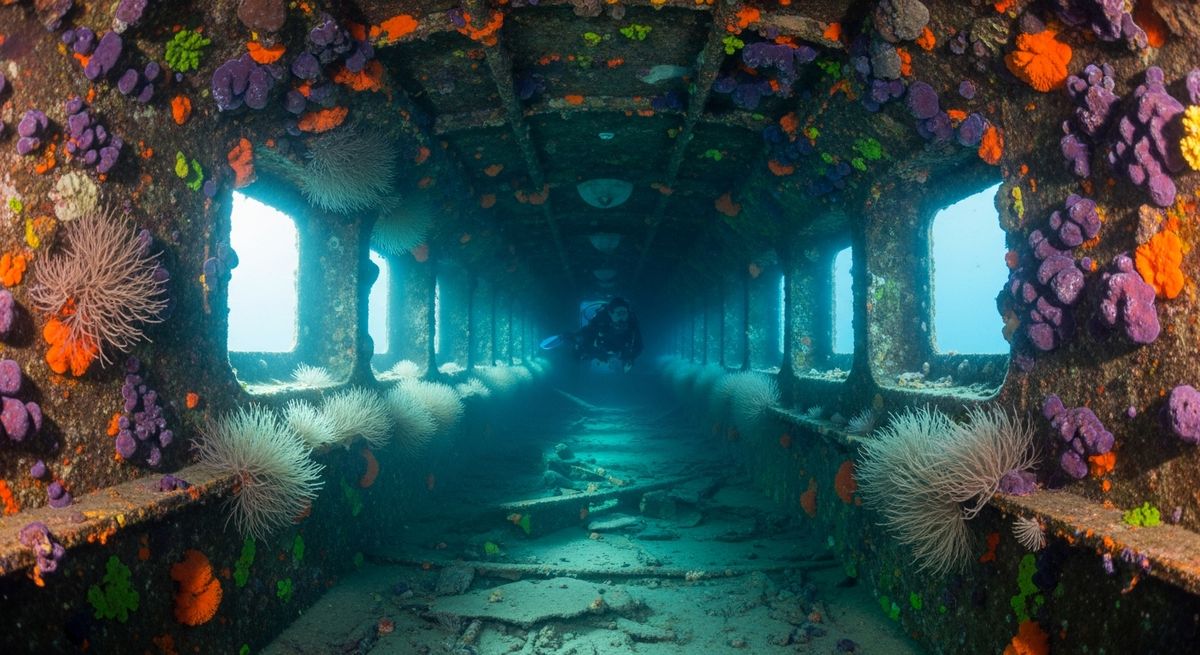
The Avalon G II is one of our absolute favourite wrecks in this part of the world, even if she is a little on the smaller side. Sunk in 1991 after a run-in with a Norwegian tanker, this 18-meter fishing vessel now rests upright in around 40 meters, making her a solid choice for those with a bit of deep-diving experience. We love how intact she is; you can still make out the wheelhouse, and her mast reaches up invitingly from the seabed. Dropping down, the first thing you notice is the sheer volume of life that’s made the wreck home. Squat lobsters peek from every crevice, conger eels coil in the shadows, and schools of pollock often swirl overhead, creating a dynamic, shimmering canopy. Our best tip here is to take your time, really look into the nooks and crannies. The conditions can be typical for the UK, so pick a day with good visibility, ideally after a few calm days, and you'll be rewarded. This wreck is perfect for divers who appreciate the history of a vessel and the way it becomes an artificial reef, teeming with marine life, rather than just a structure.
Typical AVALON G II Dive Profile
Illustrative profile based on site depth and type. Actual dive profiles vary - always follow your dive computer and training.
Safety Notes
Deep dive (40m) - monitor air consumption closely. Advanced certification recommended.
Wreck site - avoid penetration without wreck diving certification. Watch for sharp metal and entanglement hazards.
Always perform a 3-minute safety stop at 5m before surfacing.
AVALON G II Wreck History
Year Sunk
1991
Vessel Type
fishing vessel
Cause
collision
The story of the AVALON G II is one of a sudden and dramatic end. On January 28, 1991, the 18-metre fishing vessel was anchored off the English coast when it was struck by the Norwegian tanker, Berge Lord. The massive size difference sealed the smaller vessel's fate, and the AVALON G II quickly sank beneath the waves, coming to rest on the seabed.
Today, the wreck sits upright at a depth of 40 metres. This depth makes it an excellent dive for advanced and technical divers exploring the rich maritime graveyard off the coasts of Cornwall and Devon. While not a large wreck, it is relatively intact and provides a compact, interesting site to explore. Divers can expect to see the typical features of a fishing trawler, now draped in marine life and patrolled by the fish it once sought to catch.
Nearest Dive Centres to AVALON G II
Dive shops near AVALON G II
View all dive centres in Cornwall & DevonReviews for AVALON G II
Conditions
Ocean conditions, forecast and tides for AVALON G II
AVALON G II Ocean Conditions
Monthly averages for AVALON G II, sourced from Open-Meteo marine data - nearest station: Open-Meteo marine grid (50.44, -2.73) (3km away)
October Averages
Sea Temperature
17°C
62°F · Range: 15.1–17.5°C
Air Temperature
13°C
56°F
Wind Speed
8.14 m/s
15.8 knots
Atmospheric Pressure
1011 hPa
Based on 4 years of monitoring data · Data sources: Open-Meteo marine data
Plan & book
Ways to dive Cornwall & Devon, from day trips to liveaboards.
Day trips & courses
via GetYourGuideGuided dives, courses and snorkel trips with instant booking.
Find dive trips in Cornwall & DevonPlaces to stay
via Booking.comHotels and dive resorts near Cornwall & Devon.
Search stays in Cornwall & DevonDive insurance
Most travel insurance excludes or limits scuba. Check what you need before you go.
Dive insurance explainedPartner links: we may earn a commission if you book, at no extra cost to you. How we make money
Where to Stay near AVALON G II
Prices from Booking.com. We may earn a commission at no extra cost to you.