AZEMMOUR
Protected Area
Albert Field
Why dive here
With 176+ marine species recorded in the area - including blue sharks, dolphins, dwarf minke whales, humpback whales and ocean sunfish (mola mola) - AZEMMOUR offers some of Cornwall & Devon's richest wreck diving. Water ranges 10-18°C, warmest July, August, September.
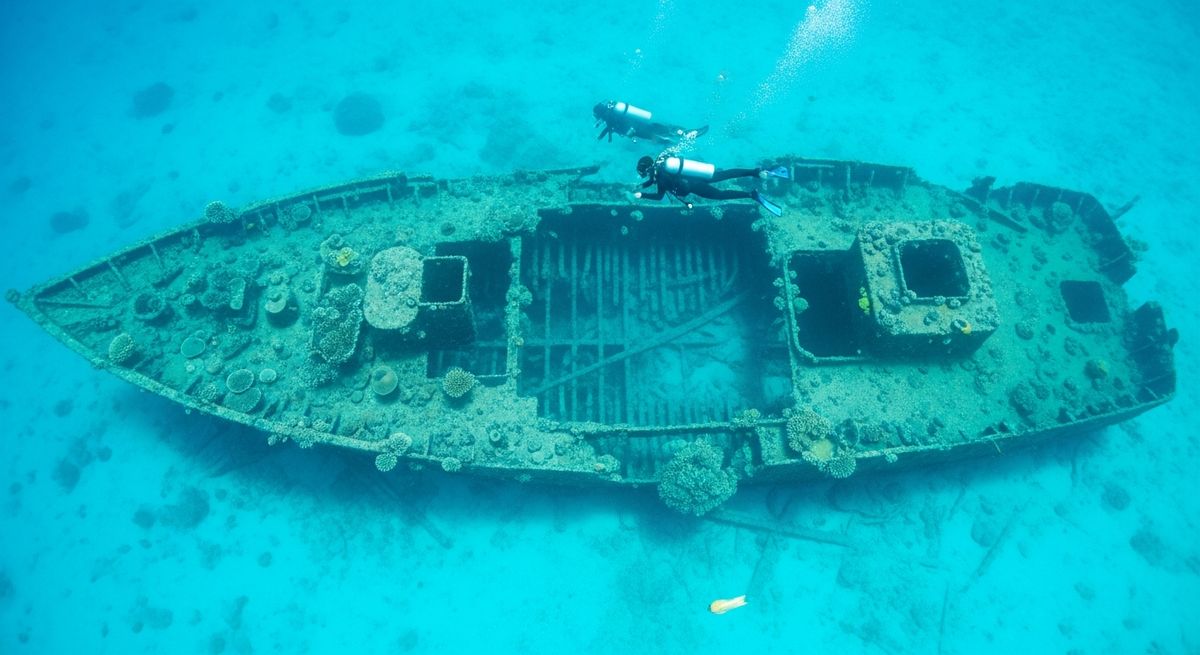
The Azemmour is a truly absorbing wreck and one of our favourites in Lyme Bay, especially if you’re into a proper rummage. She’s a decent size at 62.5m, sitting upright and largely intact at 37m. Dropping down, the first thing you notice is the sheer volume of fish – pollack and cod drift lazily through the superstructure, and if you’re lucky, conger eels peek from hidden nooks. We’ve found her bridge section particularly interesting, still quite defined, with plenty of entry points for careful penetration if you’re appropriately qualified and experienced. Our pick for exploring is the stern, where the triple expansion engine and a single boiler are still very much present, now heavily encrusted with plumose anemones, creating these incredible white and orange tapestries. It’s a real photographer's wreck, with dramatic silhouettes against the green-blue water. The Azemmour suits experienced divers comfortable at depth and keen to explore a historical wreck rather than just observing it from above. Currents can be a factor here, so slack water is always the smart play.
Typical AZEMMOUR Dive Profile
Illustrative profile based on site depth and type. Actual dive profiles vary - always follow your dive computer and training.
Safety Notes
Deep dive (37m) - monitor air consumption closely. Advanced certification recommended.
Wreck site - avoid penetration without wreck diving certification. Watch for sharp metal and entanglement hazards.
Always perform a 3-minute safety stop at 5m before surfacing.
AZEMMOUR Wreck History
Year Sunk
1918
Vessel Type
cargo ship
Cause
torpedo
Tonnage
1,779 GRT
Launched in 1909 as the SS Wistaria, this vessel was later acquired by the famous Compagnie Générale Transatlantique (the French Line) and renamed Azemmour. During the height of the First World War, she was put into service transporting vital supplies. Her wartime career ended on March 20, 1918, while she was sailing off the coast of Devon. She was spotted and torpedoed by the German submarine UB-57, sinking with her general cargo.
Today, the Azemmour lies at a depth of 37 meters, making her an excellent dive for advanced and technical divers. The wreck is a classic WWI casualty, with her triple-expansion engine and large boiler standing as the most prominent features amidst the collapsed hull plates. As a victim of war, she serves as a poignant reminder of the conflict that took place just off the British coast. The wreck is often visited by schools of fish and is decorated with anemones and other marine growth, bringing life and color to this historical site.
Nearest Dive Centres to AZEMMOUR
Dive shops near AZEMMOUR
Divers Down
Mayim Mermaid Academy
TAL Scuba Ltd.
Dorset Diving Services
Reviews for AZEMMOUR
Conditions
Ocean conditions, forecast and tides for AZEMMOUR
AZEMMOUR Ocean Conditions
Monthly averages for AZEMMOUR, sourced from Open-Meteo marine data - nearest station: Open-Meteo marine grid (50.44, -2.73) (3km away)
October Averages
Sea Temperature
17°C
62°F · Range: 15.1–17.5°C
Air Temperature
13°C
56°F
Wind Speed
8.14 m/s
15.8 knots
Atmospheric Pressure
1011 hPa
Based on 4 years of monitoring data · Data sources: Open-Meteo marine data
Plan & book
Ways to dive Cornwall & Devon, from day trips to liveaboards.
Day trips & courses
via GetYourGuideGuided dives, courses and snorkel trips with instant booking.
Find dive trips in Cornwall & DevonPlaces to stay
via Booking.comHotels and dive resorts near Cornwall & Devon.
Search stays in Cornwall & DevonDive insurance
Most travel insurance excludes or limits scuba. Check what you need before you go.
Dive insurance explainedPartner links: we may earn a commission if you book, at no extra cost to you. How we make money
Where to Stay near AZEMMOUR
Prices from Booking.com. We may earn a commission at no extra cost to you.