BADEN (POSSIBLY)
Protected Area
Sinah Common
Why dive here
With 176+ marine species recorded in the area - including blue sharks, dolphins, dwarf minke whales, humpback whales and ocean sunfish (mola mola) - BADEN (POSSIBLY) offers some of Cornwall & Devon's richest wreck diving. Water ranges 10-18°C, warmest July, August, September.
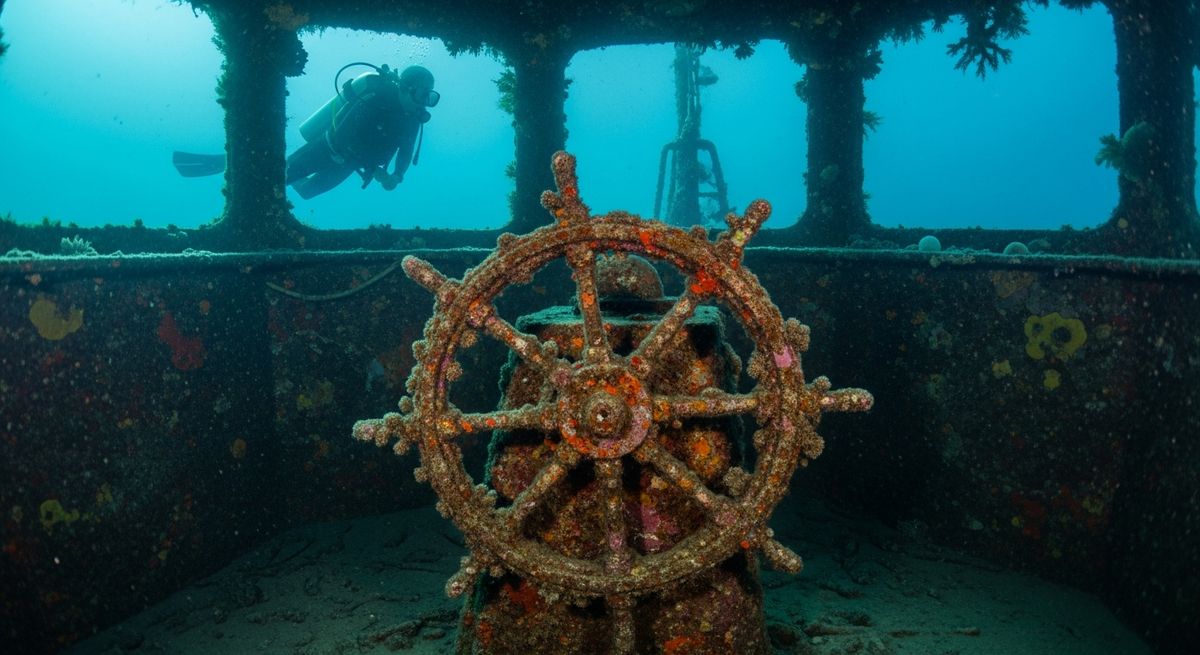
The Baden, possibly, is one of those frustratingly brilliant sites that only the UK can deliver. At just 10 metres deep, it’s accessible to most divers, but don’t let that fool you into thinking it's an easy dive. We love the mystery surrounding this wreck; the local consensus is it’s the Baden, a WWI German freighter torpedoed in 1917, but it’s never been definitively proven. That just adds to the adventure. What you find is a surprisingly intact wreck, spread across a relatively flat seabed. The bow and stern sections are still distinct, though the midships have collapsed. We’ve spent hours poking around the engine room, which is still quite recognisable, and the propeller shaft tunnel. Light filters through gaps, illuminating schools of pollack darting amongst the twisted metal. Conger eels are a regular sight, often peeking out from beneath plates of steel, and the anemones that have colonised every surface add splashes of colour to the monochrome wreckage. Our favourite time to dive it is on a slack tide, when the visibility is at its best, often reaching 10-15 metres – decent for these parts. It’s a proper wreck dive, full of history and atmosphere, and a great site for divers who appreciate a bit of detective work with their diving.
Typical BADEN (POSSIBLY) Dive Profile
Illustrative profile based on site depth and type. Actual dive profiles vary - always follow your dive computer and training.
Safety Notes
Wreck site - avoid penetration without wreck diving certification. Watch for sharp metal and entanglement hazards.
BADEN (POSSIBLY) Wreck History
Vessel Type
unknown
Cause
unknown
Shrouded in mystery, the wreck known only as the 'Baden' lies in the diver-rich waters off the coast of Cornwall and Devon. Its true identity and the story of how it sank have been lost to time, leaving only a scattered debris field for modern explorers to investigate. The wreck rests at an accessible depth of 10 metres, making it an easy dive for those looking to explore a piece of anonymous maritime history.
Despite its shallow location, the site is designated as a dangerous wreck. This classification serves as a warning to divers that the structure is likely collapsed, unstable, and may present hazards such as sharp, rusting metal and potential entanglement points. A dive on the Baden is a cautious exploration of a forgotten vessel, offering a glimpse into the past for those willing to navigate its skeletal remains.
Nearest Dive Centres to BADEN (POSSIBLY)
Dive shops near BADEN (POSSIBLY)
In2 Diving
Sussex Diving & Leisure
Mulberry Marine Experiences CIC
Andark Diving
Abyss Scuba School
Sunken Dreams Scuba Diving Academy
Reviews for BADEN (POSSIBLY)
Conditions
Ocean conditions, forecast and tides for BADEN (POSSIBLY)
BADEN (POSSIBLY) Ocean Conditions
Monthly averages for BADEN (POSSIBLY), sourced from Open-Meteo marine data - nearest station: Open-Meteo marine grid (50.44, -2.73) (3km away)
October Averages
Sea Temperature
17°C
62°F · Range: 15.1–17.5°C
Air Temperature
13°C
56°F
Wind Speed
8.14 m/s
15.8 knots
Atmospheric Pressure
1011 hPa
Based on 4 years of monitoring data · Data sources: Open-Meteo marine data
Plan & book
Ways to dive Cornwall & Devon, from day trips to liveaboards.
Day trips & courses
via GetYourGuideGuided dives, courses and snorkel trips with instant booking.
Find dive trips in Cornwall & DevonPlaces to stay
via Booking.comHotels and dive resorts near Cornwall & Devon.
Search stays in Cornwall & DevonDive insurance
Most travel insurance excludes or limits scuba. Check what you need before you go.
Dive insurance explainedPartner links: we may earn a commission if you book, at no extra cost to you. How we make money
Where to Stay near BADEN (POSSIBLY)
Prices from Booking.com. We may earn a commission at no extra cost to you.