BALVENIE (POSSIBLY)
Protected Area
Lundy
Why dive here
With 176+ marine species recorded in the area - including blue sharks, dolphins, dwarf minke whales, humpback whales and ocean sunfish (mola mola) - BALVENIE (POSSIBLY) offers some of Cornwall & Devon's richest wreck diving. Water ranges 10-18°C, warmest July, August, September.
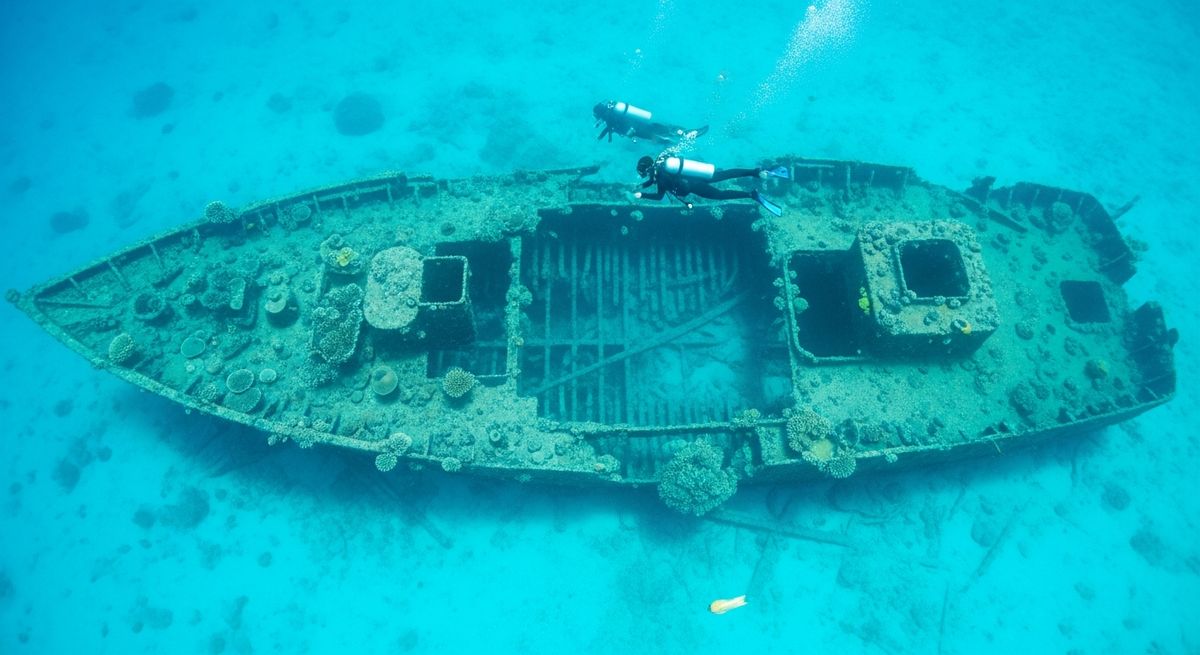
The Balvenie, or what we strongly suspect is the Balvenie, is a proper technical dive, and one we always look forward to. At 53 metres, you're deep enough that the light takes on that ethereal blue, a real sense of being somewhere remote. It’s a steamship, built in 1911, and she went down in 1916. You can still make out the triple expansion engine, the single boiler, and the shaft. We love dropping down to see the bow pointing purposefully into the current, often adorned with sea fans and dead men's fingers, a ghostly reminder of her original journey from Glasgow. The structure itself is still pretty intact in places, a testament to its robust build. You'll find plenty of inquisitive bib and pollack darting through the holds, and often a grumpy conger eel peering out from a dark corner. Our favourite part is navigating the upper decks, seeing where the ocean has reclaimed the metal, creating new homes. This site really suits experienced wreck divers who appreciate the history and the challenging depth. It’s a proper expedition, not a casual dip. We'd suggest aiming for a slack tide window; those currents off the Cornish coast can be swift.
Typical BALVENIE (POSSIBLY) Dive Profile
Illustrative profile based on site depth and type. Actual dive profiles vary - always follow your dive computer and training.
Safety Notes
Maximum depth 53m exceeds recreational limits (40m). Technical diving certification and equipment required.
Wreck site - avoid penetration without wreck diving certification. Watch for sharp metal and entanglement hazards.
Always perform a 3-minute safety stop at 5m before surfacing.
BALVENIE (POSSIBLY) Wreck History
Year Sunk
1916
Vessel Type
cargo ship
Cause
torpedo
The SS Balvenie was a British steamship built in 1911 by the Greenock & Grangemouth Dockyard Co. For five years, she served as a typical merchant vessel, but the outbreak of World War I placed her in constant peril. In July 1916, while on a passage from Glasgow to St. Nazaire carrying a general cargo, she was sailing through the vital shipping lanes of the English Channel. It was here, during the height of Germany's U-boat campaign, that she was targeted and sunk by a torpedo.
Resting at a depth of 53 meters, the Balvenie is now a dive for experienced and technically-certified divers. The depth has helped preserve the wreck from the worst of the currents and storm damage. Divers descending on the site can explore a classic WWI-era steamer, its hull and machinery offering a poignant glimpse into the maritime conflict that sent thousands of similar ships to the seabed. The wreck serves as a memorial to the merchant mariners who risked everything to keep supply lines open during the war.
Nearest Dive Centres to BALVENIE (POSSIBLY)
Dive shops near BALVENIE (POSSIBLY)
View all dive centres in Cornwall & DevonReviews for BALVENIE (POSSIBLY)
Conditions
Ocean conditions, forecast and tides for BALVENIE (POSSIBLY)
BALVENIE (POSSIBLY) Ocean Conditions
Monthly averages for BALVENIE (POSSIBLY), sourced from Open-Meteo marine data - nearest station: Open-Meteo marine grid (50.44, -2.73) (3km away)
October Averages
Sea Temperature
17°C
62°F · Range: 15.1–17.5°C
Air Temperature
13°C
56°F
Wind Speed
8.14 m/s
15.8 knots
Atmospheric Pressure
1011 hPa
Based on 4 years of monitoring data · Data sources: Open-Meteo marine data
Plan & book
Ways to dive Cornwall & Devon, from day trips to liveaboards.
Day trips & courses
via GetYourGuideGuided dives, courses and snorkel trips with instant booking.
Find dive trips in Cornwall & DevonPlaces to stay
via Booking.comHotels and dive resorts near Cornwall & Devon.
Search stays in Cornwall & DevonDive insurance
Most travel insurance excludes or limits scuba. Check what you need before you go.
Dive insurance explainedPartner links: we may earn a commission if you book, at no extra cost to you. How we make money
Where to Stay near BALVENIE (POSSIBLY)
Prices from Booking.com. We may earn a commission at no extra cost to you.