BAMSE (PROBABLY)
Protected Area
East of Start Point
Why dive here
With 176+ marine species recorded in the area - including blue sharks, dolphins, dwarf minke whales, humpback whales and ocean sunfish (mola mola) - BAMSE (PROBABLY) offers some of Cornwall & Devon's richest wreck diving. Water ranges 10-18°C, warmest July, August, September.
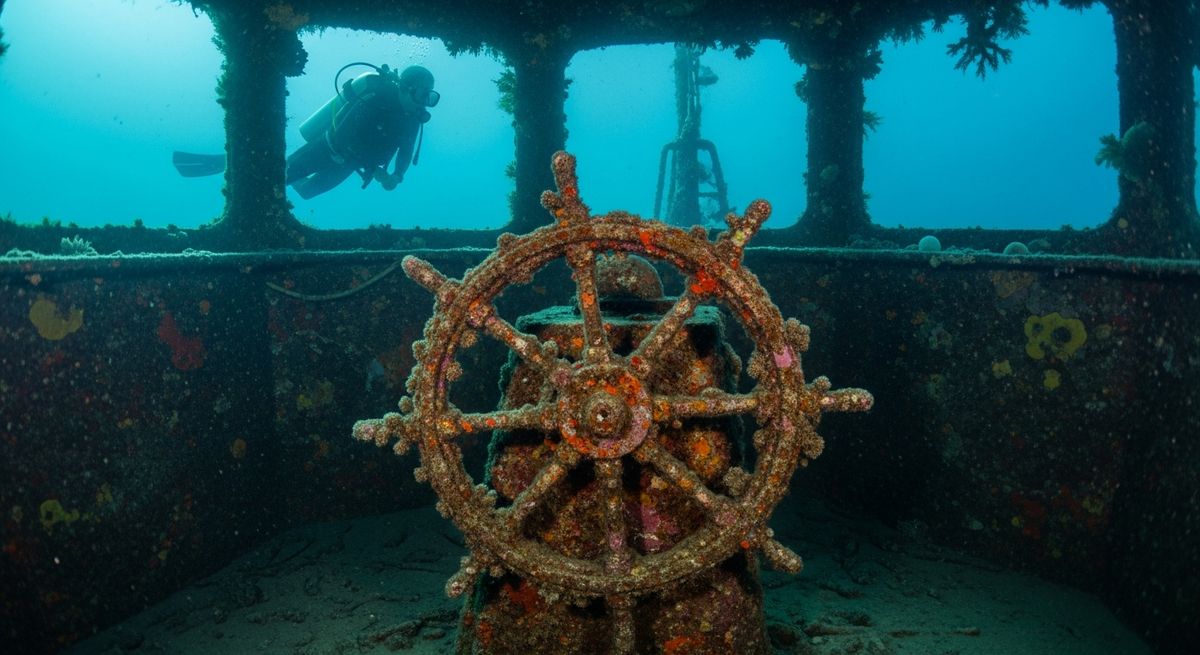
The Bamse (probably) is one of our favourite deep wrecks off the Cornish coast. Dropping down, you’ll feel the chill of the deep, a proper expedition dive, well worth the planning. We love how the wreck sits upright at 48 metres, her bow pointing north. The visibility here can be superb, 15 metres isn't uncommon, and the structure is surprisingly intact for a ship sunk in 1918. You can still make out the forecastle and the stern, and even spot the remains of her compound expansion engine. Schools of pout and bib often swarm the midships, while conger eels peer out from behind plating. We always feel a real sense of history here. This site is for experienced deep divers looking for a challenging but rewarding glimpse into maritime heritage. The Bamse delivers a true wreck dive, showcasing how the ocean reclaims these forgotten vessels.
Typical BAMSE (PROBABLY) Dive Profile
Illustrative profile based on site depth and type. Actual dive profiles vary - always follow your dive computer and training.
Safety Notes
Maximum depth 48m exceeds recreational limits (40m). Technical diving certification and equipment required.
Wreck site - avoid penetration without wreck diving certification. Watch for sharp metal and entanglement hazards.
Always perform a 3-minute safety stop at 5m before surfacing.
BAMSE (PROBABLY) Wreck History
Year Sunk
1918
Vessel Type
cargo ship
Cause
torpedo
The SS Bamse was a veteran of the seas, an iron steamship built in Whitby back in 1875. By the time of World War I, she was an old vessel, sailing under the Norwegian flag for the Fred Olsen line. On April 17, 1918, during the final, intense year of the war, the Bamse was sailing off the coast of Cornwall. Her fate was sealed when she was spotted by the German submarine SM UB-112, a new Type UB III U-boat that had only been commissioned a day earlier. The Bamse became one of UB-112's first victims, sunk by a torpedo.
The story connects two diveable wrecks. The predator, SM UB-112, survived the war only to be surrendered to the Allies at Harwich. She was later used for explosive trials off Falmouth and her remains can still be found on Castle Beach. Her victim, the Bamse, lies in 48 meters of water and is a challenging but rewarding dive for experienced wreck enthusiasts. Exploring this elderly steamship offers a direct connection to the hunter-killer drama that played out beneath the waves of the English Channel over a century ago.
Nearest Dive Centres to BAMSE (PROBABLY)
Dive shops near BAMSE (PROBABLY)
Edge Watersports
Teign Diving Centre
Dive Beyond Limited
Old Harbour Dive Centre
Reviews for BAMSE (PROBABLY)
Conditions
Ocean conditions, forecast and tides for BAMSE (PROBABLY)
BAMSE (PROBABLY) Ocean Conditions
Monthly averages for BAMSE (PROBABLY), sourced from Open-Meteo marine data - nearest station: Open-Meteo marine grid (50.44, -2.73) (3km away)
October Averages
Sea Temperature
17°C
62°F · Range: 15.1–17.5°C
Air Temperature
13°C
56°F
Wind Speed
8.14 m/s
15.8 knots
Atmospheric Pressure
1011 hPa
Based on 4 years of monitoring data · Data sources: Open-Meteo marine data
Plan & book
Ways to dive Cornwall & Devon, from day trips to liveaboards.
Day trips & courses
via GetYourGuideGuided dives, courses and snorkel trips with instant booking.
Find dive trips in Cornwall & DevonPlaces to stay
via Booking.comHotels and dive resorts near Cornwall & Devon.
Search stays in Cornwall & DevonDive insurance
Most travel insurance excludes or limits scuba. Check what you need before you go.
Dive insurance explainedPartner links: we may earn a commission if you book, at no extra cost to you. How we make money
Where to Stay near BAMSE (PROBABLY)
Prices from Booking.com. We may earn a commission at no extra cost to you.