BARCAROLLE
Protected Area
Studland Cliffs
Why dive here
With 176+ marine species recorded in the area - including blue sharks, dolphins, dwarf minke whales, humpback whales and ocean sunfish (mola mola) - BARCAROLLE offers some of Cornwall & Devon's richest wreck diving. Water ranges 10-18°C, warmest July, August, September.
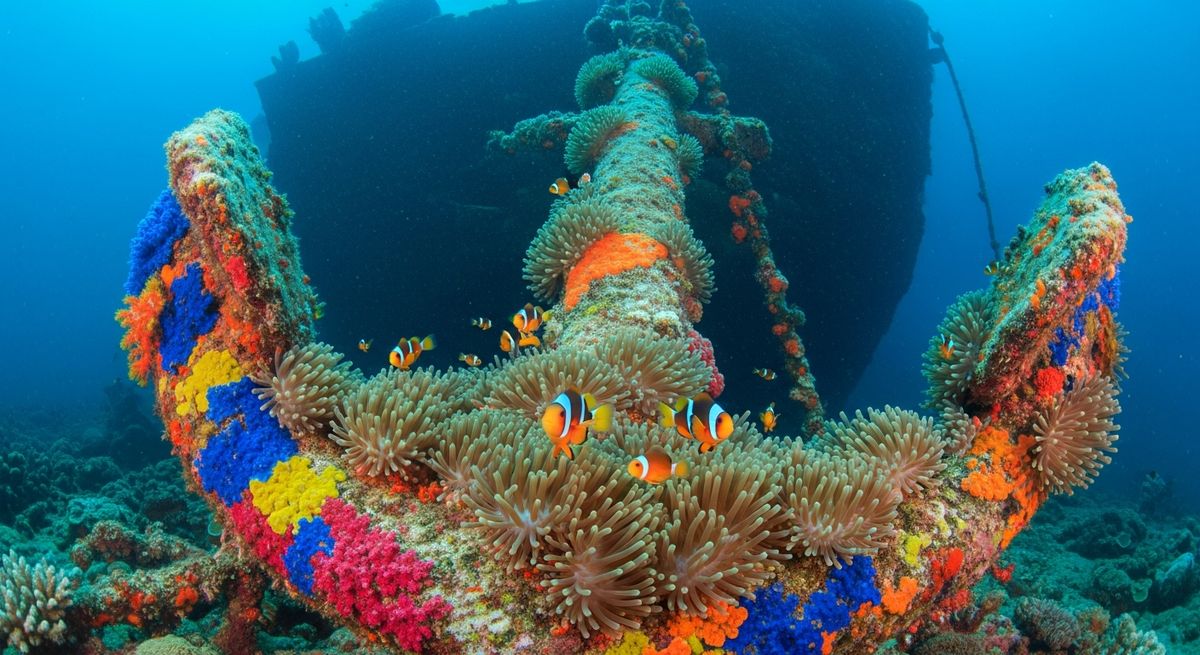
The *Barcarolle* offers a different kind of wreck dive, a relatively modern yacht that went down in 1990. We love how accessible she is at 29 metres, making for a comfortable no-decompression dive. You drop down onto the main deck, often with decent visibility, and the structure is still very much intact, giving you a real sense of her former life as a sailing vessel. What makes *Barcarolle* a standout for us isn't just the wreck itself, but the way marine life has utterly embraced it. The interior is quite open, a perfect haven for shoals of bib and pouting that swirl around you as you peer into the cabins. Our favourite spot is the stern, where the prop is still visible, usually encased in a vibrant growth of plumose anemones, their white tentacles swaying gently in the current. Look closely amongst them for tiny crabs scuttling about. It's a fantastic site for anyone who enjoys exploring a wreck that feels like it’s becoming part of the reef, rather than just a sunken shell.
Typical BARCAROLLE Dive Profile
Illustrative profile based on site depth and type. Actual dive profiles vary - always follow your dive computer and training.
Safety Notes
Depth of 29m - Advanced Open Water certification recommended.
Wreck site - avoid penetration without wreck diving certification. Watch for sharp metal and entanglement hazards.
Always perform a 3-minute safety stop at 5m before surfacing.
BARCAROLLE Wreck History
Year Sunk
1990
Vessel Type
yacht
Cause
collision
The final voyage of the Barcarolle was tragically short. The Eclipse 43 sailing yacht was on a delivery passage from Bursledon to Plymouth on December 1, 1990, when disaster struck. In the dark waters, she hit an unknown submerged object, which holed the hull and caused rapid flooding. The Swanage lifeboat was quick to respond and took the stricken vessel in tow, but the damage was too severe. The Barcarolle slipped beneath the waves before she could be brought to safety.
Now resting at a depth of 29 meters, the Barcarolle offers a fascinating dive on a relatively modern wreck. Unlike older, heavily corroded wrecks, the yacht's form is still very recognizable. Divers can explore the sleek lines of the hull, the cockpit, and the remains of the mast and rigging, which now host an array of marine life. It's a poignant site, serving as a stark reminder of the unforgiving nature of the sea, even for modern vessels. The wreck is a testament to a rescue attempt that tragically ran out of time, leaving a perfectly preserved, if sunken, yacht for divers to explore.
Nearest Dive Centres to BARCAROLLE
Dive shops near BARCAROLLE
Divers Down
Mayim Mermaid Academy
Dorset Diving Services
TAL Scuba Ltd.
Dive Beyond Limited
Old Harbour Dive Centre
Reviews for BARCAROLLE
Conditions
Ocean conditions, forecast and tides for BARCAROLLE
BARCAROLLE Ocean Conditions
Monthly averages for BARCAROLLE, sourced from Open-Meteo marine data - nearest station: Open-Meteo marine grid (50.44, -2.73) (3km away)
October Averages
Sea Temperature
17°C
62°F · Range: 15.1–17.5°C
Air Temperature
13°C
56°F
Wind Speed
8.14 m/s
15.8 knots
Atmospheric Pressure
1011 hPa
Based on 4 years of monitoring data · Data sources: Open-Meteo marine data
Plan & book
Ways to dive Cornwall & Devon, from day trips to liveaboards.
Day trips & courses
via GetYourGuideGuided dives, courses and snorkel trips with instant booking.
Find dive trips in Cornwall & DevonPlaces to stay
via Booking.comHotels and dive resorts near Cornwall & Devon.
Search stays in Cornwall & DevonDive insurance
Most travel insurance excludes or limits scuba. Check what you need before you go.
Dive insurance explainedPartner links: we may earn a commission if you book, at no extra cost to you. How we make money
Where to Stay near BARCAROLLE
Prices from Booking.com. We may earn a commission at no extra cost to you.