BARMSTON
Protected Area
Chesil Beach and Stennis Ledges
Why dive here
With 176+ marine species recorded in the area - including blue sharks, dolphins, dwarf minke whales, humpback whales and ocean sunfish (mola mola) - BARMSTON offers some of Cornwall & Devon's richest wreck diving. Water ranges 10-18°C, warmest July, August, September.
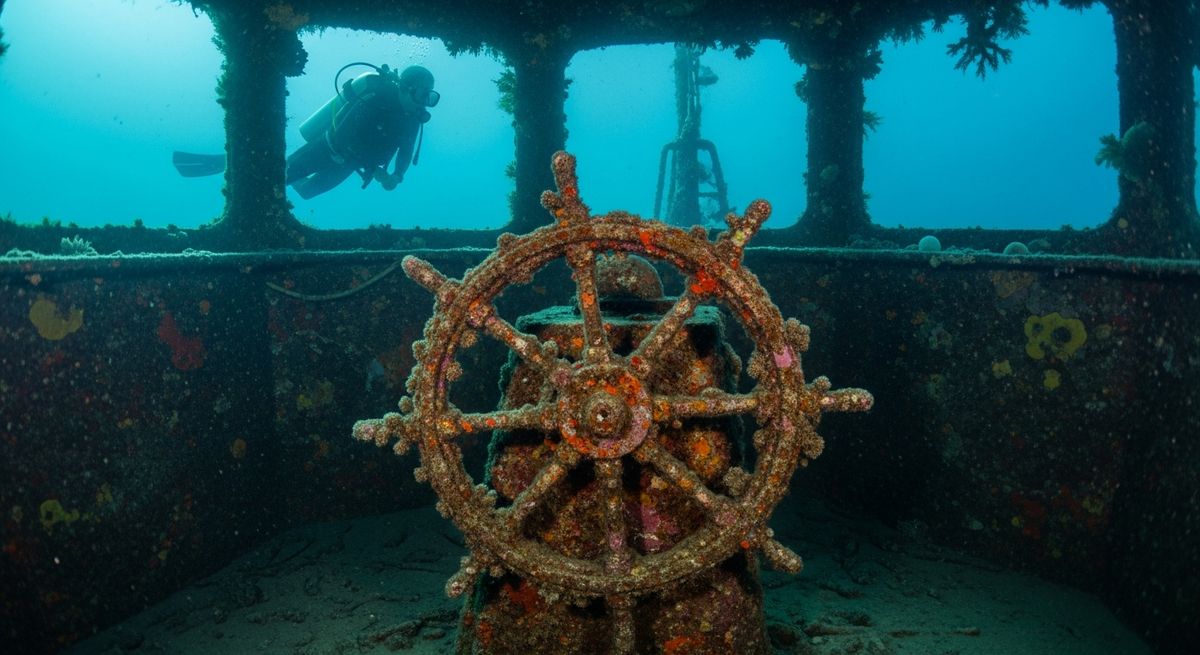
There’s something about a Cornish wreck, isn't there? The Barmston is a firm favourite of ours, not just for its history, but for how it’s settled on the seabed. She was originally the Martha Sayber, built way back in 1888, a steamship that met her end in 1918. You drop onto the main body of the wreck at about 16 metres, and it's quite intact for its age. We love how the two boilers stand proud, like ancient sentinels, and the triple expansion engine is a fantastic focus for exploration. You’ll often find conger eels tucked into the darker recesses of the machinery, and the plates are thick with jewel anemones, a vibrant splash of colour against the dull metal. Dogfish sometimes cruise over the main deck, their shadows gliding across the hull. It’s a site that really suits divers who enjoy a bit of penetration, though we’d always suggest staying within your comfort zone, as some areas can be quite silty. For us, the Barmston offers a tangible link to the past, a truly atmospheric dive, especially when the light filters down through the green Cornish water.
Typical BARMSTON Dive Profile
Illustrative profile based on site depth and type. Actual dive profiles vary - always follow your dive computer and training.
Safety Notes
Wreck site - avoid penetration without wreck diving certification. Watch for sharp metal and entanglement hazards.
Always perform a 3-minute safety stop at 5m before surfacing.
BARMSTON Wreck History
Year Sunk
1918
Vessel Type
cargo ship
Cause
torpedo
The SS Barmston was a veteran steamship with a 30-year career that came to a violent end during the final year of World War I. Built in 1888 in Sunderland, this hardy vessel sailed the seas for decades before finding itself in the crosshairs of Germany's unrestricted submarine warfare campaign. On March 3, 1918, while sailing off the coast of Cornwall, the Barmston was spotted by the German submarine UB-57.
A single torpedo sealed the steamer's fate, sending her to the seabed. She now rests at a depth of 16 meters, making her a fantastic and highly accessible wreck dive for a wide range of skill levels. Divers can explore the remains of this wartime casualty, including her two large boilers and triple-expansion engine. The wreck is a poignant memorial to the merchant sailors who risked everything during the Great War, and it now serves as a bustling artificial reef, teeming with the marine life of the English Channel.
Nearest Dive Centres to BARMSTON
Dive shops near BARMSTON
Dive Beyond Limited
Old Harbour Dive Centre
Divers Down
Dorset Diving Services
Mayim Mermaid Academy
Dive academy
Reviews for BARMSTON
Conditions
Ocean conditions, forecast and tides for BARMSTON
BARMSTON Ocean Conditions
Monthly averages for BARMSTON, sourced from Open-Meteo marine data - nearest station: Open-Meteo marine grid (50.44, -2.73) (3km away)
October Averages
Sea Temperature
17°C
62°F · Range: 15.1–17.5°C
Air Temperature
13°C
56°F
Wind Speed
8.14 m/s
15.8 knots
Atmospheric Pressure
1011 hPa
Based on 4 years of monitoring data · Data sources: Open-Meteo marine data
Plan & book
Ways to dive Cornwall & Devon, from day trips to liveaboards.
Day trips & courses
via GetYourGuideGuided dives, courses and snorkel trips with instant booking.
Find dive trips in Cornwall & DevonPlaces to stay
via Booking.comHotels and dive resorts near Cornwall & Devon.
Search stays in Cornwall & DevonDive insurance
Most travel insurance excludes or limits scuba. Check what you need before you go.
Dive insurance explainedPartner links: we may earn a commission if you book, at no extra cost to you. How we make money
Where to Stay near BARMSTON
Prices from Booking.com. We may earn a commission at no extra cost to you.