BARON GARIOCH
Protected Area
Albert Field
Why dive here
With 176+ marine species recorded in the area - including blue sharks, dolphins, dwarf minke whales, humpback whales and ocean sunfish (mola mola) - BARON GARIOCH offers some of Cornwall & Devon's richest wreck diving. Water ranges 10-18°C, warmest July, August, September.
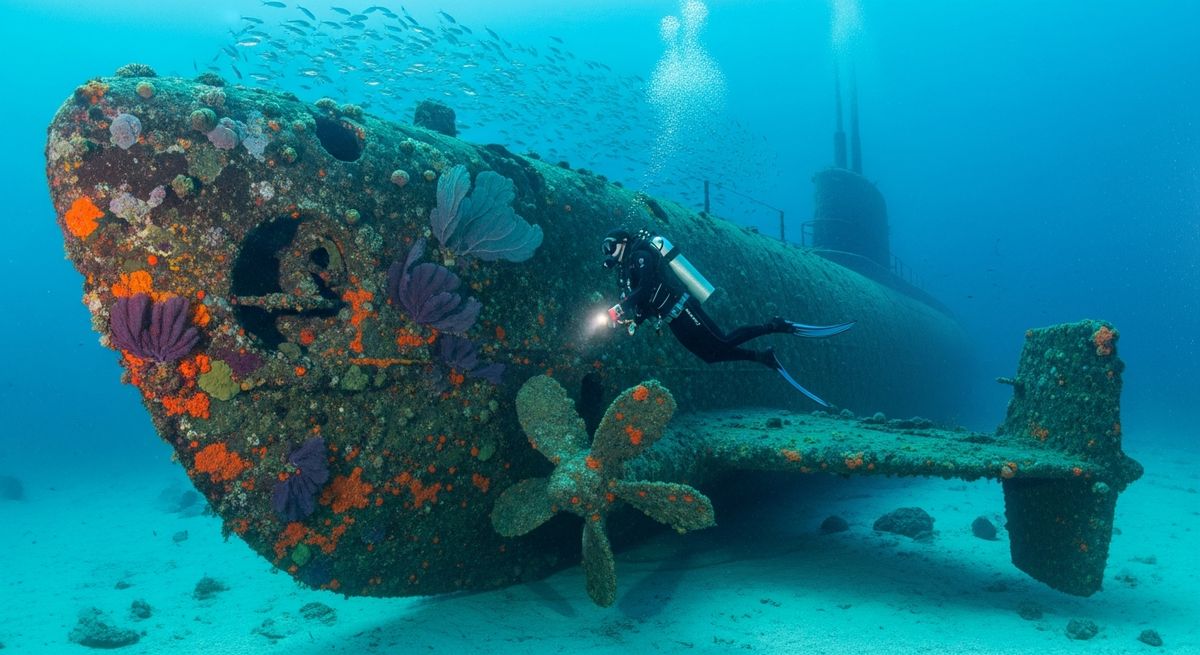
The Baron Garioch sits in around 35 meters, a proper deep dive for those comfortable with the depth and the chill of UK waters. She was a steamship, torpedoed in 1917, and her story adds a real weight to the dive. We love that she's still largely intact, giving you a proper wreck to explore rather than just scattered debris. Dropping down, the bow section is often the first thing you pick out of the gloom, usually swathed in shoals of pouting and bib. Our favourite part has to be the midships, where the triple-expansion engine still stands proud. You can often swim through some of the holds, feeling the cool water press in as you navigate the shadows, always keeping an eye out for conger eels tucked into crevices. The stern tapers away, sometimes revealing a propeller blade encrusted with dead man's fingers. Visibility can vary wildly here, from a glorious 15 metres to a more typical 5 metres, so be prepared for a real UK wreck experience. It’s a dive that rewards careful exploration, suited to advanced divers keen on history and the atmospheric beauty of a century-old steel ghost.
Typical BARON GARIOCH Dive Profile
Illustrative profile based on site depth and type. Actual dive profiles vary - always follow your dive computer and training.
Safety Notes
Deep dive (35m) - monitor air consumption closely. Advanced certification recommended.
Wreck site - avoid penetration without wreck diving certification. Watch for sharp metal and entanglement hazards.
Always perform a 3-minute safety stop at 5m before surfacing.
BARON GARIOCH Wreck History
Year Sunk
1917
Vessel Type
cargo ship
Cause
torpedo
The SS Baron Garioch was a British steamship built in 1895. An aging but still capable vessel, she was powered by a classic triple-expansion engine and served dutifully in the merchant fleet. During World War I, ships like the Baron Garioch were the lifeline of Great Britain, transporting essential goods and materials under the constant threat of attack.
On October 28, 1917, that threat became a reality. While sailing in ballast from Calais to Glasgow, the Baron Garioch was spotted by a German U-boat off the coast of Cornwall. A torpedo struck the vessel, and she sank beneath the waves, a casualty of the unrestricted submarine warfare that defined the conflict at sea. The attack was swift and brutal, tragically resulting in the loss of two crew members.
Resting at a depth of 35 meters, the Baron Garioch is now a fascinating wreck dive. The 80-meter-long vessel is broken but its key features, including the prominent boilers and the impressive triple-expansion engine, remain intact and stand proud of the seabed. Exploring the wreckage provides a poignant reminder of the Great War's toll on civilian shipping and offers a rewarding dive for those interested in history and marine life, with conger eels and lobsters often found amongst the debris.
Nearest Dive Centres to BARON GARIOCH
Dive shops near BARON GARIOCH
Divers Down
Mayim Mermaid Academy
TAL Scuba Ltd.
Dorset Diving Services
Dive Beyond Limited
Old Harbour Dive Centre
Reviews for BARON GARIOCH
Conditions
Ocean conditions, forecast and tides for BARON GARIOCH
BARON GARIOCH Ocean Conditions
Monthly averages for BARON GARIOCH, sourced from Open-Meteo marine data - nearest station: Open-Meteo marine grid (50.44, -2.73) (3km away)
October Averages
Sea Temperature
17°C
62°F · Range: 15.1–17.5°C
Air Temperature
13°C
56°F
Wind Speed
8.14 m/s
15.8 knots
Atmospheric Pressure
1011 hPa
Based on 4 years of monitoring data · Data sources: Open-Meteo marine data
Plan & book
Ways to dive Cornwall & Devon, from day trips to liveaboards.
Day trips & courses
via GetYourGuideGuided dives, courses and snorkel trips with instant booking.
Find dive trips in Cornwall & DevonPlaces to stay
via Booking.comHotels and dive resorts near Cornwall & Devon.
Search stays in Cornwall & DevonDive insurance
Most travel insurance excludes or limits scuba. Check what you need before you go.
Dive insurance explainedPartner links: we may earn a commission if you book, at no extra cost to you. How we make money
Where to Stay near BARON GARIOCH
Prices from Booking.com. We may earn a commission at no extra cost to you.