BEECHTREE
Protected Area
Skerries Bank and Surrounds
Why dive here
With 176+ marine species recorded in the area - including blue sharks, dolphins, dwarf minke whales, humpback whales and ocean sunfish (mola mola) - BEECHTREE offers some of Cornwall & Devon's richest wreck diving. Water ranges 10-18°C, warmest July, August, September.
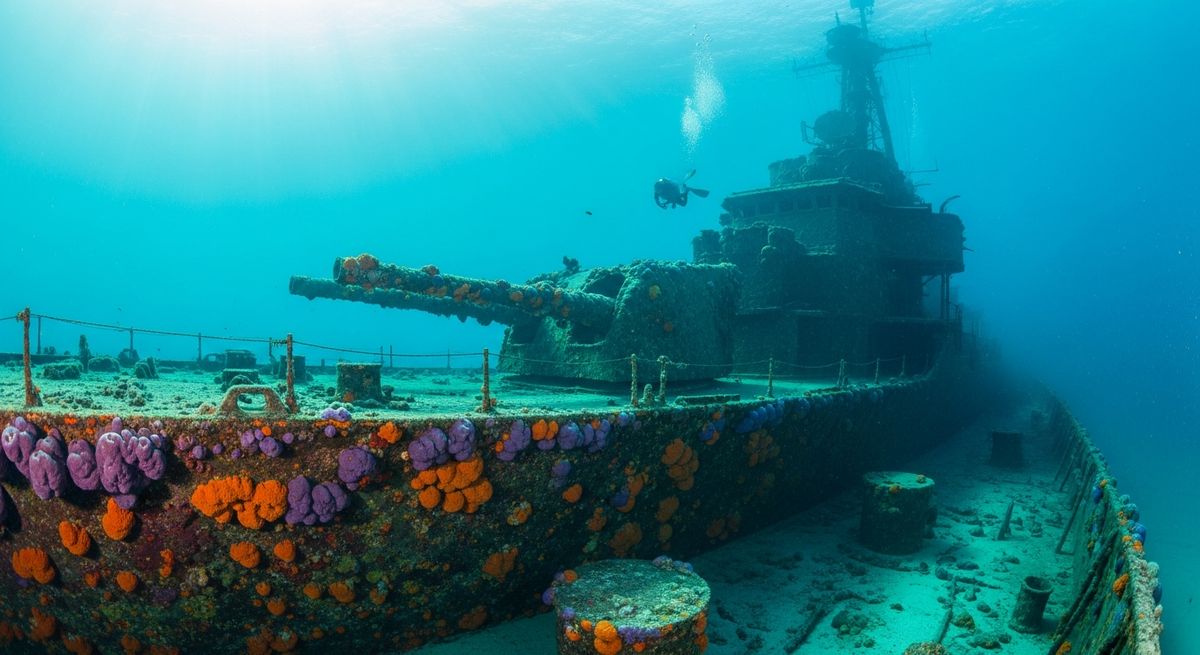
The Beechtree is a proper dive, one we keep coming back to when the conditions are right. This steamship, torpedoed in 1917, sits upright at 60 metres, a deep but rewarding dive for those comfortable with the depth. Dropping down, the bow emerges first, often draped in fishing nets, then the whole structure slowly reveals itself. We love tracing the deck, seeing the mast sections collapsed across the holds, and picturing her final moments. The sheer size of the Beechtree means there's always something new to spot. Look for conger eels peeking from every crack and crevice, and the sheer number of jewel anemones covering the metalwork is something else – a riot of orange and pink. Visibility can be a challenge here, as with many deeper wrecks in the UK, so pick your weather window carefully; we've found that a calm spell after a few days of settled high pressure gives the best chance. It’s a site for experienced wreck divers, definitely not one for your first 60m dive, but for those with the training, it’s a magnificent piece of history waiting to be explored.
Typical BEECHTREE Dive Profile
Illustrative profile based on site depth and type. Actual dive profiles vary - always follow your dive computer and training.
Safety Notes
Maximum depth 60m exceeds recreational limits (40m). Technical diving certification and equipment required.
Wreck site - avoid penetration without wreck diving certification. Watch for sharp metal and entanglement hazards.
Always perform a 3-minute safety stop at 5m before surfacing.
BEECHTREE Wreck History
Year Sunk
1917
Vessel Type
cargo ship
Cause
torpedo
Tonnage
1,227 GRT
The SS Beechtree was a relatively new vessel when she met her fate during the height of the First World War. Built in 1912 in Hoboken, Belgium, by the Antwerp Engineering Co., she was a modern steamship designed for the rigours of European trade. At just five years old, she was a valuable asset in the Allied war effort, transporting essential cargo across the heavily contested waters of the English Channel.
On February 10, 1917, the Beechtree was on a voyage from Swansea to Rouen, France, laden with a cargo of coal. As she steamed approximately 11 miles southeast of Start Point, she was spotted by the German minelaying submarine UC-21. A single torpedo struck the Beechtree, sealing her doom. The ship sank quickly, becoming another casualty of Germany's unrestricted submarine warfare campaign.
Lying at a depth of 60 meters, the Beechtree is a challenging and rewarding dive reserved for experienced technical and rebreather divers. The wreck sits upright on the seabed and is remarkably intact for a vessel of its age. Divers can explore the bows, the holds, and the stern section, all of which are covered in a vibrant carpet of jewel anemones and dead man's fingers. The depth and clear waters often attract large pollack and conger eels, making it a spectacular, albeit deep, window into maritime history.
Reviews for BEECHTREE
Conditions
Ocean conditions, forecast and tides for BEECHTREE
BEECHTREE Ocean Conditions
Monthly averages for BEECHTREE, sourced from Open-Meteo marine data - nearest station: Open-Meteo marine grid (50.44, -2.73) (3km away)
October Averages
Sea Temperature
17°C
62°F · Range: 15.1–17.5°C
Air Temperature
13°C
56°F
Wind Speed
8.14 m/s
15.8 knots
Atmospheric Pressure
1011 hPa
Based on 4 years of monitoring data · Data sources: Open-Meteo marine data
Plan & book
Ways to dive Cornwall & Devon, from day trips to liveaboards.
Day trips & courses
via GetYourGuideGuided dives, courses and snorkel trips with instant booking.
Find dive trips in Cornwall & DevonPlaces to stay
via Booking.comHotels and dive resorts near Cornwall & Devon.
Search stays in Cornwall & DevonDive insurance
Most travel insurance excludes or limits scuba. Check what you need before you go.
Dive insurance explainedPartner links: we may earn a commission if you book, at no extra cost to you. How we make money
Where to Stay near BEECHTREE
Prices from Booking.com. We may earn a commission at no extra cost to you.