BELMONT
Protected Area
Trebetherick Point
Why dive here
With 176+ marine species recorded in the area - including blue sharks, dolphins, dwarf minke whales, humpback whales and ocean sunfish (mola mola) - BELMONT offers some of Cornwall & Devon's richest wreck diving. Water ranges 10-18°C, warmest July, August, September.
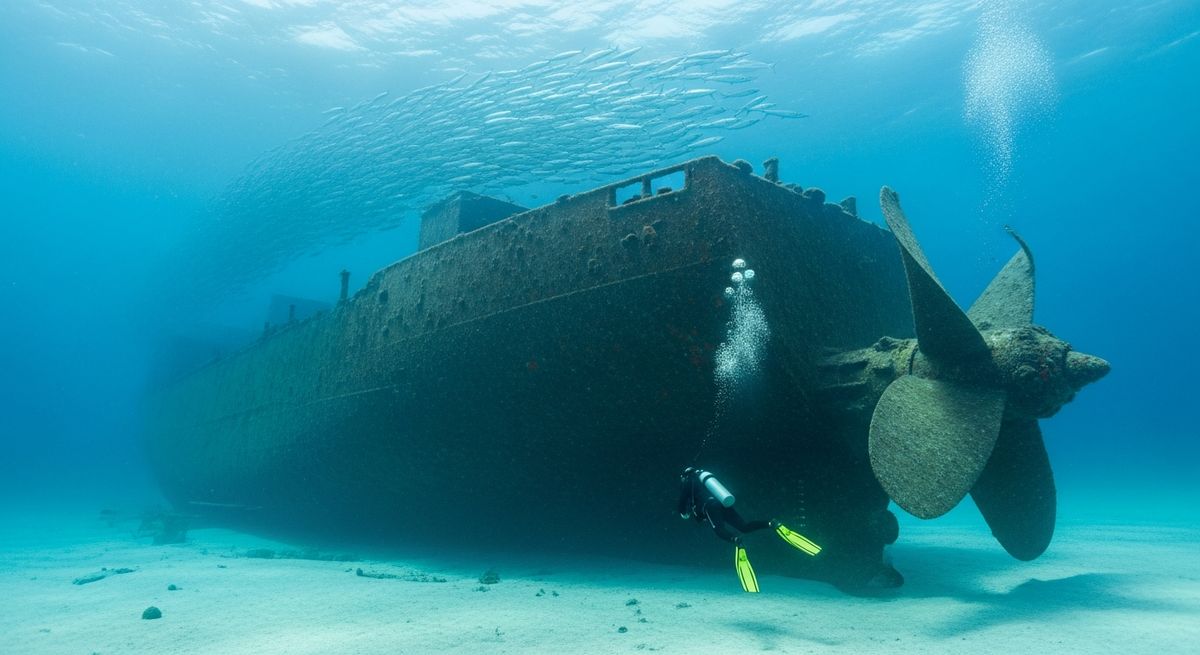
The Belmont is one of those wrecks that just keeps giving, especially when the conditions line up. We always aim for a slack tide on a neap, because the currents in the mouth of Padstow Harbour can be a real express train. Dropping down, you hit the bow first, often surrounded by a swirling cloud of bait fish – sand eels usually, or sprats, shimmering like quicksilver. The hull structure is still quite substantial, particularly forward, and you can spend a good chunk of a dive poking around the holds. What we really love about the Belmont is how she’s settled into the seabed. There are gaps and crevices everywhere, perfect hideouts for conger eels, and we’ve seen some absolute monsters lurking in the deeper parts of the wreck. Lobsters are plentiful too, their antennae waving from beneath overturned plates of steel. Look out for the resident wrasse population, particularly corkwing wrasse, zipping between the encrusting anemones. It's a proper British wreck dive, moody and full of life, a brilliant explore for anyone comfortable with a bit of current and a low viz day.
Safety Notes
Wreck site - avoid penetration without wreck diving certification. Watch for sharp metal and entanglement hazards.
BELMONT Wreck History
Year Sunk
1920
Vessel Type
cargo ship
Cause
grounding
Tonnage
93 GRT
The Belmont was a 93-ton coastal schooner, a workhorse of the seas built in 1895. These sailing vessels were the lifeblood of trade around the British Isles. On April 26, 1920, the Belmont was nearing the end of her passage from Runcorn to Treport, France. As she attempted to navigate the notoriously tricky entrance to Padstow Harbour in Cornwall, she misjudged the channel and struck a rock. The damage was fatal, and the small schooner quickly sank.
With a listed depth of 0 metres, the Belmont is an intertidal wreck, meaning its remains are often exposed at low tide. After more than a century of being pounded by the surf, very little of the original vessel remains intact. Divers and snorkelers exploring the site will find scattered timbers, iron fittings, and other remnants of the wooden hull embedded in the seabed. It is less of a classic wreck dive and more of a historical exploration, a tangible connection to the final days of commercial sail and the unforgiving nature of the Cornish coast.
Nearest Dive Centres to BELMONT
Dive shops near BELMONT
Harlyn Dive School
Dive Newquay
Scuba 2000
Wavecrest Scuba
Viewpoint Diving Centre
Karleyth Diving Ltd.
Reviews for BELMONT
Conditions
Ocean conditions, forecast and tides for BELMONT
BELMONT Ocean Conditions
Monthly averages for BELMONT, sourced from Open-Meteo marine data - nearest station: Open-Meteo marine grid (50.44, -2.73) (3km away)
October Averages
Sea Temperature
17°C
62°F · Range: 15.1–17.5°C
Air Temperature
13°C
56°F
Wind Speed
8.14 m/s
15.8 knots
Atmospheric Pressure
1011 hPa
Based on 4 years of monitoring data · Data sources: Open-Meteo marine data
Plan & book
Ways to dive Cornwall & Devon, from day trips to liveaboards.
Day trips & courses
via GetYourGuideGuided dives, courses and snorkel trips with instant booking.
Find dive trips in Cornwall & DevonPlaces to stay
via Booking.comHotels and dive resorts near Cornwall & Devon.
Search stays in Cornwall & DevonDive insurance
Most travel insurance excludes or limits scuba. Check what you need before you go.
Dive insurance explainedPartner links: we may earn a commission if you book, at no extra cost to you. How we make money
Where to Stay near BELMONT
Prices from Booking.com. We may earn a commission at no extra cost to you.