BEN BLANCHE
Protected Area
Gower
Why dive here
With 176+ marine species recorded in the area - including blue sharks, dolphins, dwarf minke whales, humpback whales and ocean sunfish (mola mola) - BEN BLANCHE offers some of Cornwall & Devon's richest wreck diving. Water ranges 10-18°C, warmest July, August, September.
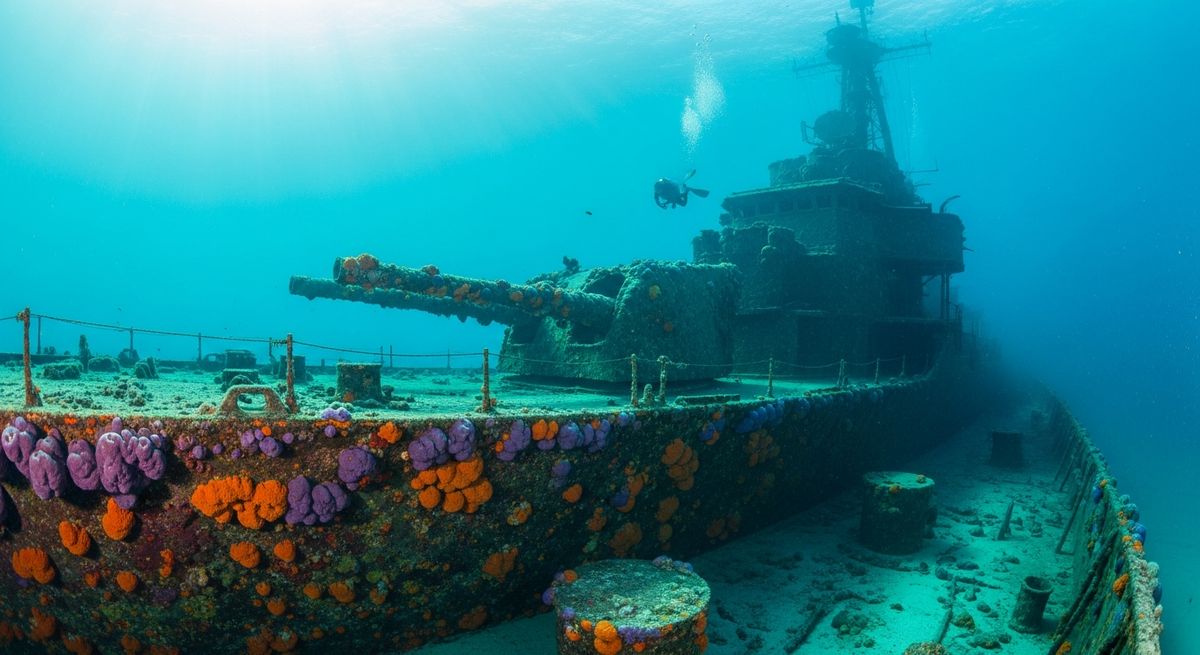
We’ve always had a soft spot for the Ben Blanche, a little iron steamship that went down in 1931. It’s a shallow dive, maxing out at three metres, which makes it perfect for a relaxed second dive or when the weather's a bit choppy further out. What we love here is how the wreck, despite its age, still holds its shape surprisingly well. You can trace the lines of the hull, parts of the superstructure, and even the single boiler. Our favourite time to visit is on a slack tide, with a bit of sunshine filtering down; the light plays beautifully on the rust-coloured metal. Schools of juvenile pollack often use the wreck for shelter, darting in and out of the crevices. We’ve also spotted plenty of dogfish nestled amongst the plates, and the anemones here are particularly vibrant, speckling the ironwork with colour. It’s a gentle exploration, a real step back in time, and just a genuinely peaceful place to spend an hour underwater. This spot is definitely one for those who appreciate history and don't need roaring currents or deep drops to enjoy a dive.
Typical BEN BLANCHE Dive Profile
Illustrative profile based on site depth and type. Actual dive profiles vary - always follow your dive computer and training.
Safety Notes
Wreck site - avoid penetration without wreck diving certification. Watch for sharp metal and entanglement hazards.
BEN BLANCHE Wreck History
Year Sunk
1933
Vessel Type
cargo ship
Cause
grounding
The SS Ben Blanche began her life in 1891 as the Sarah Blanche, an iron-hulled steamship built by J. Fullerton & Co. For over 40 years, this modest vessel, powered by a 55-horsepower compound steam engine, reliably transported goods around the British Isles. Her story is one of routine maritime commerce, a stark contrast to the dramatic end she would meet off the rugged Cornish coast.
In December 1933, the Ben Blanche was caught in a severe gale. Battered by fierce winds and massive waves, she was driven ashore and wrecked. Today, her remains lie scattered in just 3 meters of water, making her one of the most accessible wrecks in the region. This shallow depth means the site can be explored by novice divers, freedivers, and even snorkelers on a calm day. Over the decades, the sea has flattened much of her structure, but divers can still identify her boiler, engine components, and sections of iron hull plating, all now colonized by kelp and home to a variety of coastal marine life.
Nearest Dive Centres to BEN BLANCHE
Dive shops near BEN BLANCHE
Easy Divers
Divexplore
Celtic Deep
Reviews for BEN BLANCHE
Conditions
Ocean conditions, forecast and tides for BEN BLANCHE
BEN BLANCHE Ocean Conditions
Monthly averages for BEN BLANCHE, sourced from Open-Meteo marine data - nearest station: Open-Meteo marine grid (50.44, -2.73) (3km away)
October Averages
Sea Temperature
17°C
62°F · Range: 15.1–17.5°C
Air Temperature
13°C
56°F
Wind Speed
8.14 m/s
15.8 knots
Atmospheric Pressure
1011 hPa
Based on 4 years of monitoring data · Data sources: Open-Meteo marine data
Plan & book
Ways to dive Cornwall & Devon, from day trips to liveaboards.
Day trips & courses
via GetYourGuideGuided dives, courses and snorkel trips with instant booking.
Find dive trips in Cornwall & DevonPlaces to stay
via Booking.comHotels and dive resorts near Cornwall & Devon.
Search stays in Cornwall & DevonDive insurance
Most travel insurance excludes or limits scuba. Check what you need before you go.
Dive insurance explainedPartner links: we may earn a commission if you book, at no extra cost to you. How we make money
Where to Stay near BEN BLANCHE
Prices from Booking.com. We may earn a commission at no extra cost to you.