BEN REIN
Protected Area
Carricknath Point to Porthbean Beach
Why dive here
With 176+ marine species recorded in the area - including blue sharks, dolphins, dwarf minke whales, humpback whales and ocean sunfish (mola mola) - BEN REIN offers some of Cornwall & Devon's richest wreck diving. Water ranges 10-18°C, warmest July, August, September.
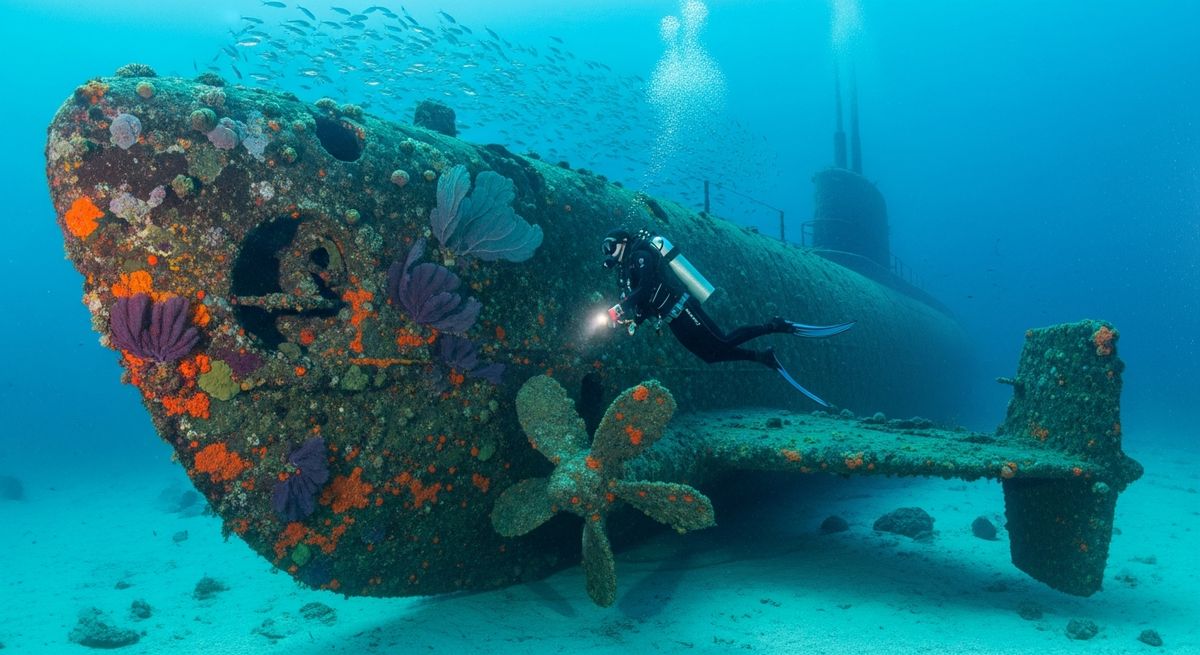
The Ben Rein, for us, is a proper wreck dive, the kind that whispers stories as you descend. Lying at 59 metres, this steamship went down after hitting a mine in 1941. We love that raw piece of history. The wreck itself is compact, just 32 metres long, making it feel intimate rather than overwhelming. It’s the details that get us: the single boiler is still prominent, often shrouded in a cloud of jewel anemones, their tiny tentacles a riot of orange and pink against the aged metal. Look closely and you’ll spot dogfish tucked into crevices and ling snaking through the remains of the holds. Visibility can be a challenge, as with many UK wrecks, so pick a calm day with neap tides if you can. It’s certainly a site for experienced cold-water divers, but the reward is a tangible connection to wartime history and a vibrant artificial reef.
Typical BEN REIN Dive Profile
Illustrative profile based on site depth and type. Actual dive profiles vary - always follow your dive computer and training.
Safety Notes
Maximum depth 59m exceeds recreational limits (40m). Technical diving certification and equipment required.
Wreck site - avoid penetration without wreck diving certification. Watch for sharp metal and entanglement hazards.
Always perform a 3-minute safety stop at 5m before surfacing.
BEN REIN Wreck History
Year Sunk
1941
Vessel Type
steamship
Cause
mine
Tonnage
245 GRT
Built in 1905 by J. Fullerton & Co in Paisley, the SS Ben Rein was a 245-ton coastal steamship that served for decades before the outbreak of the Second World War. Powered by a 27-horsepower compound expansion engine, she was a small but sturdy vessel, transporting cargo around the British Isles. In February 1941, with the Battle of the Atlantic raging, she was undertaking a short coastal passage from Plymouth to Falmouth, a route fraught with danger from German U-boats, aircraft, and naval mines.
On the 17th of February 1941, her luck ran out. While steaming off the Cornish coast, the Ben Rein struck a German-laid mine and sank quickly. The sudden and violent nature of her loss left little time for her crew to escape. She joined the countless other merchant vessels on the seabed that form the 'ghost fleet' of WWII.
Resting at a depth of 59 metres, the Ben Rein is a challenging technical dive reserved for experienced, suitably qualified divers. The depth requires careful planning, mixed gases, and decompression stops. Those who make the descent are rewarded with the sight of a largely intact early 20th-century steamship. Divers can explore the ship's boiler and engine, identify features on the deck, and observe the deep-water marine life that now encrusts the wreck. It is a sombre and rewarding dive that serves as a tangible link to the perils of wartime maritime trade.
Nearest Dive Centres to BEN REIN
Dive shops near BEN REIN
Porthkerris Divers
DiveUK
Seaways Diving
Karleyth Diving Ltd.
Viewpoint Diving Centre
Wavecrest Scuba
Reviews for BEN REIN
Conditions
Ocean conditions, forecast and tides for BEN REIN
BEN REIN Ocean Conditions
Monthly averages for BEN REIN, sourced from Open-Meteo marine data - nearest station: Open-Meteo marine grid (50.44, -2.73) (3km away)
October Averages
Sea Temperature
17°C
62°F · Range: 15.1–17.5°C
Air Temperature
13°C
56°F
Wind Speed
8.14 m/s
15.8 knots
Atmospheric Pressure
1011 hPa
Based on 4 years of monitoring data · Data sources: Open-Meteo marine data
Plan & book
Ways to dive Cornwall & Devon, from day trips to liveaboards.
Day trips & courses
via GetYourGuideGuided dives, courses and snorkel trips with instant booking.
Find dive trips in Cornwall & DevonPlaces to stay
via Booking.comHotels and dive resorts near Cornwall & Devon.
Search stays in Cornwall & DevonDive insurance
Most travel insurance excludes or limits scuba. Check what you need before you go.
Dive insurance explainedPartner links: we may earn a commission if you book, at no extra cost to you. How we make money
Where to Stay near BEN REIN
Prices from Booking.com. We may earn a commission at no extra cost to you.