BESSIE STEPHENS
Protected Area
Lundy
Why dive here
With 176+ marine species recorded in the area - including blue sharks, dolphins, dwarf minke whales, humpback whales and ocean sunfish (mola mola) - BESSIE STEPHENS offers some of Cornwall & Devon's richest wreck diving. Water ranges 10-18°C, warmest July, August, September.
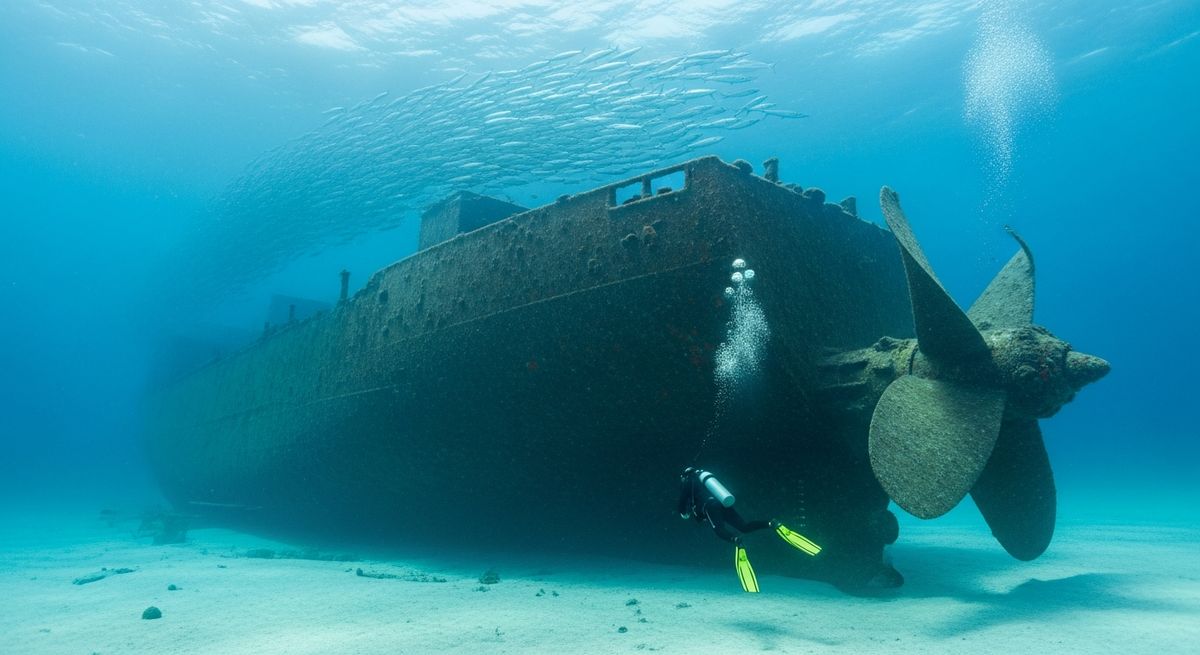
The Bessie Stephens is, in our opinion, one of the more evocative wrecks off the Cornish coast. She was a sailing vessel, sunk by a U-boat in 1918, and that wartime history just hangs in the water around her. You’re looking at a deep dive here, 59 metres, so definitely one for experienced technical divers. We’d suggest a trimix setup to give you comfortable bottom time. She sits upright, largely intact, with her masts still reaching skyward, though obviously collapsed and draped in fishing nets these days. Descending onto her deck, you’ll often find conger eels peering from every dark recess, and big schools of pollack swirl around the rigging, dimming the already limited light. The wooden hull itself is covered in dead man’s fingers and anemones, a tapestry of white and orange against the gloom. Our favourite part has to be the stern, where you can still make out the graceful curve of her counter, a stark reminder of her sailing days before the torpedo hit. Visibility can be a challenge, so pick your day carefully, ideally with slack tide for the best conditions. When it’s good, though, she’s absolutely captivating.
Typical BESSIE STEPHENS Dive Profile
Illustrative profile based on site depth and type. Actual dive profiles vary - always follow your dive computer and training.
Safety Notes
Maximum depth 59m exceeds recreational limits (40m). Technical diving certification and equipment required.
Wreck site - avoid penetration without wreck diving certification. Watch for sharp metal and entanglement hazards.
Always perform a 3-minute safety stop at 5m before surfacing.
BESSIE STEPHENS Wreck History
Year Sunk
1918
Vessel Type
sailing vessel
Cause
torpedo
The Bessie Stephens met her end during the final, brutal year of World War I. By February 1918, Germany's campaign of unrestricted submarine warfare was at its peak, and the waters around the British Isles were among the most dangerous in the world. As a sailing vessel, the Bessie Stephens would have been a slow-moving and vulnerable target for the U-boats that stalked the shipping lanes off the coast of Cornwall.
On February 14, 1918, her luck ran out. She was intercepted by a German submarine, captured, and then sunk by explosive charges or gunfire. This was a common tactic used against smaller merchant vessels to conserve precious torpedoes. The crew were likely taken prisoner or set adrift in a lifeboat as their ship slipped beneath the waves, becoming another casualty in the relentless war at sea.
Today, the Bessie Stephens rests in 59 meters of water, placing her firmly in the realm of technical diving. At this depth, she is protected from the worst of the storm surge, and is likely a well-preserved time capsule from the Great War. For suitably qualified and equipped divers, the wreck offers a poignant dive into history, a chance to explore the silent remains of a vessel that was a victim of a global conflict far from the trenches of France.
Reviews for BESSIE STEPHENS
Conditions
Ocean conditions, forecast and tides for BESSIE STEPHENS
BESSIE STEPHENS Ocean Conditions
Monthly averages for BESSIE STEPHENS, sourced from Open-Meteo marine data - nearest station: Open-Meteo marine grid (50.44, -2.73) (3km away)
October Averages
Sea Temperature
17°C
62°F · Range: 15.1–17.5°C
Air Temperature
13°C
56°F
Wind Speed
8.14 m/s
15.8 knots
Atmospheric Pressure
1011 hPa
Based on 4 years of monitoring data · Data sources: Open-Meteo marine data
Plan & book
Ways to dive Cornwall & Devon, from day trips to liveaboards.
Day trips & courses
via GetYourGuideGuided dives, courses and snorkel trips with instant booking.
Find dive trips in Cornwall & DevonPlaces to stay
via Booking.comHotels and dive resorts near Cornwall & Devon.
Search stays in Cornwall & DevonDive insurance
Most travel insurance excludes or limits scuba. Check what you need before you go.
Dive insurance explainedPartner links: we may earn a commission if you book, at no extra cost to you. How we make money
Where to Stay near BESSIE STEPHENS
Prices from Booking.com. We may earn a commission at no extra cost to you.