BEYECHARELLE
Protected Area
Blackpill, Swansea
Why dive here
With 176+ marine species recorded in the area - including blue sharks, dolphins, dwarf minke whales, humpback whales and ocean sunfish (mola mola) - BEYECHARELLE offers some of Cornwall & Devon's richest wreck diving. Water ranges 10-18°C, warmest July, August, September.
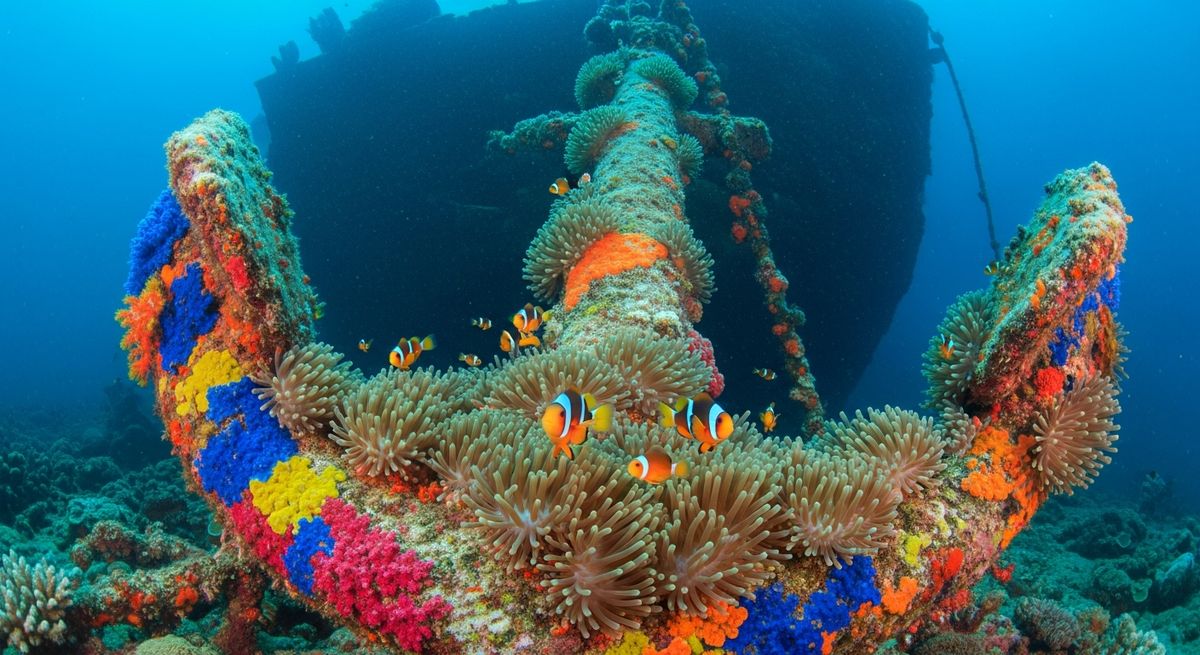
Okay, so "Beyecharelle" is a bit of a local legend, a yacht that went down off the coast in 1980. We love how accessible it is, sitting practically on the surface. You're looking at a maximum depth of just one metre, which means it’s more of a snorkel or free-dive than a typical scuba excursion, but don't let that fool you into thinking it's boring. Even in shallow water, a wreck has a story. What makes Beyecharelle special is the light. Sunlight streams through the water, illuminating the yacht's skeleton. You can trace the outline of the hull, now draped in green and brown algae, a stark contrast to the shifting sand around it. This is a brilliant spot for macro enthusiasts or underwater photographers keen on capturing the interplay of natural light and shadow on a slowly disintegrating vessel. We’d suggest heading out on a calm day, perhaps an hour or two either side of high tide, when the water clarity tends to be at its best. Keep an eye out for small crabs scuttling amongst the bits of twisted metal and tiny blennies peering from crevices. It’s a gentle introduction to wreck exploration, perfect for families or anyone wanting to see history without the need for heavy gear.
Typical BEYECHARELLE Dive Profile
Illustrative profile based on site depth and type. Actual dive profiles vary - always follow your dive computer and training.
Safety Notes
Wreck site - avoid penetration without wreck diving certification. Watch for sharp metal and entanglement hazards.
BEYECHARELLE Wreck History
Year Sunk
1980
Vessel Type
yacht
Cause
storm
Resting in just a single meter of water, the wreck of the yacht Beyecharelle is a testament to the power of the sea. The vessel capsized and sank on July 11, 1980, likely caught in treacherous conditions too close to shore. Its extreme shallow depth means it is more of an attraction for snorkelers or kayakers at high tide, or can even be explored on foot during very low tides.
The constant action of the surf zone has heavily battered the wreck, and its remains are likely scattered and well-weathered. Its 'Dangerous wreck' classification is an important warning, as the turbulent water and broken structure can pose significant hazards. For the prepared explorer, the Beyecharelle offers a unique and dramatic look at a vessel's final resting place at the very boundary of land and sea.
Nearest Dive Centres to BEYECHARELLE
Dive shops near BEYECHARELLE
View all dive centres in Cornwall & DevonReviews for BEYECHARELLE
Conditions
Ocean conditions, forecast and tides for BEYECHARELLE
BEYECHARELLE Ocean Conditions
Monthly averages for BEYECHARELLE, sourced from Open-Meteo marine data - nearest station: Open-Meteo marine grid (50.44, -2.73) (3km away)
October Averages
Sea Temperature
17°C
62°F · Range: 15.1–17.5°C
Air Temperature
13°C
56°F
Wind Speed
8.14 m/s
15.8 knots
Atmospheric Pressure
1011 hPa
Based on 4 years of monitoring data · Data sources: Open-Meteo marine data
Plan & book
Ways to dive Cornwall & Devon, from day trips to liveaboards.
Day trips & courses
via GetYourGuideGuided dives, courses and snorkel trips with instant booking.
Find dive trips in Cornwall & DevonPlaces to stay
via Booking.comHotels and dive resorts near Cornwall & Devon.
Search stays in Cornwall & DevonDive insurance
Most travel insurance excludes or limits scuba. Check what you need before you go.
Dive insurance explainedPartner links: we may earn a commission if you book, at no extra cost to you. How we make money
Where to Stay near BEYECHARELLE
Prices from Booking.com. We may earn a commission at no extra cost to you.