BIZON (POSSIBLY)
Protected Area
Gouliot Caves and Headland, Sark
Why dive here
With 176+ marine species recorded in the area - including blue sharks, dolphins, dwarf minke whales, humpback whales and ocean sunfish (mola mola) - BIZON (POSSIBLY) offers some of Cornwall & Devon's richest wreck diving. Water ranges 10-18°C, warmest July, August, September.
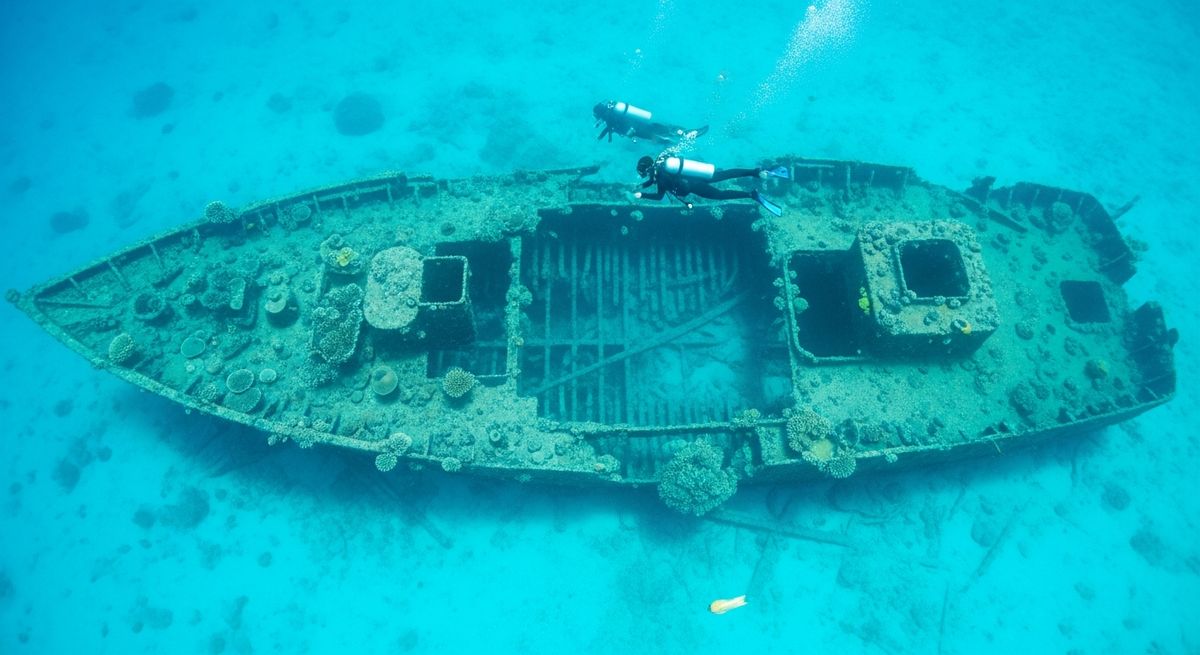
The Bizon (Possibly) is a proper deep dive, sitting at 46 metres, making it one for experienced wreck heads with the right training. She was part of a German convoy in 1944, sunk by British MTBs – that history adds a real edge to the dive. We love the way the Bizon rests, mostly intact considering her age and wartime end. What you find down there is a classic steel wreck, draped in the usual Southwest favourites: plumose anemones, dead man's fingers, and plenty of jewel anemones adding splashes of colour. You’ll often spot conger eels poking out from crevices, and big wrasse patrol the decks. We’d suggest a good torch, as the light penetration at this depth can be limited, even on a sunny day. The currents here can be tricky, so picking your slack water window is crucial for an enjoyable dive. This isn't a beginner's wreck, but for those with the skills, it's a fantastic piece of history and a vibrant artificial reef.
Typical BIZON (POSSIBLY) Dive Profile
Illustrative profile based on site depth and type. Actual dive profiles vary - always follow your dive computer and training.
Safety Notes
Maximum depth 46m exceeds recreational limits (40m). Technical diving certification and equipment required.
Wreck site - avoid penetration without wreck diving certification. Watch for sharp metal and entanglement hazards.
Always perform a 3-minute safety stop at 5m before surfacing.
BIZON (POSSIBLY) Wreck History
Year Sunk
1944
Vessel Type
cargo ship
Cause
military action
The Bizon was a German steamship pressed into service during the Second World War. On May 8th, 1944, just a month before the D-Day landings, she was part of a convoy steaming towards St. Peter Port in the occupied Channel Islands. The English Channel was a lethal hunting ground, and the convoy was intercepted by a squadron of four aggressive British Motor Torpedo Boats (MTBs). In the ensuing nighttime battle, the Bizon was hit and sank, taking her wartime cargo to the seabed.
Resting at a depth of 46 metres, the wreck tentatively identified as the Bizon is a challenging but rewarding dive for experienced, tech-certified divers. The vessel's 58-metre-long hull lies in the often-turbulent waters off the English coast, a region notorious for its strong currents and variable visibility. Divers exploring the site can trace the outlines of a wartime steamship, now heavily colonized by marine life. The uncertain identity adds a layer of mystery, inviting visiting divers to look for clues that might finally confirm if this is indeed the final resting place of the Bizon.
Nearest Dive Centres to BIZON (POSSIBLY)
Dive shops near BIZON (POSSIBLY)
View all dive centres in Cornwall & DevonReviews for BIZON (POSSIBLY)
Conditions
Ocean conditions, forecast and tides for BIZON (POSSIBLY)
BIZON (POSSIBLY) Ocean Conditions
Monthly averages for BIZON (POSSIBLY), sourced from Open-Meteo marine data - nearest station: Open-Meteo marine grid (50.44, -2.73) (3km away)
October Averages
Sea Temperature
17°C
62°F · Range: 15.1–17.5°C
Air Temperature
13°C
56°F
Wind Speed
8.14 m/s
15.8 knots
Atmospheric Pressure
1011 hPa
Based on 4 years of monitoring data · Data sources: Open-Meteo marine data
Plan & book
Ways to dive Cornwall & Devon, from day trips to liveaboards.
Day trips & courses
via GetYourGuideGuided dives, courses and snorkel trips with instant booking.
Find dive trips in Cornwall & DevonPlaces to stay
via Booking.comHotels and dive resorts near Cornwall & Devon.
Search stays in Cornwall & DevonDive insurance
Most travel insurance excludes or limits scuba. Check what you need before you go.
Dive insurance explainedPartner links: we may earn a commission if you book, at no extra cost to you. How we make money
Where to Stay near BIZON (POSSIBLY)
Prices from Booking.com. We may earn a commission at no extra cost to you.