BIZON (PROBABLY)
Protected Area
Gouliot Caves and Headland, Sark
Why dive here
With 176+ marine species recorded in the area - including blue sharks, dolphins, dwarf minke whales, humpback whales and ocean sunfish (mola mola) - BIZON (PROBABLY) offers some of Cornwall & Devon's richest wreck diving. Water ranges 10-18°C, warmest July, August, September.
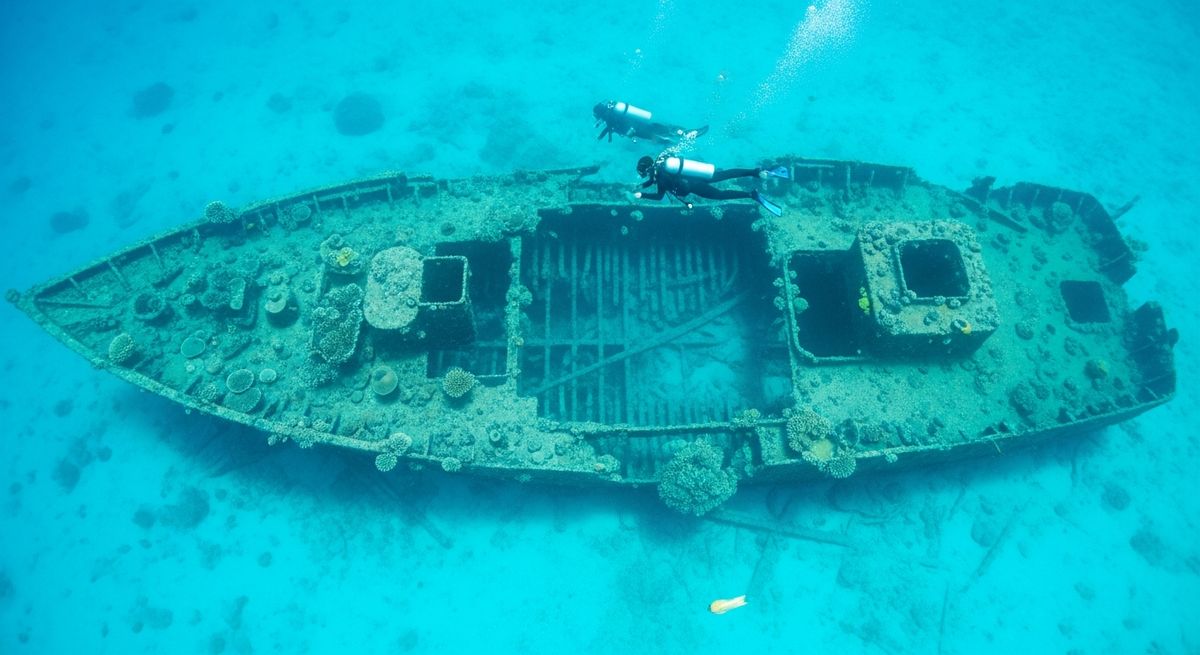
The Bizon, or what we’re fairly sure is the Bizon, is a proper dive for those who love a bit of history and a decent depth. Lying at 50 metres, it's not a shallow potter, but the rewards are there if you're comfortable with the depth and a bit of chill in the water. She was a steamship, sunk in 1944 during a British MTB attack, and you can really feel that wartime story when you're down there. We love dropping onto the stern and working our way forward. The visibility here can be surprisingly good on the right day, letting you pick out the deck structures and the general shape of the 57-metre hull. Our favourite part is probably the midships, where the steam engine used to be. It's collapsed now, but it's a fantastic haven for conger eels, and you'll often find them peering out from every nook and cranny. The wreck itself has become a hard-working artificial reef. Expect to see plump wrasse patrolling the decks, a good smattering of dead man's fingers, and always a few curious pollack darting in and out of the shadows. It’s a dive that rewards slow exploration, letting the story and the marine life unfold around you.
Typical BIZON (PROBABLY) Dive Profile
Illustrative profile based on site depth and type. Actual dive profiles vary - always follow your dive computer and training.
Safety Notes
Maximum depth 50m exceeds recreational limits (40m). Technical diving certification and equipment required.
Wreck site - avoid penetration without wreck diving certification. Watch for sharp metal and entanglement hazards.
Always perform a 3-minute safety stop at 5m before surfacing.
BIZON (PROBABLY) Wreck History
Year Sunk
1944
Vessel Type
cargo ship
Cause
military action
Lost in the chaotic naval skirmishes of World War II, the German steamship Bizon met its end on May 8th, 1944. While steaming in a convoy to the occupied Channel Island of Guernsey, it was ambushed by four British Motor Torpedo Boats. The swift, audacious attack proved fatal, and the 58-metre vessel slipped beneath the waves. The exact location of the Bizon has been a subject of debate for decades, with more than one wreck site in the area bearing a tentative identification.
This particular site, lying at a depth of 50 metres, is another strong candidate for the lost vessel. It's a dive reserved for deep-certified, technical divers prepared for the demanding conditions of the English Channel. The wreck represents a fascinating piece of underwater detective work. Exploring its deteriorating structure, divers are not just witnessing a piece of history, but are actively participating in the ongoing effort to solve a wartime mystery. Every detail, from the shape of the boilers to the layout of the deck, could be the key to confirming its true name.
Nearest Dive Centres to BIZON (PROBABLY)
Dive shops near BIZON (PROBABLY)
View all dive centres in Cornwall & DevonReviews for BIZON (PROBABLY)
Conditions
Ocean conditions, forecast and tides for BIZON (PROBABLY)
BIZON (PROBABLY) Ocean Conditions
Monthly averages for BIZON (PROBABLY), sourced from Open-Meteo marine data - nearest station: Open-Meteo marine grid (50.44, -2.73) (3km away)
October Averages
Sea Temperature
17°C
62°F · Range: 15.1–17.5°C
Air Temperature
13°C
56°F
Wind Speed
8.14 m/s
15.8 knots
Atmospheric Pressure
1011 hPa
Based on 4 years of monitoring data · Data sources: Open-Meteo marine data
Plan & book
Ways to dive Cornwall & Devon, from day trips to liveaboards.
Day trips & courses
via GetYourGuideGuided dives, courses and snorkel trips with instant booking.
Find dive trips in Cornwall & DevonPlaces to stay
via Booking.comHotels and dive resorts near Cornwall & Devon.
Search stays in Cornwall & DevonDive insurance
Most travel insurance excludes or limits scuba. Check what you need before you go.
Dive insurance explainedPartner links: we may earn a commission if you book, at no extra cost to you. How we make money
Where to Stay near BIZON (PROBABLY)
Prices from Booking.com. We may earn a commission at no extra cost to you.