BLUE BELL
Protected Area
Gower
Why dive here
With 176+ marine species recorded in the area - including blue sharks, dolphins, dwarf minke whales, humpback whales and ocean sunfish (mola mola) - BLUE BELL offers some of Cornwall & Devon's richest wreck diving. Water ranges 10-18°C, warmest July, August, September.
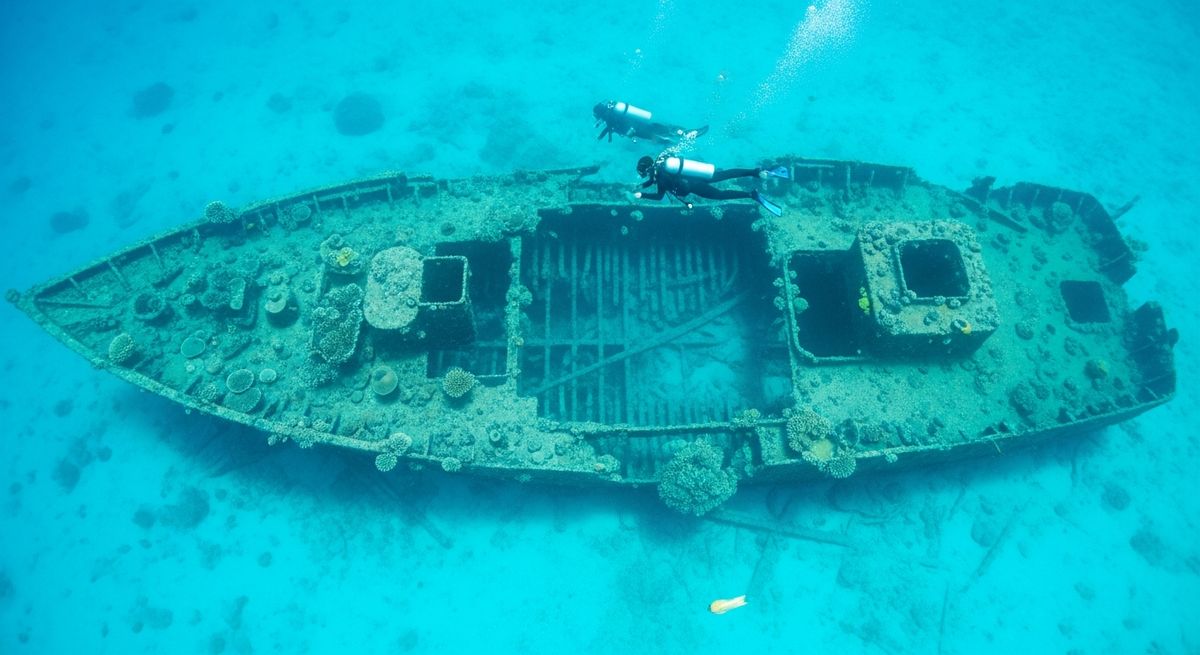
The Blue Bell is a proper piece of history, just waiting for the right conditions. Sunk back in 1913, this steamship lies in quite shallow water, making it a bit of a trick. You need a calm day, and we mean properly calm, otherwise, surge is going to make it a bouncy ride. When the stars align though, it’s brilliant. We love dropping onto the Blue Bell because it feels like you're stepping into a time capsule. The wreck itself is quite broken up, but you can still make out the general shape of a steamship. What makes it though, is the sheer amount of life that has taken over. Expect to find schools of pollock circling the larger hull sections, and the cracks and crevices are packed with velvet crabs and blennies. The visibility here can be hit or miss, but on a good day, the light filters down beautifully, highlighting the rusty ironwork and the green anenomes clinging to every surface. It’s a photographer's dream if you’re patient and the surge isn't too bad. We'd suggest timing your dive for slack water, always. Otherwise, you’ll be fighting the current and missing all the smaller details. This one's for divers who appreciate history and the tenacity of marine life, rather than pristine coral.
Typical BLUE BELL Dive Profile
Illustrative profile based on site depth and type. Actual dive profiles vary - always follow your dive computer and training.
Safety Notes
Wreck site - avoid penetration without wreck diving certification. Watch for sharp metal and entanglement hazards.
BLUE BELL Wreck History
Year Sunk
1913
Vessel Type
cargo ship
Cause
unknown
The steamship Blue Bell was lost on February 15, 1913. While the exact cause of her sinking is not widely documented, her final resting place is in the shallows off Cornwall & Devon. The wreck lies in just one meter of water and is officially classified as a 'Dangerous Wreck', likely due to its location in a high-traffic area or its state of decay, posing a hazard to navigation.
Given its extreme shallow depth, the Blue Bell is not a typical scuba dive. Instead, it's a site for intrepid snorkelers or free divers on a calm day. The wreck is heavily subject to surge and tidal forces, so extreme caution is advised. For those who can safely approach, the scattered remains offer a glimpse into the age of steam over a century ago.
Nearest Dive Centres to BLUE BELL
Dive shops near BLUE BELL
View all dive centres in Cornwall & DevonReviews for BLUE BELL
Conditions
Ocean conditions, forecast and tides for BLUE BELL
BLUE BELL Ocean Conditions
Monthly averages for BLUE BELL, sourced from Open-Meteo marine data - nearest station: Open-Meteo marine grid (50.44, -2.73) (3km away)
October Averages
Sea Temperature
17°C
62°F · Range: 15.1–17.5°C
Air Temperature
13°C
56°F
Wind Speed
8.14 m/s
15.8 knots
Atmospheric Pressure
1011 hPa
Based on 4 years of monitoring data · Data sources: Open-Meteo marine data
Plan & book
Ways to dive Cornwall & Devon, from day trips to liveaboards.
Day trips & courses
via GetYourGuideGuided dives, courses and snorkel trips with instant booking.
Find dive trips in Cornwall & DevonPlaces to stay
via Booking.comHotels and dive resorts near Cornwall & Devon.
Search stays in Cornwall & DevonDive insurance
Most travel insurance excludes or limits scuba. Check what you need before you go.
Dive insurance explainedPartner links: we may earn a commission if you book, at no extra cost to you. How we make money
Where to Stay near BLUE BELL
Prices from Booking.com. We may earn a commission at no extra cost to you.