BLUE FIN
Protected Area
Dawlish Warren
Why dive here
With 176+ marine species recorded in the area - including blue sharks, dolphins, dwarf minke whales, humpback whales and ocean sunfish (mola mola) - BLUE FIN offers some of Cornwall & Devon's richest wreck diving. Water ranges 10-18°C, warmest July, August, September.
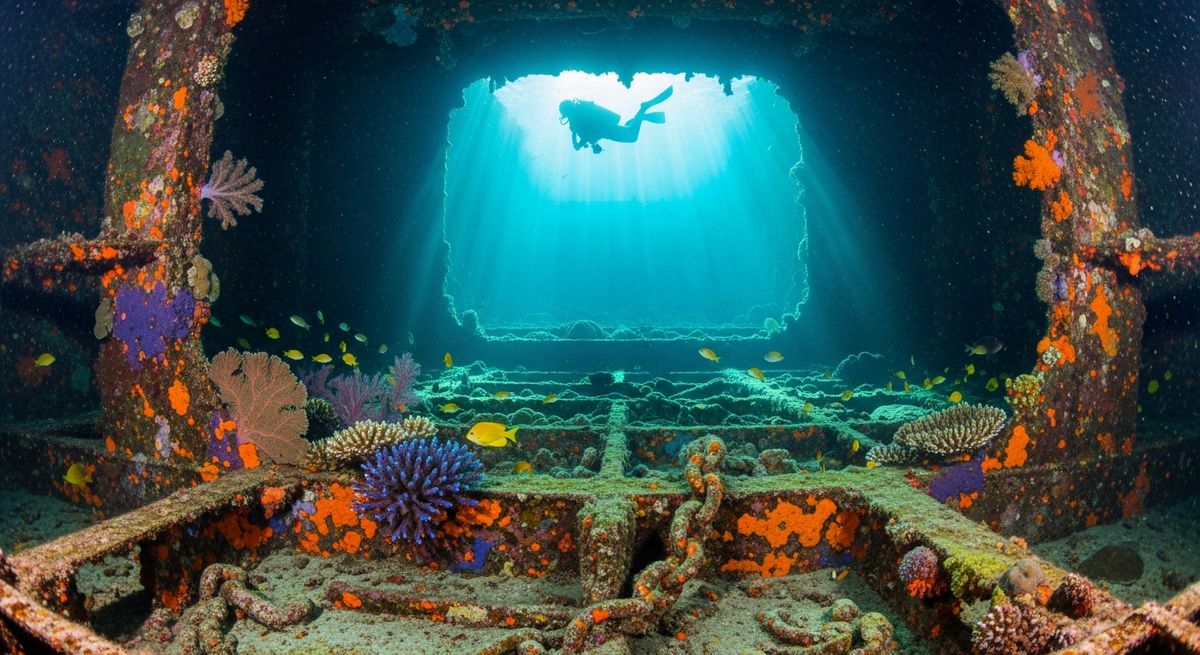
The Blue Fin isn’t a grand, deep wreck, and that’s precisely why we love it. Sunk in 1995, this 8.2-meter fishing vessel lies in just 8 meters of water, incredibly close to Langstone Rock. It’s perfect for those calm days when you want a relaxed dive with plenty to explore without pushing the limits. Our favourite way to dive the Blue Fin is on a still morning. The light filters down beautifully, illuminating the small holds and the remains of the wheelhouse. We’ve often found dogfish tucked into crevices and plump spider crabs clambering over the hull. The wreck itself is thoroughly colonised now, with anemones and hydroids swaying gently, giving it a soft, fuzzy outline. You can spend a good chunk of time circumnavigating it slowly, peering into every nook. It’s a gentle introduction to wreck diving, or a lovely follow-up dive after something a bit more demanding. Just keep an eye on the tides around Langstone Rock, as currents can pick up, making the dive less enjoyable.
Typical BLUE FIN Dive Profile
Illustrative profile based on site depth and type. Actual dive profiles vary - always follow your dive computer and training.
Safety Notes
Wreck site - avoid penetration without wreck diving certification. Watch for sharp metal and entanglement hazards.
BLUE FIN Wreck History
Year Sunk
1995
Vessel Type
fishing vessel
Cause
unknown
The wreck of the BLUE FIN is a somber and poignant dive site that tells a tragic story. On May 26, 1995, the small 8.2-meter fishing vessel sank just three-quarters of a mile east of Langstone Rock, off the coast of Devon. The incident resulted in the loss of two of its three crew members, a stark reminder of the perils of the sea. Its classification as a 'dangerous wreck' speaks to the hazard it poses to surface navigation in these shallow, busy waters.
Lying at a depth of just 8 meters, the BLUE FIN is highly accessible to divers of all levels. The shallow depth allows for long, relaxed bottom times to explore what remains of the vessel. Over the years, the structure has evolved into a thriving mini-reef, providing a home for crabs, lobsters, and schools of bib. It serves as both a memorial to those who were lost and a fascinating example of how nature quickly adapts and colonizes man-made structures.
Nearest Dive Centres to BLUE FIN
Dive shops near BLUE FIN
View all dive centres in Cornwall & DevonReviews for BLUE FIN
Conditions
Ocean conditions, forecast and tides for BLUE FIN
BLUE FIN Ocean Conditions
Monthly averages for BLUE FIN, sourced from Open-Meteo marine data - nearest station: Open-Meteo marine grid (50.44, -2.73) (3km away)
October Averages
Sea Temperature
17°C
62°F · Range: 15.1–17.5°C
Air Temperature
13°C
56°F
Wind Speed
8.14 m/s
15.8 knots
Atmospheric Pressure
1011 hPa
Based on 4 years of monitoring data · Data sources: Open-Meteo marine data
Plan & book
Ways to dive Cornwall & Devon, from day trips to liveaboards.
Day trips & courses
via GetYourGuideGuided dives, courses and snorkel trips with instant booking.
Find dive trips in Cornwall & DevonPlaces to stay
via Booking.comHotels and dive resorts near Cornwall & Devon.
Search stays in Cornwall & DevonDive insurance
Most travel insurance excludes or limits scuba. Check what you need before you go.
Dive insurance explainedPartner links: we may earn a commission if you book, at no extra cost to you. How we make money
Where to Stay near BLUE FIN
Prices from Booking.com. We may earn a commission at no extra cost to you.