BOHERA
Protected Area
Gouliot Caves and Headland, Sark
Why dive here
With 176+ marine species recorded in the area - including blue sharks, dolphins, dwarf minke whales, humpback whales and ocean sunfish (mola mola) - BOHERA offers some of Cornwall & Devon's richest wreck diving. Water ranges 10-18°C, warmest July, August, September.
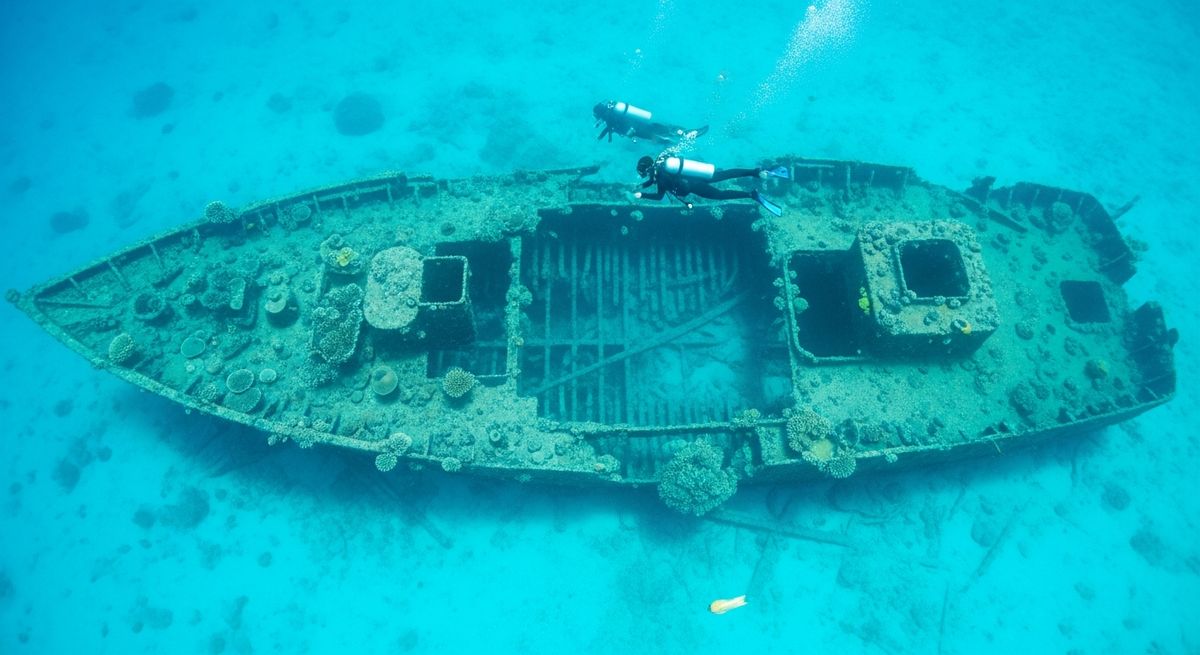
Bohera sits off the coast of Cornwall, a collier sunk back in March of 1895. We’d classify it as a true historical dive, and while it doesn't boast colourful corals, the sheer age of the wreck and the history clinging to it are what draw us back. There's a real sense of stepping back in time as you descend, the dark green water giving way to the ghostly outline of her hull. What you'll find here is a wreck that’s been thoroughly integrated into the seabed. We often see conger eels peering from dark recesses, their thick bodies almost part of the rusting metal. Look closely and you’ll spot plumose anemones, their feathery tentacles swaying with the gentle surge, and plenty of wrasse darting between the broken plating. It’s a dive for those who appreciate the quiet dignity of an old ship, how the sea slowly reclaims its own. Visibility can be a challenge here, typical for the UK, but on a good day, when the sun breaks through, the experience is wonderfully atmospheric. Our pick for an afternoon dive when the tides are slack.
Safety Notes
Wreck site - avoid penetration without wreck diving certification. Watch for sharp metal and entanglement hazards.
BOHERA Wreck History
Year Sunk
1895
Vessel Type
cargo ship
Cause
unknown
The Bohera was a 19th-century collier, a workhorse of the sea designed to transport coal. Her career came to an end on March 22, 1895, when she was recorded as 'lost' off Houmets Florens in the Channel Islands. The exact cause of her sinking remains unknown, though the notoriously strong currents, hidden reefs, and frequent storms of the region were likely contributing factors. What makes the Bohera a unique site is its depth of zero meters. It is an intertidal wreck, meaning its skeletal remains are exposed to the air during low tide.
This accessibility makes the Bohera more than just a dive site; it's a piece of history that can be visited by walking. At high tide, snorkelers and shallow-water divers can explore the submerged sections of the hull among the kelp. As the tide recedes, the wreck emerges from the water, allowing historians, photographers, and curious beachcombers to examine its decaying iron structure up close. The Bohera serves as a stark and tangible reminder of the perils of 19th-century maritime trade, its bones resting where the land and sea meet.
Nearest Dive Centres to BOHERA
Dive shops near BOHERA
View all dive centres in Cornwall & DevonReviews for BOHERA
Conditions
Ocean conditions, forecast and tides for BOHERA
BOHERA Ocean Conditions
Monthly averages for BOHERA, sourced from Open-Meteo marine data - nearest station: Open-Meteo marine grid (50.44, -2.73) (3km away)
October Averages
Sea Temperature
17°C
62°F · Range: 15.1–17.5°C
Air Temperature
13°C
56°F
Wind Speed
8.14 m/s
15.8 knots
Atmospheric Pressure
1011 hPa
Based on 4 years of monitoring data · Data sources: Open-Meteo marine data
Plan & book
Ways to dive Cornwall & Devon, from day trips to liveaboards.
Day trips & courses
via GetYourGuideGuided dives, courses and snorkel trips with instant booking.
Find dive trips in Cornwall & DevonPlaces to stay
via Booking.comHotels and dive resorts near Cornwall & Devon.
Search stays in Cornwall & DevonDive insurance
Most travel insurance excludes or limits scuba. Check what you need before you go.
Dive insurance explainedPartner links: we may earn a commission if you book, at no extra cost to you. How we make money
Where to Stay near BOHERA
Prices from Booking.com. We may earn a commission at no extra cost to you.