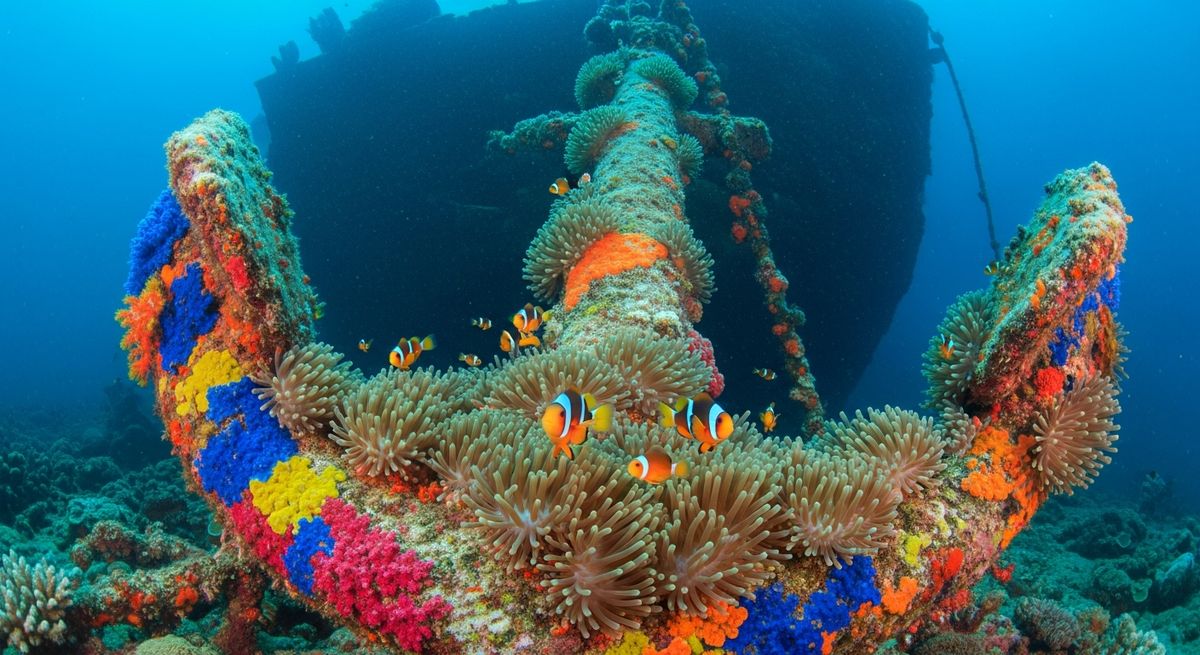
Bombarden Unit (Wreck)
Protected Area
Chesil Beach and The Fleet
Why dive here
With 176+ marine species recorded in the area - including blue sharks, dolphins, dwarf minke whales, humpback whales and ocean sunfish (mola mola) - Bombarden Unit (Wreck) offers some of Cornwall & Devon's richest wreck diving. Water ranges 10-18°C, warmest July, August, September.
The Bombarden Unit, resting at a gentle 18 metres, is one of our go-to Cornwall dives when we’re looking for a relaxed exploration. It’s perfect for beginners, but honestly, we find ourselves coming back time and again. We love how much of the wreck is still discernible – not just a pile of plates, you know? You can trace the deck lines, peer into what would have been the holds, and even get a sense of the vessel’s original structure. What makes it special for us is the way the marine life has completely taken over. Big schools of pollack hang suspended over the metalwork, flickering in the shafts of light that pierce the green water. Look closer and you'll spot crabs scuttling amongst the debris, and anenomes clinging to every surface, waving their tentacles in the slight surge. It’s a proper macro playground too, if you’re patient; nudibranchs are always a good find here, camouflaged against the rust. We always try to dive it at slack water, an hour either side of high or low tide, to really take our time exploring without fighting any current. It's an excellent training ground for wreck navigation, or just a really pleasant way to spend an hour underwater.
Typical Bombarden Unit (Wreck) Dive Profile
Illustrative profile based on site depth and type. Actual dive profiles vary - always follow your dive computer and training.
Safety Notes
Wreck site - avoid penetration without wreck diving certification. Watch for sharp metal and entanglement hazards.
Always perform a 3-minute safety stop at 5m before surfacing.
Bombarden Unit (Wreck) Wreck History
Vessel Type
barge
Cause
unknown
This is not a traditional shipwreck, but a fascinating and unique piece of World War II history. A 'Bombardon Unit' was a key component of the Mulberry Harbours, the massive floating ports engineered by the Allies for the D-Day landings in Normandy in 1944. These huge, cross-shaped steel structures were designed to be moored offshore to act as floating breakwaters, calming the seas to allow men and material to be offloaded. This particular unit likely broke its tow on the way to France or was lost in a storm and sank in the English Channel.
Resting at an accessible depth of 18 metres, the Bombarden Unit offers a highly unusual dive. Instead of decks and portholes, divers explore the strange, geometric steel structure, now completely colonized by marine life. It serves as a superb artificial reef, attracting fish and invertebrates, while also standing as a submerged monument to one of the most audacious engineering feats of the war.
Nearest Dive Centres to Bombarden Unit (Wreck)
Dive shops near Bombarden Unit (Wreck)
Old Harbour Dive Centre
Dive Beyond Limited
Divers Down
Dorset Diving Services
Mayim Mermaid Academy
Dive academy
Reviews for Bombarden Unit (Wreck)
Conditions
Ocean conditions, forecast and tides for Bombarden Unit (Wreck)
Bombarden Unit (Wreck) Ocean Conditions
Monthly averages for Bombarden Unit (Wreck), sourced from Open-Meteo marine data - nearest station: Open-Meteo marine grid (50.44, -2.73) (3km away)
October Averages
Sea Temperature
17°C
62°F · Range: 15.1–17.5°C
Air Temperature
13°C
56°F
Wind Speed
8.14 m/s
15.8 knots
Atmospheric Pressure
1011 hPa
Based on 4 years of monitoring data · Data sources: Open-Meteo marine data
Plan & book
Ways to dive Cornwall & Devon, from day trips to liveaboards.
Day trips & courses
via GetYourGuideGuided dives, courses and snorkel trips with instant booking.
Find dive trips in Cornwall & DevonPlaces to stay
via Booking.comHotels and dive resorts near Cornwall & Devon.
Search stays in Cornwall & DevonDive insurance
Most travel insurance excludes or limits scuba. Check what you need before you go.
Dive insurance explainedPartner links: we may earn a commission if you book, at no extra cost to you. How we make money
Where to Stay near Bombarden Unit (Wreck)
Prices from Booking.com. We may earn a commission at no extra cost to you.