BONAFIDE
Protected Area
Gouliot Caves and Headland, Sark
Why dive here
With 176+ marine species recorded in the area - including blue sharks, dolphins, dwarf minke whales, humpback whales and ocean sunfish (mola mola) - BONAFIDE offers some of Cornwall & Devon's richest wreck diving. Water ranges 10-18°C, warmest July, August, September.
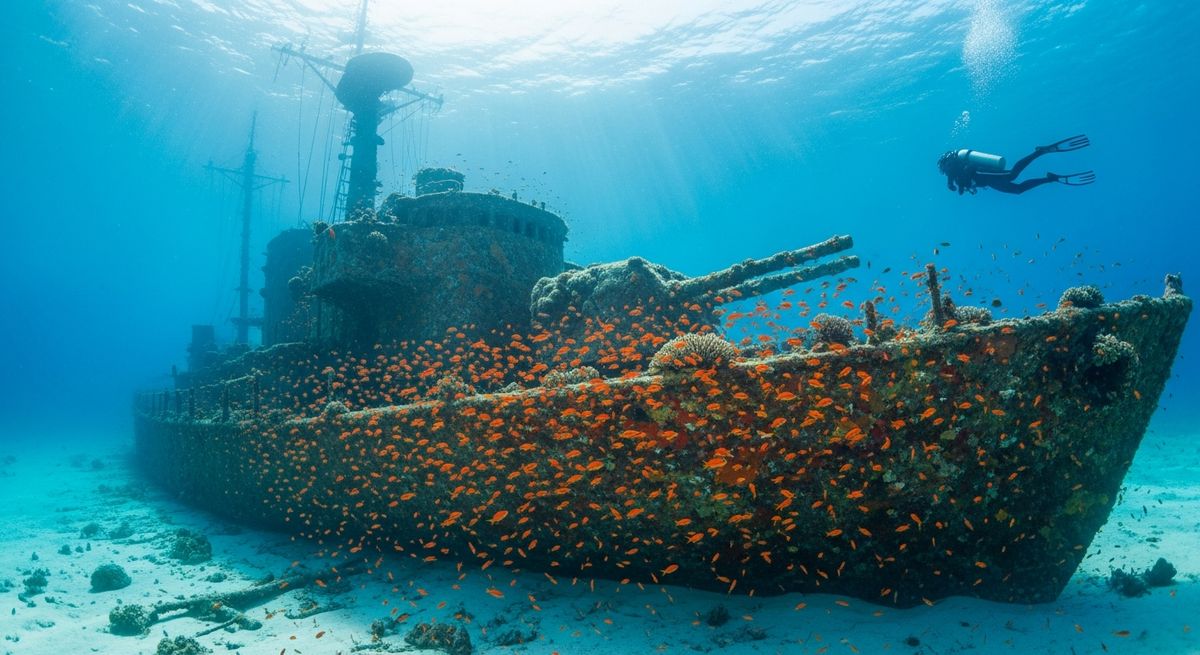
The Bonafide, just four metres down off the coast of Cornwall, is our go-to when we want a relaxed dive with a real sense of history. This isn't a dramatic, upright wreck; she's spread out across the seabed, the ribs of the old barque forming a skeleton that feels ancient and very much part of the ocean floor. We love weaving through the scattered timbers, imagining the ship in her prime before she went down in 1893. What you'll find here is a tapestry of life that has claimed the wreck. Every surface is coated in jewel anemones, vivid orange and pink, and you’ll spot plenty of blennies peeking out from cracks in the wood. On a good day, the sunlight filters down, illuminating clouds of small fish darting between the beams. It’s an easy, calm dive, perfect for photographers wanting to capture intricate details, or anyone who enjoys exploring a piece of maritime heritage without deep dive pressures. Come at slack tide for the best visibility; the sandy bottom can kick up if there’s much current.
Typical BONAFIDE Dive Profile
Illustrative profile based on site depth and type. Actual dive profiles vary - always follow your dive computer and training.
Safety Notes
Wreck site - avoid penetration without wreck diving certification. Watch for sharp metal and entanglement hazards.
BONAFIDE Wreck History
Year Sunk
1893
Vessel Type
sailing vessel
Cause
grounding
The Bonafide was a proud Norwegian barque, a three-masted sailing ship typical of the late 19th century. In the summer of 1893, she was on a long voyage from Sundsvall, Sweden, bound for Falmouth, England, with a heavy cargo of timber. As she navigated the treacherous waters of the English Channel, a thick fog descended, obscuring the many hazards that lay in her path. On July 24th, the vessel sailed blindly onto the notorious Renonquet rocks off Alderney in the Channel Islands. The ship was lost, but fortunately, the entire crew was rescued.
Today, the remains of the Bonafide lie in just 4 metres of water, making it an extremely shallow wreck dive. The site is heavily influenced by the powerful tides and surge that characterize the Channel Islands, so it can only be dived in the calmest conditions. Over a century of immersion has caused the wooden hull to disintegrate, but divers can still find evidence of the wreck scattered amongst the rocks. Exploring the gulleys, you may discover iron fittings, parts of the ship's structure, and the remnants of its timber cargo, all slowly being reclaimed by the marine environment. It's a dive that connects you directly with the perilous history of sail in one of the world's most challenging waterways.
Nearest Dive Centres to BONAFIDE
Dive shops near BONAFIDE
View all dive centres in Cornwall & DevonReviews for BONAFIDE
Conditions
Ocean conditions, forecast and tides for BONAFIDE
BONAFIDE Ocean Conditions
Monthly averages for BONAFIDE, sourced from Open-Meteo marine data - nearest station: Open-Meteo marine grid (50.44, -2.73) (3km away)
October Averages
Sea Temperature
17°C
62°F · Range: 15.1–17.5°C
Air Temperature
13°C
56°F
Wind Speed
8.14 m/s
15.8 knots
Atmospheric Pressure
1011 hPa
Based on 4 years of monitoring data · Data sources: Open-Meteo marine data
Plan & book
Ways to dive Cornwall & Devon, from day trips to liveaboards.
Day trips & courses
via GetYourGuideGuided dives, courses and snorkel trips with instant booking.
Find dive trips in Cornwall & DevonPlaces to stay
via Booking.comHotels and dive resorts near Cornwall & Devon.
Search stays in Cornwall & DevonDive insurance
Most travel insurance excludes or limits scuba. Check what you need before you go.
Dive insurance explainedPartner links: we may earn a commission if you book, at no extra cost to you. How we make money
Where to Stay near BONAFIDE
Prices from Booking.com. We may earn a commission at no extra cost to you.