BONITA
Protected Area
East Aberthaw Coast
Why dive here
With 176+ marine species recorded in the area - including blue sharks, dolphins, dwarf minke whales, humpback whales and ocean sunfish (mola mola) - BONITA offers some of Cornwall & Devon's richest wreck diving. Water ranges 10-18°C, warmest July, August, September.
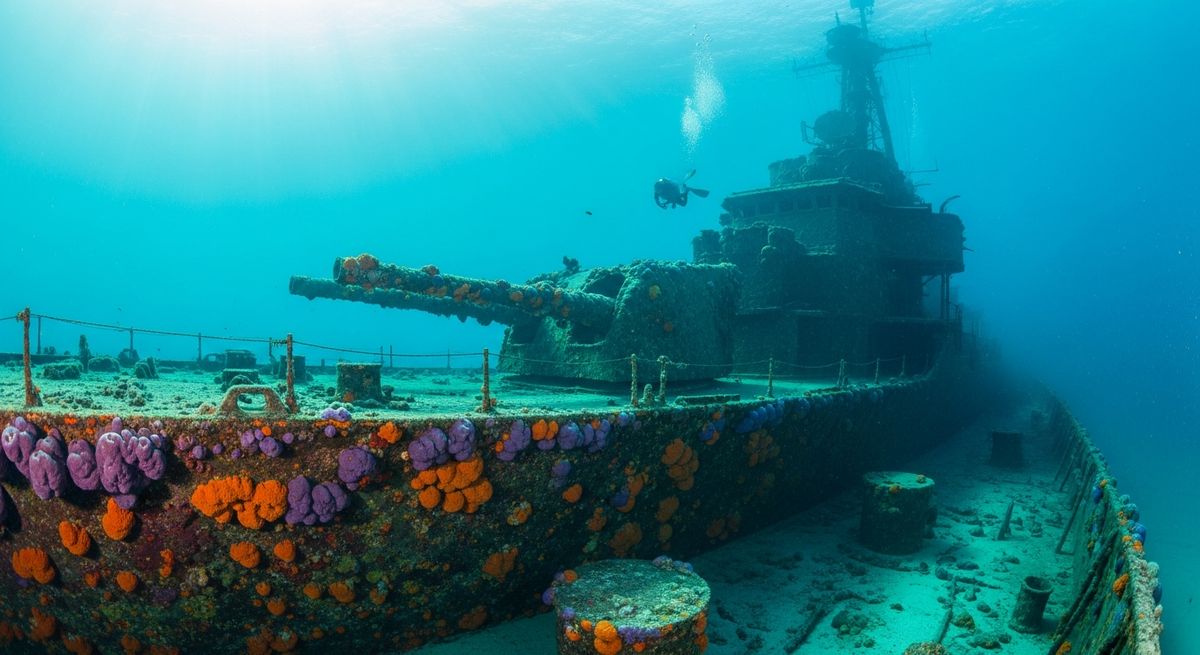
Alright, Bonita. This one’s a proper character, a sailing vessel that called it quits in 1934 and now rests in an astonishingly shallow 1 metre of water. Yes, you read that right, one metre. We love it because it’s a bit unusual, a wreck you can practically walk to at low tide, making it perfect for an extended snorkel or a very, very shallow free-dive. You'll find the Bonita’s ribs and timbers spread across the sandy seabed, often picked out by the dappled sunlight filtering through the surface. It’s a ghost of its former self, but in that skeletal structure, you'll spot blennies darting between the frames and often a curious crab scuttling for cover. Look closely and you might even catch sight of flatfish camouflaged against the sand, pretending they’re not there. Our tip for this spot: go on a calm day with good sun. The visibility really pops then, and you get that lovely interplay of light and shadow on the wreck. It’s a quiet, reflective spot, more about soaking in the history and the subtle marine life than chasing big pelagics.
Typical BONITA Dive Profile
Illustrative profile based on site depth and type. Actual dive profiles vary - always follow your dive computer and training.
Safety Notes
Wreck site - avoid penetration without wreck diving certification. Watch for sharp metal and entanglement hazards.
BONITA Wreck History
Year Sunk
1934
Vessel Type
sailing vessel
Cause
unknown
The treacherous coastline of Cornwall & Devon claimed another victim in 1934 with the loss of the sailing vessel Bonita. Today, its remains lie in just one meter of water, making it one of the most accessible wrecks in the region. Battered by nearly a century of relentless surf and tides, the Bonita is no longer an intact ship but a scattered collection of timbers and metal, slowly being reclaimed by the marine environment.
Its shallow depth makes it an ideal site for snorkelers or for a 'scrappy' shore dive on a very calm day at high tide. The 'dangerous wreck' classification is a warning about sharp, rusted metal and the potential for strong coastal currents. Exploring the Bonita is a tangible connection to the age of sail and a reminder of the raw power of the sea along this historic and rugged coast.
Nearest Dive Centres to BONITA
Dive shops near BONITA
Divexplore
Welsh Diving
Scuba Scene Taunton
Scuba Blue Ltd
Reviews for BONITA
Conditions
Ocean conditions, forecast and tides for BONITA
BONITA Ocean Conditions
Monthly averages for BONITA, sourced from Open-Meteo marine data - nearest station: Open-Meteo marine grid (50.44, -2.73) (3km away)
October Averages
Sea Temperature
17°C
62°F · Range: 15.1–17.5°C
Air Temperature
13°C
56°F
Wind Speed
8.14 m/s
15.8 knots
Atmospheric Pressure
1011 hPa
Based on 4 years of monitoring data · Data sources: Open-Meteo marine data
Plan & book
Ways to dive Cornwall & Devon, from day trips to liveaboards.
Day trips & courses
via GetYourGuideGuided dives, courses and snorkel trips with instant booking.
Find dive trips in Cornwall & DevonPlaces to stay
via Booking.comHotels and dive resorts near Cornwall & Devon.
Search stays in Cornwall & DevonDive insurance
Most travel insurance excludes or limits scuba. Check what you need before you go.
Dive insurance explainedPartner links: we may earn a commission if you book, at no extra cost to you. How we make money
Where to Stay near BONITA
Prices from Booking.com. We may earn a commission at no extra cost to you.