BORDERDENE
Protected Area
Berrow Dunes
Why dive here
With 176+ marine species recorded in the area - including blue sharks, dolphins, dwarf minke whales, humpback whales and ocean sunfish (mola mola) - BORDERDENE offers some of Cornwall & Devon's richest wreck diving. Water ranges 10-18°C, warmest July, August, September.
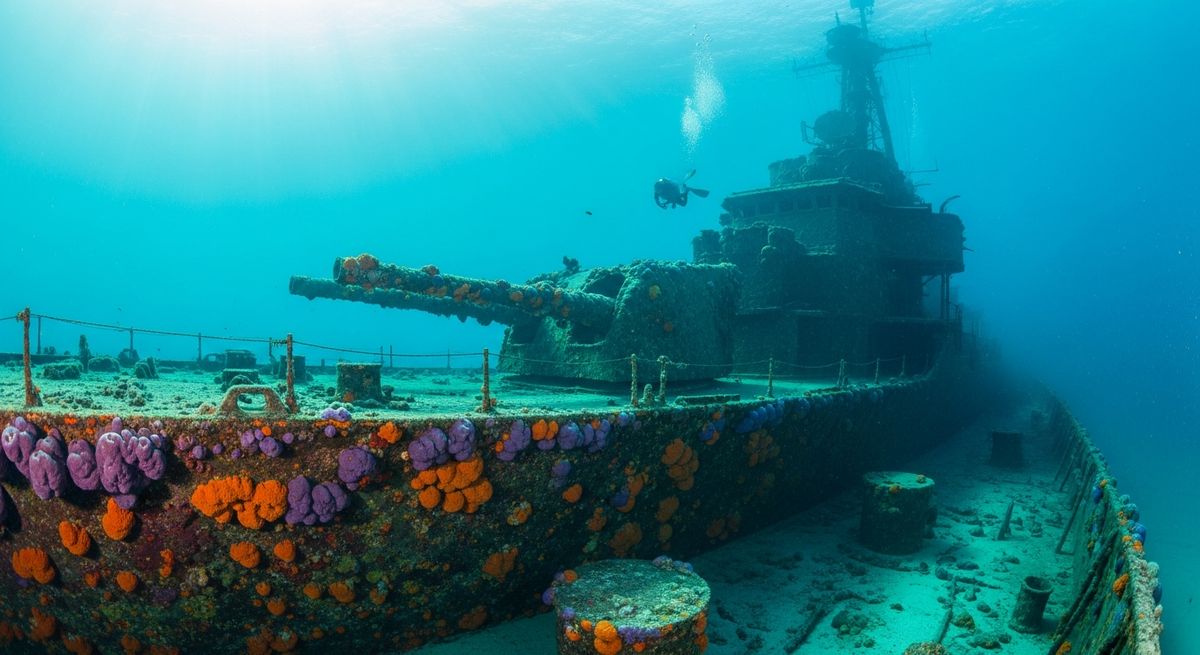
The Borderdene is a surprisingly engaging wreck, though it’s not for everyone. We love it for its sheer accessibility, sitting in around 18 metres on a sandy bottom, making it a good option for those looking to stretch their bottom time without getting too deep. What’s left of the steamship is spread out, a real jumble of metal that tells a clear story of a mine strike in 1942. You'll find yourself finning over twisted plates and ribs, with bits of the engine still recognisable if you know what you’re looking for. This wreck really shines on a sunny day. When the light filters down, it picks out the colours of the anemones and dead man’s fingers that have completely plastered the metalwork. We always find conger eels tucked into the darker recesses, and the sandy patches around the wreck often have flatfish or even a stargazer if you’re patient. It’s a site that rewards careful exploration, less about penetration and more about appreciating the history and the marine life that has made a home here. It’s a good step up for divers comfortable with UK diving but not yet ready for the deeper, more intact wrecks.
Typical BORDERDENE Dive Profile
Illustrative profile based on site depth and type. Actual dive profiles vary - always follow your dive computer and training.
Safety Notes
Wreck site - avoid penetration without wreck diving certification. Watch for sharp metal and entanglement hazards.
BORDERDENE Wreck History
Year Sunk
1942
Vessel Type
cargo ship
Cause
mined
Tonnage
429 GRT
The SS Borderdene was a small British steam coaster built in 1919. During the Second World War, she played a vital role in the dangerous but essential task of transporting goods around the British coastline. These small vessels were the lifeblood of the home front, but they faced constant threats from enemy aircraft, E-boats, and naval mines.
On January 13th, 1942, while on a voyage from London to Hayle with a cargo of cement, the Borderdene's journey came to an abrupt end. She struck a mine near the infamous Manacles reef off the Cornish coast, a treacherous area of water made even deadlier by the war. The explosion was catastrophic, and the vessel quickly foundered, coming to rest in very shallow water close to the shore.
Lying at a depth of just 1 meter, the Borderdene is now a highly broken and scattered wreck, heavily salvaged and pounded by the relentless sea. While not a scuba dive in the traditional sense, its remains are accessible to snorkelers and kayakers on a calm day. Twisted plates and sections of the hull are visible amongst the kelp, offering a stark and shallow reminder of the perils of wartime shipping on the British coast.
Nearest Dive Centres to BORDERDENE
Dive shops near BORDERDENE
Scuba Blue Ltd
Scuba Scene Taunton
Extreme Marine
Welsh Diving
Vobster Quay Dive Shop
Dive academy
Reviews for BORDERDENE
Conditions
Ocean conditions, forecast and tides for BORDERDENE
BORDERDENE Ocean Conditions
Monthly averages for BORDERDENE, sourced from Open-Meteo marine data - nearest station: Open-Meteo marine grid (50.44, -2.73) (3km away)
October Averages
Sea Temperature
17°C
62°F · Range: 15.1–17.5°C
Air Temperature
13°C
56°F
Wind Speed
8.14 m/s
15.8 knots
Atmospheric Pressure
1011 hPa
Based on 4 years of monitoring data · Data sources: Open-Meteo marine data
Plan & book
Ways to dive Cornwall & Devon, from day trips to liveaboards.
Day trips & courses
via GetYourGuideGuided dives, courses and snorkel trips with instant booking.
Find dive trips in Cornwall & DevonPlaces to stay
via Booking.comHotels and dive resorts near Cornwall & Devon.
Search stays in Cornwall & DevonDive insurance
Most travel insurance excludes or limits scuba. Check what you need before you go.
Dive insurance explainedPartner links: we may earn a commission if you book, at no extra cost to you. How we make money
Where to Stay near BORDERDENE
Prices from Booking.com. We may earn a commission at no extra cost to you.