BORU OF NEYLAND
Protected Area
Lundy
Why dive here
With 176+ marine species recorded in the area - including blue sharks, dolphins, dwarf minke whales, humpback whales and ocean sunfish (mola mola) - BORU OF NEYLAND offers some of Cornwall & Devon's richest wreck diving. Water ranges 10-18°C, warmest July, August, September.
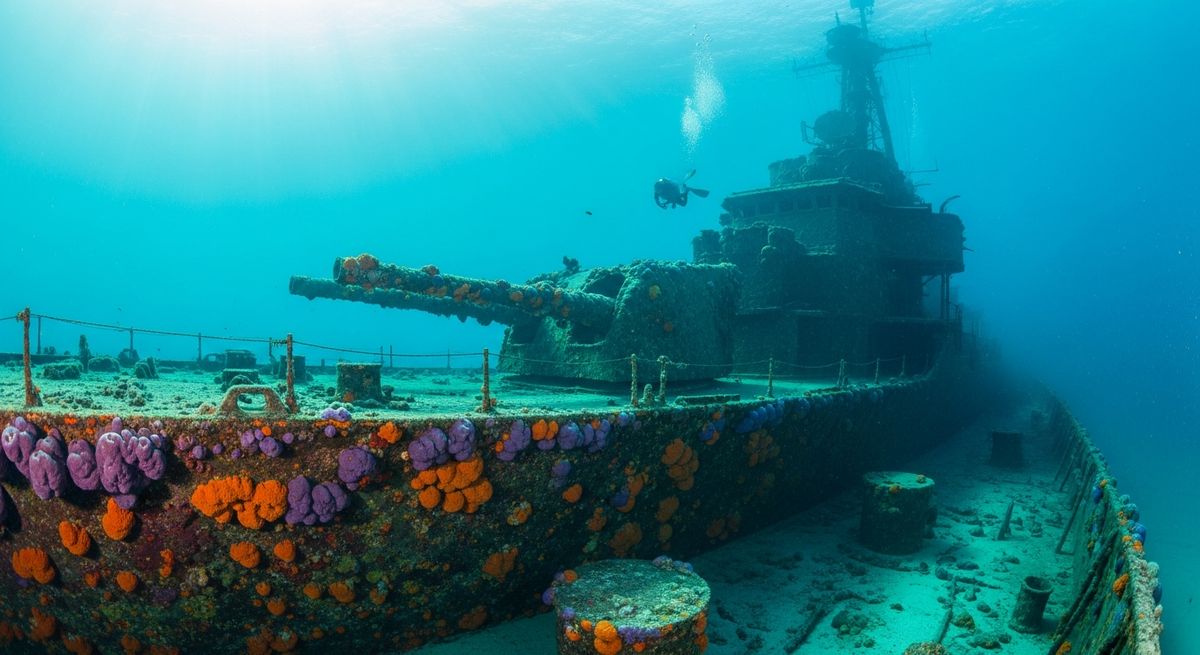
The Boru of Neyland isn't your grand, cathedral-like wreck, but it’s one of our favourite smaller, more intimate dives around Neyland. This 13.4-meter yacht settled onto the seabed back in 1995 after running aground, and while it's not deep – the depth is essentially zero, meaning parts can be exposed at low tide – it's full of character. We often find ourselves just floating above, watching the light play through the remains of the superstructure. The wreck is now a proper home for some interesting critters. You’ll spot crabs scuttling in and out of the nooks and crannies, and quite a few wrasse species dart between the barnacle-encrusted metalwork. It’s a fantastic site for macro photography, especially on a sunny day when the visibility really opens up. The Boru is best explored by careful divers, those who appreciate the subtle beauty of a small wreck and the life that takes hold. It's a shallow, sheltered spot, so it’s great for getting back in the water or just enjoying a relaxed dive without battling currents. Look for it around high slack water for the clearest views of the whole boat.
Safety Notes
Wreck site - avoid penetration without wreck diving certification. Watch for sharp metal and entanglement hazards.
BORU OF NEYLAND Wreck History
Year Sunk
1995
Vessel Type
yacht
Cause
grounding
Not all wrecks require a boat and scuba gear to explore. The Boru of Neyland, a 13.4-meter yacht, offers a different kind of wreck experience on the coast of Cornwall & Devon. In September 1995, the yacht ran aground, and while the crew made it safely to shore, their vessel did not. It came to rest at a depth of 0 meters, meaning its hull and superstructure are exposed, particularly during low tide.
This intertidal wreck is an excellent destination for beachcombers, kayakers, and snorkelers. At low tide, you can walk right up to the remains and examine the structure of the yacht as it lies on the shore, being slowly claimed by the coastal environment. It's a tangible piece of maritime history that can be seen and touched, offering a poignant reminder of the fine line between a safe passage and disaster along this rugged coastline.
Nearest Dive Centres to BORU OF NEYLAND
Dive shops near BORU OF NEYLAND
View all dive centres in Cornwall & DevonReviews for BORU OF NEYLAND
Conditions
Ocean conditions, forecast and tides for BORU OF NEYLAND
BORU OF NEYLAND Ocean Conditions
Monthly averages for BORU OF NEYLAND, sourced from Open-Meteo marine data - nearest station: Open-Meteo marine grid (50.44, -2.73) (3km away)
October Averages
Sea Temperature
17°C
62°F · Range: 15.1–17.5°C
Air Temperature
13°C
56°F
Wind Speed
8.14 m/s
15.8 knots
Atmospheric Pressure
1011 hPa
Based on 4 years of monitoring data · Data sources: Open-Meteo marine data
Plan & book
Ways to dive Cornwall & Devon, from day trips to liveaboards.
Day trips & courses
via GetYourGuideGuided dives, courses and snorkel trips with instant booking.
Find dive trips in Cornwall & DevonPlaces to stay
via Booking.comHotels and dive resorts near Cornwall & Devon.
Search stays in Cornwall & DevonDive insurance
Most travel insurance excludes or limits scuba. Check what you need before you go.
Dive insurance explainedPartner links: we may earn a commission if you book, at no extra cost to you. How we make money
Where to Stay near BORU OF NEYLAND
Prices from Booking.com. We may earn a commission at no extra cost to you.