BOURNEMOUTH
Protected Area
South of Portland
Why dive here
With 176+ marine species recorded in the area - including blue sharks, dolphins, dwarf minke whales, humpback whales and ocean sunfish (mola mola) - BOURNEMOUTH offers some of Cornwall & Devon's richest wreck diving. Water ranges 10-18°C, warmest July, August, September.
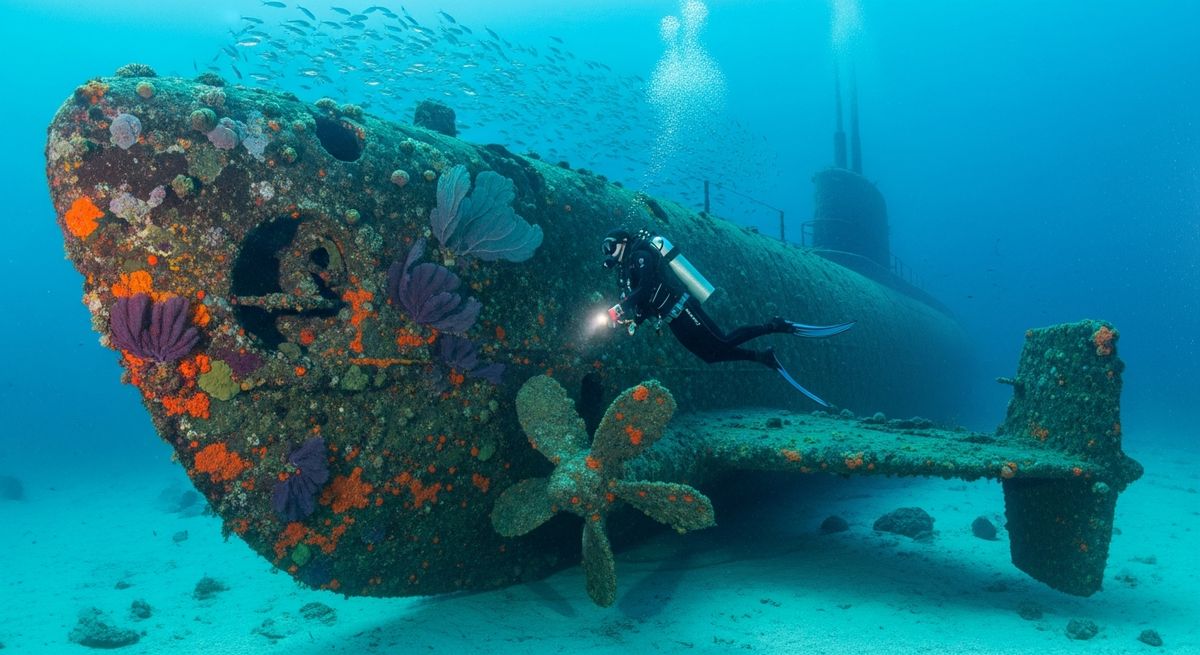
The Bournemouth, a steamship that went down in 1886, is a proper slice of history right off the coast. It’s a shallow dive, barely 5m, which means plenty of light even on an overcast day. We love that you can spend a good long time poking around the wreckage, picking out the boiler and the faint outline of the hull. It’s not about grand swim-throughs here, but rather a slow, detailed exploration. You'll find the Bournemouth has become a haven for local critters. Crabs scuttle through the nooks, and we’ve often spotted lobsters tucked into the deeper parts of the hull. The metalwork itself is encrusted with anemones, their tentacles swaying gently with the surge. Visibility can be a bit variable, but even in 5m, a decent torch helps bring out the colours. Our favourite time to dive it is on a slack tide, just after high water; it makes for a much calmer experience. It’s a really solid site for anyone keen on wreck history, or photographers who enjoy macro work amongst the remains.
Typical BOURNEMOUTH Dive Profile
Illustrative profile based on site depth and type. Actual dive profiles vary - always follow your dive computer and training.
Safety Notes
Wreck site - avoid penetration without wreck diving certification. Watch for sharp metal and entanglement hazards.
BOURNEMOUTH Wreck History
Year Sunk
1886
Vessel Type
passenger ship
Cause
grounding
Launched in 1884, the SS Bournemouth was a relatively new steamship serving the popular tourist routes for the Bournemouth, Swanage & Poole Steam Packet Company. Her career, however, was tragically short. On the night of August 27, 1886, while on passage from Bournemouth, she encountered thick fog and struck the infamous Manacles reef, a notorious ship graveyard off the Cornish coast. The impact tore a hole in her hull, and despite efforts to save her, she sank shortly after.
Today, the Bournemouth rests in just 5 metres of water, making her an exceptionally accessible and fascinating dive. Her shallow depth means long bottom times and excellent light conditions, perfect for novice wreck divers and underwater photographers. The wreck is broken up, but divers can easily identify her single boiler, compound engine, and sections of the hull. Over a century beneath the waves has transformed her into a vibrant artificial reef, bustling with the marine life of the Cornish coast.
Nearest Dive Centres to BOURNEMOUTH
Dive shops near BOURNEMOUTH
Dive Beyond Limited
Old Harbour Dive Centre
Divers Down
Mayim Mermaid Academy
Dorset Diving Services
Reviews for BOURNEMOUTH
Conditions
Ocean conditions, forecast and tides for BOURNEMOUTH
BOURNEMOUTH Ocean Conditions
Monthly averages for BOURNEMOUTH, sourced from Open-Meteo marine data - nearest station: Open-Meteo marine grid (50.44, -2.73) (3km away)
October Averages
Sea Temperature
17°C
62°F · Range: 15.1–17.5°C
Air Temperature
13°C
56°F
Wind Speed
8.14 m/s
15.8 knots
Atmospheric Pressure
1011 hPa
Based on 4 years of monitoring data · Data sources: Open-Meteo marine data
Plan & book
Ways to dive Cornwall & Devon, from day trips to liveaboards.
Day trips & courses
via GetYourGuideGuided dives, courses and snorkel trips with instant booking.
Find dive trips in Cornwall & DevonPlaces to stay
via Booking.comHotels and dive resorts near Cornwall & Devon.
Search stays in Cornwall & DevonDive insurance
Most travel insurance excludes or limits scuba. Check what you need before you go.
Dive insurance explainedPartner links: we may earn a commission if you book, at no extra cost to you. How we make money
Where to Stay near BOURNEMOUTH
Prices from Booking.com. We may earn a commission at no extra cost to you.