BOY TOBY (POSSIBLY)
Protected Area
Castlemartin Coast
Why dive here
With 176+ marine species recorded in the area - including blue sharks, dolphins, dwarf minke whales, humpback whales and ocean sunfish (mola mola) - BOY TOBY (POSSIBLY) offers some of Cornwall & Devon's richest wreck diving. Water ranges 10-18°C, warmest July, August, September.
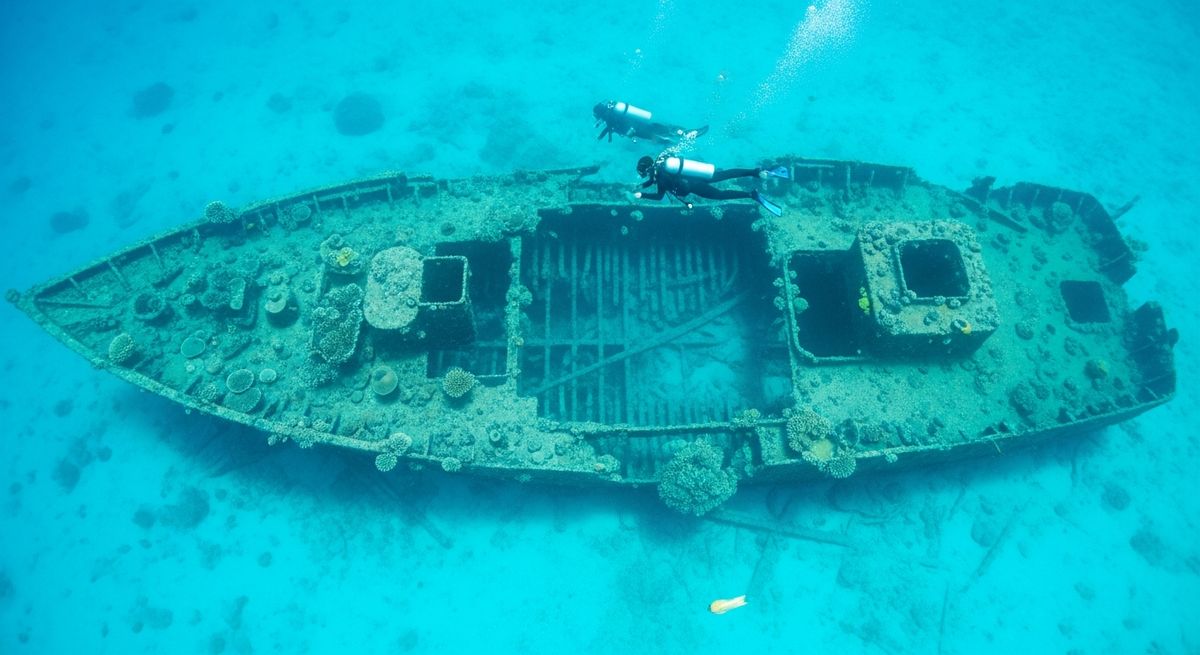
Let’s be honest, you’re not coming to the UK for balmy waters, but for wreck diving, Cornwall delivers. The *Boy Toby* is a prime example of why we love diving off Plymouth. Dropping down to 48 metres, this small fishing vessel, sunk in 1980, offers a proper technical dive. You’ll hit the main deck first, then the stern, where the damage from the stern tube breaking away is still evident – a stark reminder of its final moments. We’ve spent hours poking around this wreck, and it’s always rewarding. Expect the usual suspects: conger eels peering from every dark recess, spider crabs scuttling across the deck, and sometimes, a school of pollock swirling above the superstructure. It’s compact enough to explore thoroughly on a single dive, but deep enough to demand careful planning. Our tip? Go on a slack tide, otherwise, you’ll be fighting some serious current down there. Visibility can be hit or miss, but on a good day, seeing the full 14 metres of the *Boy Toby* laid out below you is a real treat. It’s a site for experienced cold water wreck divers, definitely not one for beginners.
Typical BOY TOBY (POSSIBLY) Dive Profile
Illustrative profile based on site depth and type. Actual dive profiles vary - always follow your dive computer and training.
Safety Notes
Maximum depth 48m exceeds recreational limits (40m). Technical diving certification and equipment required.
Wreck site - avoid penetration without wreck diving certification. Watch for sharp metal and entanglement hazards.
Always perform a 3-minute safety stop at 5m before surfacing.
BOY TOBY (POSSIBLY) Wreck History
Year Sunk
1980
Vessel Type
fishing vessel
Cause
unknown
The fishing vessel Boy Toby foundered on December 3, 1980, not due to a storm or collision, but because of a critical mechanical failure. While at sea, the vessel's stern tube, which houses the propeller shaft, broke away from the deadwood of the hull. This created a catastrophic leak, and the boat began taking on water far faster than its pumps could handle. A tow was attempted in a desperate effort to save the vessel, but it was ultimately futile. The Boy Toby slipped beneath the waves and settled on the seabed.
Lying at a depth of 48 meters in the waters off Cornwall, the Boy Toby is an excellent dive for experienced recreational or technical divers. As a relatively modern wreck, it is largely intact, though its wooden hull is slowly deteriorating. Divers can explore the 14-meter vessel, observing its deck features and machinery. The clear cause of sinking makes it an interesting site for those fascinated by the mechanics of maritime disasters, offering a tangible connection to the final, frantic hours of the doomed vessel.
Nearest Dive Centres to BOY TOBY (POSSIBLY)
Dive shops near BOY TOBY (POSSIBLY)
View all dive centres in Cornwall & DevonReviews for BOY TOBY (POSSIBLY)
Conditions
Ocean conditions, forecast and tides for BOY TOBY (POSSIBLY)
BOY TOBY (POSSIBLY) Ocean Conditions
Monthly averages for BOY TOBY (POSSIBLY), sourced from Open-Meteo marine data - nearest station: Open-Meteo marine grid (50.44, -2.73) (3km away)
October Averages
Sea Temperature
17°C
62°F · Range: 15.1–17.5°C
Air Temperature
13°C
56°F
Wind Speed
8.14 m/s
15.8 knots
Atmospheric Pressure
1011 hPa
Based on 4 years of monitoring data · Data sources: Open-Meteo marine data
Plan & book
Ways to dive Cornwall & Devon, from day trips to liveaboards.
Day trips & courses
via GetYourGuideGuided dives, courses and snorkel trips with instant booking.
Find dive trips in Cornwall & DevonPlaces to stay
via Booking.comHotels and dive resorts near Cornwall & Devon.
Search stays in Cornwall & DevonDive insurance
Most travel insurance excludes or limits scuba. Check what you need before you go.
Dive insurance explainedPartner links: we may earn a commission if you book, at no extra cost to you. How we make money
Where to Stay near BOY TOBY (POSSIBLY)
Prices from Booking.com. We may earn a commission at no extra cost to you.