BOYNE
Protected Area
Lizard Point
Why dive here
With 176+ marine species recorded in the area - including blue sharks, dolphins, dwarf minke whales, humpback whales and ocean sunfish (mola mola) - BOYNE offers some of Cornwall & Devon's richest wreck diving. Water ranges 10-18°C, warmest July, August, September.
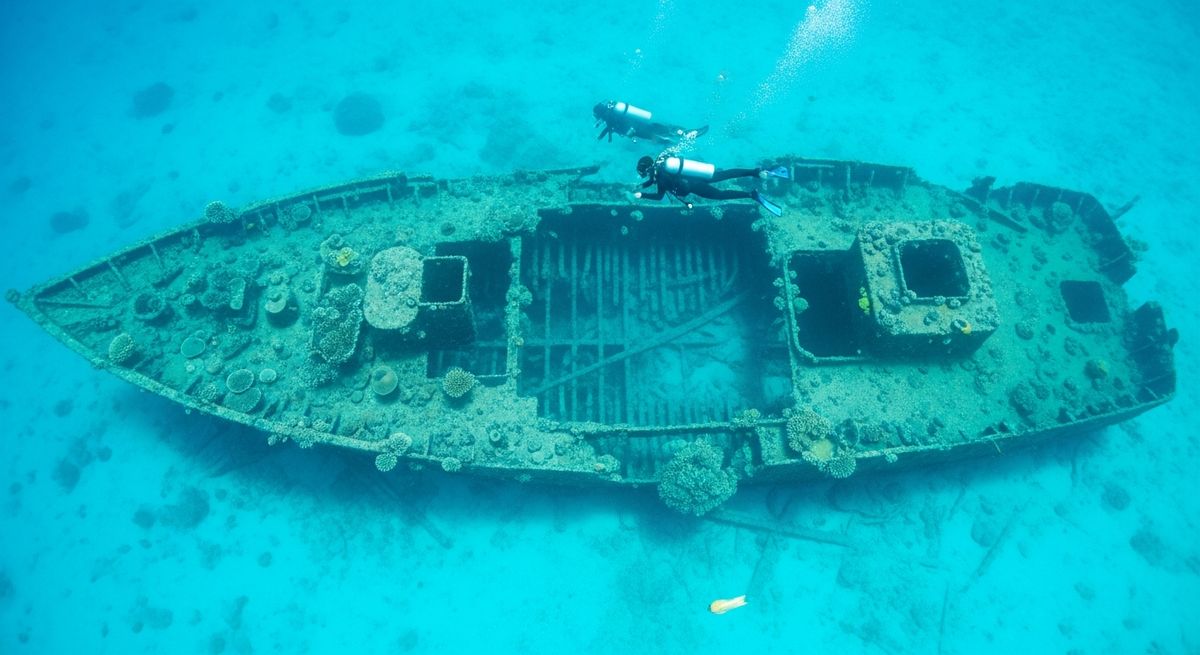
The Boyne, a barque that ran aground in Mullion Cove back in 1873, offers a different kind of dive. With a maximum depth of just 2 metres, it’s really more of a snorkel or a very shallow shore entry, ideal for easing back into things or for newer divers getting comfortable with wreckage. What you’ll find is a scattered array of timbers and hull sections, well-worn by the waves over the last century and a half. It’s not about penetration here, but about exploring the nooks and crannies of the exposed remains. We’ve spotted plenty of blennies darting between the timbers and anemones clinging to the darker recesses, a testament to how life reclaims even the most broken things. It’s a good spot for a relaxed look around, particularly on a calm day when the water clarity lets you really pick out the details.
Typical BOYNE Dive Profile
Illustrative profile based on site depth and type. Actual dive profiles vary - always follow your dive computer and training.
Safety Notes
Wreck site - avoid penetration without wreck diving certification. Watch for sharp metal and entanglement hazards.
Nearest Dive Centres to BOYNE
Dive shops near BOYNE
Porthkerris Divers
Seaways Diving
DiveUK
Karleyth Diving Ltd.
Wavecrest Scuba
Viewpoint Diving Centre
Reviews for BOYNE
Conditions
Ocean conditions, forecast and tides for BOYNE
BOYNE Ocean Conditions
Monthly averages for BOYNE, sourced from Open-Meteo marine data - nearest station: Open-Meteo marine grid (50.44, -2.73) (3km away)
October Averages
Sea Temperature
17°C
62°F · Range: 15.1–17.5°C
Air Temperature
13°C
56°F
Wind Speed
8.14 m/s
15.8 knots
Atmospheric Pressure
1011 hPa
Based on 4 years of monitoring data · Data sources: Open-Meteo marine data
Plan & book
Ways to dive Cornwall & Devon, from day trips to liveaboards.
Day trips & courses
via GetYourGuideGuided dives, courses and snorkel trips with instant booking.
Find dive trips in Cornwall & DevonPlaces to stay
via Booking.comHotels and dive resorts near Cornwall & Devon.
Search stays in Cornwall & DevonDive insurance
Most travel insurance excludes or limits scuba. Check what you need before you go.
Dive insurance explainedPartner links: we may earn a commission if you book, at no extra cost to you. How we make money
Where to Stay near BOYNE
Prices from Booking.com. We may earn a commission at no extra cost to you.