BRENDA
Protected Area
Devon Avon Estuary
Why dive here
With 176+ marine species recorded in the area - including blue sharks, dolphins, dwarf minke whales, humpback whales and ocean sunfish (mola mola) - BRENDA offers some of Cornwall & Devon's richest wreck diving. Water ranges 10-18°C, warmest July, August, September.
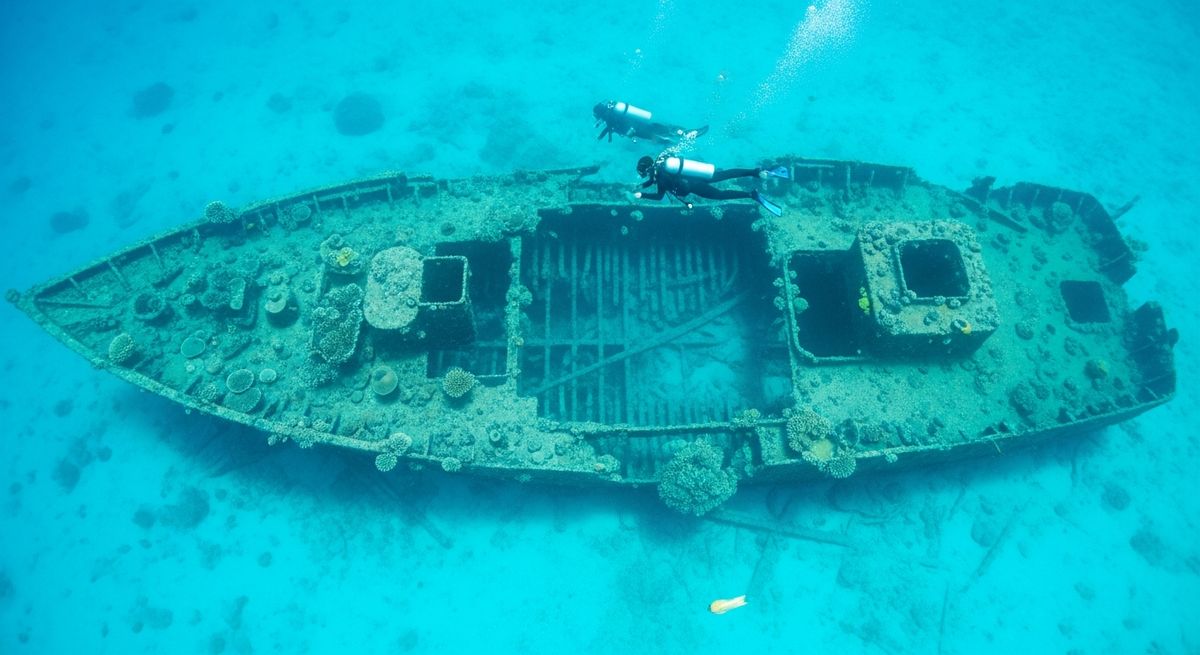
Brenda isn't your typical deep, dark UK wreck. We’re talking about an 8.5-meter fishing vessel, run aground on Murray's Rock near Burgh Island back in 2001. The interesting bit? She’s sitting in barely two meters of water. This is less a dive and more a snorkel, or maybe a very shallow freedive, but don't let the depth fool you into thinking it's not worth the effort. We love Brenda for how accessible she is, and for the sheer amount of life that’s made a home on her steel hull. Clingfish hide amongst the rust, wrasse dart through the skeletal remains of her superstructure, and small crabs scuttle across the seabed nearby. On a calm day, when the sun filters through the surface, the light plays across the wreck, highlighting the colours of the anemones and soft corals that now coat almost every surface. It’s a completely different wreck experience; think of it as an intertidal exploration with a historical twist. Perfect for photographers keen on shallow water macro, or anyone who fancies a gentle dip to see a piece of maritime history reclaimed by the sea.
Typical BRENDA Dive Profile
Illustrative profile based on site depth and type. Actual dive profiles vary - always follow your dive computer and training.
Safety Notes
Wreck site - avoid penetration without wreck diving certification. Watch for sharp metal and entanglement hazards.
BRENDA Wreck History
Year Sunk
2001
Vessel Type
fishing vessel
Cause
grounding
The story of the Brenda is a recent and dramatic one. On June 6, 2001, the 8.5-meter fishing vessel tragically ran aground on Murray's Rock, near the iconic Burgh Island off the South Devon coast. The impact was severe, causing the small boat to capsize and sink into the shallow waters. Fortunately, a swift rescue operation ensured that all four crew members were saved from the wreck, but their vessel was a total loss, left to the mercy of the tides.
Resting in a mere 2 meters of water, the wreck of the Brenda is an ideal site for snorkelers, freedivers, and those taking their very first steps into wreck diving. Its recent sinking means that its structure, though broken, is more defined than many older wrecks in the area. The extreme shallow depth allows for unlimited time to explore the wreckage, which has quickly become colonized by local marine life. It serves as a stark and accessible reminder of the ever-present dangers of the sea, even for modern vessels.
Nearest Dive Centres to BRENDA
Dive shops near BRENDA
Sound Diving Limited
Plymouth Diving Centre
Dive Looe
Teign Diving Centre
Reviews for BRENDA
Conditions
Ocean conditions, forecast and tides for BRENDA
BRENDA Ocean Conditions
Monthly averages for BRENDA, sourced from Open-Meteo marine data - nearest station: Open-Meteo marine grid (50.44, -2.73) (3km away)
October Averages
Sea Temperature
17°C
62°F · Range: 15.1–17.5°C
Air Temperature
13°C
56°F
Wind Speed
8.14 m/s
15.8 knots
Atmospheric Pressure
1011 hPa
Based on 4 years of monitoring data · Data sources: Open-Meteo marine data
Plan & book
Ways to dive Cornwall & Devon, from day trips to liveaboards.
Day trips & courses
via GetYourGuideGuided dives, courses and snorkel trips with instant booking.
Find dive trips in Cornwall & DevonPlaces to stay
via Booking.comHotels and dive resorts near Cornwall & Devon.
Search stays in Cornwall & DevonDive insurance
Most travel insurance excludes or limits scuba. Check what you need before you go.
Dive insurance explainedPartner links: we may earn a commission if you book, at no extra cost to you. How we make money
Where to Stay near BRENDA
Prices from Booking.com. We may earn a commission at no extra cost to you.