BRESTOIS
Protected Area
Albert Field
Why dive here
With 176+ marine species recorded in the area - including blue sharks, dolphins, dwarf minke whales, humpback whales and ocean sunfish (mola mola) - BRESTOIS offers some of Cornwall & Devon's richest wreck diving. Water ranges 10-18°C, warmest July, August, September.
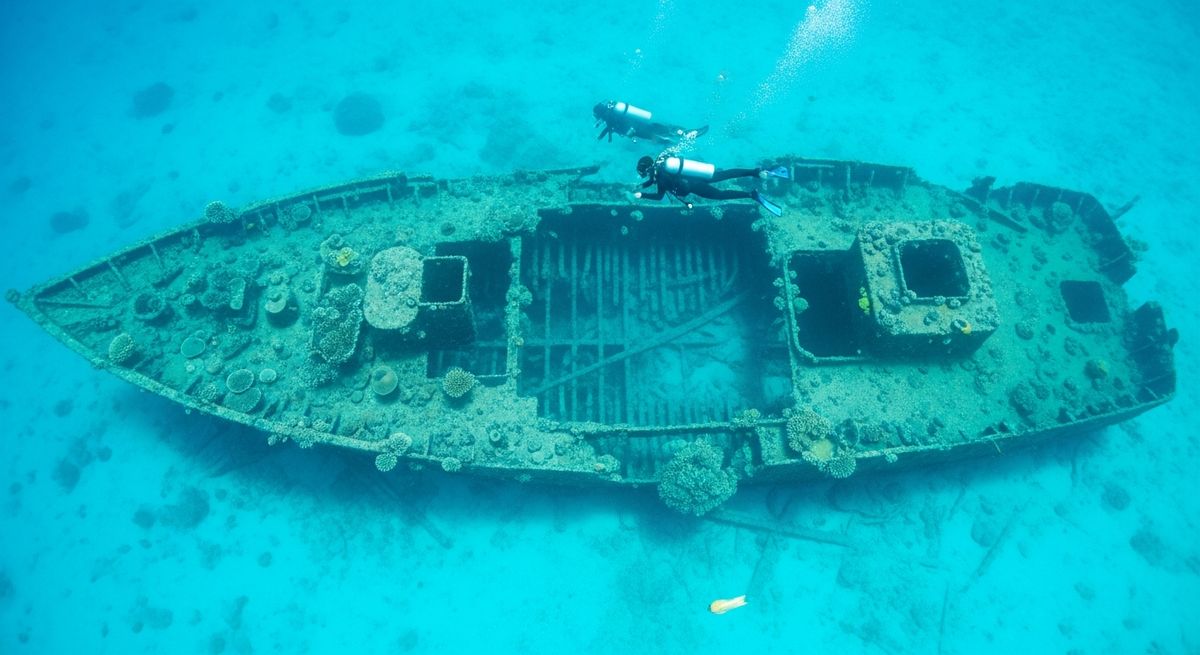
The *Brestois* sits in about 37 metres of water off Plymouth, a substantial iron steamship that went down after a collision in 1918. For us, this wreck is one of the standout dives in the area, a proper penetration dive if you know what you’re doing and have the right training. You’ll drop down onto the bow, often with impressive visibility, and find yourself looking into the cavernous holds. We love finning through the open sections, seeing light filter down, illuminating massive conger eels peering out from gaps in the plates. Our favourite part is the engine room, surprisingly intact, where you can still make out machinery wrapped in anemones. Keep an eye out for dogfish resting in the sand nearby, and big ballan wrasse patrolling the perimeter. The *Brestois* really gives you a sense of its history; you can almost feel the chill of that March morning it went down. It’s definitely one for experienced cold water wreck divers who appreciate a good, honest dive with plenty to explore, especially those who enjoy a bit of overhead environment.
Typical BRESTOIS Dive Profile
Illustrative profile based on site depth and type. Actual dive profiles vary - always follow your dive computer and training.
Safety Notes
Deep dive (37m) - monitor air consumption closely. Advanced certification recommended.
Wreck site - avoid penetration without wreck diving certification. Watch for sharp metal and entanglement hazards.
Always perform a 3-minute safety stop at 5m before surfacing.
BRESTOIS Wreck History
Year Sunk
1918
Vessel Type
cargo ship
Cause
torpedo
Tonnage
1,173 GRT
The SS Brestois was a French-owned, iron-hulled steamship built in 1897. Her career came to a violent end during the final year of World War I, a period when German U-boats were relentlessly targeting Allied shipping in the English Channel. On March 7, 1918, the Brestois was on a voyage in ballast from Cherbourg, France, to Cardiff, Wales, when she sailed into the periscope sights of the German submarine UB-55.
Without warning, the U-boat launched a torpedo that struck the Brestois, sealing her fate. The explosion was catastrophic, and the ship sank quickly, tragically taking 18 of her crew members with her to the seabed. She became another statistic in the brutal war at sea, a civilian vessel lost to a military conflict.
Today, the wreck of the Brestois lies at a depth of 37 meters. It's a dive for more experienced enthusiasts, offering a poignant glimpse into the past. The wreck is broken but key features, including her single boiler and compound expansion engine, are still clearly identifiable. As you explore the scattered remains, now colonized by anemones and patrolled by fish, it's impossible not to reflect on the sudden and violent end this vessel and her crew met over a century ago.
Nearest Dive Centres to BRESTOIS
Dive shops near BRESTOIS
Divers Down
TAL Scuba Ltd.
Mayim Mermaid Academy
Dorset Diving Services
In2 Diving
Andark Diving
Reviews for BRESTOIS
Conditions
Ocean conditions, forecast and tides for BRESTOIS
BRESTOIS Ocean Conditions
Monthly averages for BRESTOIS, sourced from Open-Meteo marine data - nearest station: Open-Meteo marine grid (50.44, -2.73) (3km away)
October Averages
Sea Temperature
17°C
62°F · Range: 15.1–17.5°C
Air Temperature
13°C
56°F
Wind Speed
8.14 m/s
15.8 knots
Atmospheric Pressure
1011 hPa
Based on 4 years of monitoring data · Data sources: Open-Meteo marine data
Plan & book
Ways to dive Cornwall & Devon, from day trips to liveaboards.
Day trips & courses
via GetYourGuideGuided dives, courses and snorkel trips with instant booking.
Find dive trips in Cornwall & DevonPlaces to stay
via Booking.comHotels and dive resorts near Cornwall & Devon.
Search stays in Cornwall & DevonDive insurance
Most travel insurance excludes or limits scuba. Check what you need before you go.
Dive insurance explainedPartner links: we may earn a commission if you book, at no extra cost to you. How we make money
Where to Stay near BRESTOIS
Prices from Booking.com. We may earn a commission at no extra cost to you.