BRIGHTON
Protected Area
Gouliot Caves and Headland, Sark
Why dive here
With 176+ marine species recorded in the area - including blue sharks, dolphins, dwarf minke whales, humpback whales and ocean sunfish (mola mola) - BRIGHTON offers some of Cornwall & Devon's richest wreck diving. Water ranges 10-18°C, warmest July, August, September.
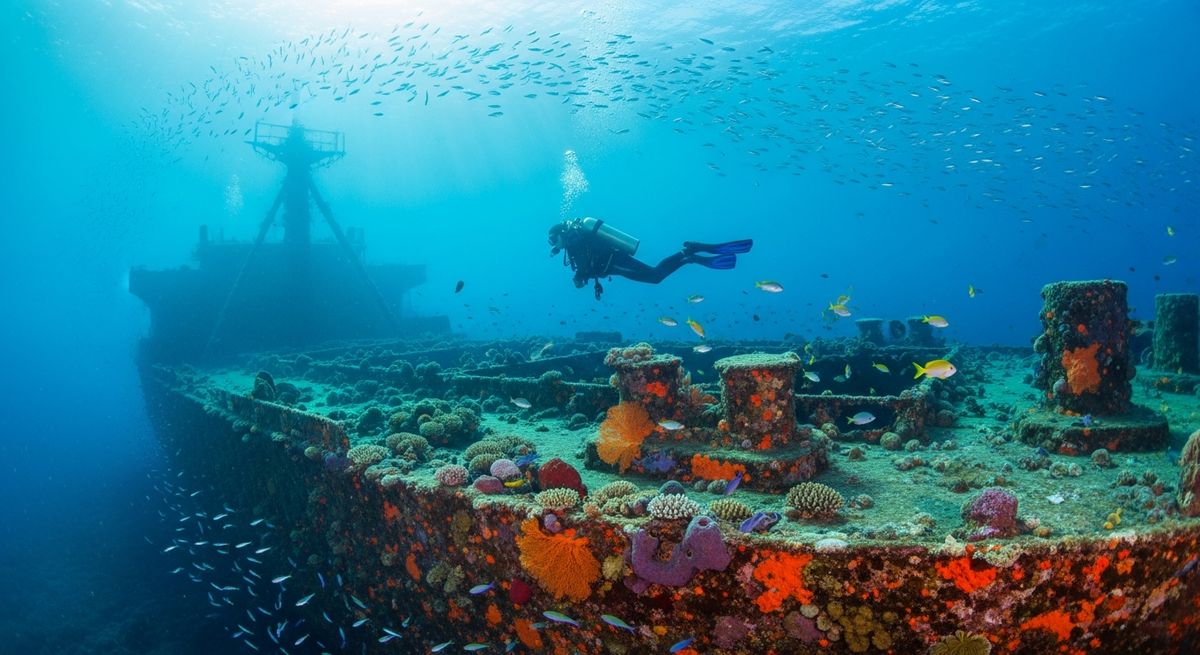
The Brighton, oh, she’s a proper charmer for a shallow wreck. Sunk way back in 1887, this steamship met its end on Grande Braye Rock, and what’s left of her now sits in just 5 metres of water. We love a wreck you can really spend time exploring without racking up deco, and the Brighton delivers. You'll find scattered hull plates and ribs spread across the seabed, twisted into some fantastic shapes by over a century of storms. What really makes the Brighton a standout for us is the way the sea has reclaimed her. These metal remains have become a thriving artificial reef. Expect to spot spider crabs scuttling amongst the plates and dogfish resting in the shadows. Look carefully into the nooks and crannies for blennies peering out, and we’ve often seen small shoals of pollack darting through the clearer sections. It’s a gentle dive, brilliant for newer wreck divers or anyone who just wants a relaxed bimble with plenty to see without deep dive concerns. Pick a calm day, and you can practically snorkel it, the visibility often decent enough to make out the bigger features from the surface.
Typical BRIGHTON Dive Profile
Illustrative profile based on site depth and type. Actual dive profiles vary - always follow your dive computer and training.
Safety Notes
Wreck site - avoid penetration without wreck diving certification. Watch for sharp metal and entanglement hazards.
BRIGHTON Wreck History
Year Sunk
1887
Vessel Type
ferry
Cause
grounding
The SS Brighton was a Victorian-era steamship, likely part of the London Brighton and South Coast Railway's fleet of cross-channel ferries that connected England to the Channel Islands. These vessels were the lifeblood of the islands, carrying passengers, mail, and essential cargo. On January 29, 1887, the Brighton's career came to an abrupt end during a voyage from Weymouth to Guernsey. In treacherous conditions, she struck the Grande Braye Rock and became hopelessly stranded.
Fortunately, a swift response ensured that all 23 passengers and the entire crew were saved before the sea claimed the ship. Today, the wreck of the Brighton lies in just 5 meters of water. Over 130 years of storms and tides have broken the vessel apart, but divers can still find boilers, sections of the hull, and other machinery scattered across the seabed. It's an atmospheric dive that connects you directly with the golden age of steam travel.
Nearest Dive Centres to BRIGHTON
Dive shops near BRIGHTON
View all dive centres in Cornwall & DevonReviews for BRIGHTON
Conditions
Ocean conditions, forecast and tides for BRIGHTON
BRIGHTON Ocean Conditions
Monthly averages for BRIGHTON, sourced from Open-Meteo marine data - nearest station: Open-Meteo marine grid (50.44, -2.73) (3km away)
October Averages
Sea Temperature
17°C
62°F · Range: 15.1–17.5°C
Air Temperature
13°C
56°F
Wind Speed
8.14 m/s
15.8 knots
Atmospheric Pressure
1011 hPa
Based on 4 years of monitoring data · Data sources: Open-Meteo marine data
Plan & book
Ways to dive Cornwall & Devon, from day trips to liveaboards.
Day trips & courses
via GetYourGuideGuided dives, courses and snorkel trips with instant booking.
Find dive trips in Cornwall & DevonPlaces to stay
via Booking.comHotels and dive resorts near Cornwall & Devon.
Search stays in Cornwall & DevonDive insurance
Most travel insurance excludes or limits scuba. Check what you need before you go.
Dive insurance explainedPartner links: we may earn a commission if you book, at no extra cost to you. How we make money
Where to Stay near BRIGHTON
Prices from Booking.com. We may earn a commission at no extra cost to you.