BRIGITTA
Protected Area
Utopia
Why dive here
With 176+ marine species recorded in the area - including blue sharks, dolphins, dwarf minke whales, humpback whales and ocean sunfish (mola mola) - BRIGITTA offers some of Cornwall & Devon's richest wreck diving. Water ranges 10-18°C, warmest July, August, September.
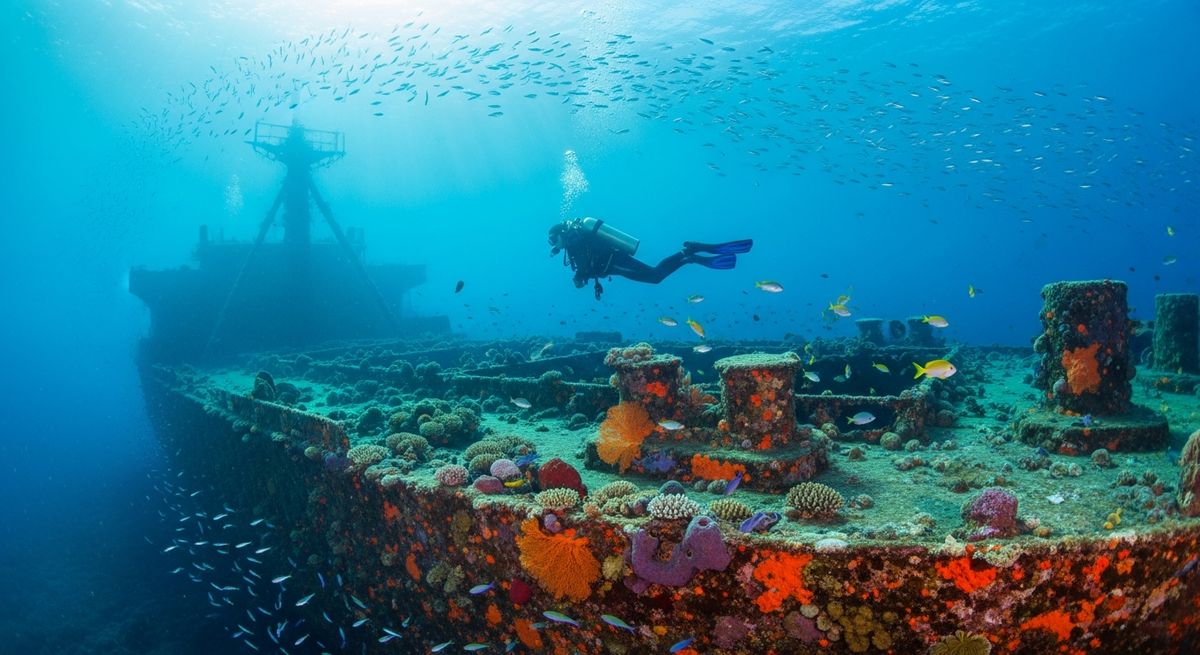
The Brigitta is one of those wrecks that just delivers. Not because it’s a big, dramatic behemoth, but because it’s a perfectly formed, accessible time capsule. Lying shallow at 13m, this World War I steamer was mined in 1917, now sitting upright on a sandy seabed. We love how much of the structure is still intact, giving you a real sense of its former life. You can pick out the bow, stern, and the engine room; penetration is limited, but there's plenty to explore externally. What truly brings the Brigitta to life for us is the way marine life has embraced it. We've often seen spider crabs scuttling across the deck plates, and there are usually conger eels peering from dark nooks. Our favourite time to dive it is on a calm, sunny day with good visibility – the light filtering through the water really illuminates the structure and the kelp growing on the highest points. It’s a cracker of a dive for anyone who appreciates history and abundant temperate water life without the need for deep diving or strong currents.
Typical BRIGITTA Dive Profile
Illustrative profile based on site depth and type. Actual dive profiles vary - always follow your dive computer and training.
Safety Notes
Wreck site - avoid penetration without wreck diving certification. Watch for sharp metal and entanglement hazards.
Always perform a 3-minute safety stop at 5m before surfacing.
BRIGITTA Wreck History
Year Sunk
1917
Vessel Type
cargo ship
Cause
mine
The SS Brigitta is a casualty of the First World War, a poignant reminder of the conflict's reach into civilian maritime trade. On December 4, 1917, this steamship was undertaking a vital wartime journey from the Welsh port of Barry to Dieppe, France, likely carrying coal or other essential supplies for the war effort. As she navigated the English Channel, she fell victim to one of the most indiscriminate weapons of the era: a naval mine. The explosion was catastrophic, sending the Brigitta and her cargo to the seabed.
Now resting in 13 meters of water, the Brigitta offers a fascinating dive into WWI history. The wreck is accessible to a wide range of divers due to its moderate depth. Exploring the remains of this humble steamship, now colonized by anemones and patrolled by fish, provides a direct link to the sacrifices made by the merchant navy during the Great War. It serves as an underwater memorial to the countless vessels and crews lost to the 'war to end all wars'.
Nearest Dive Centres to BRIGITTA
Dive shops near BRIGITTA
Sussex Diving & Leisure
Mulberry Marine Experiences CIC
Abyss Scuba School
In2 Diving
Ocean View
Andark Diving
Reviews for BRIGITTA
Conditions
Ocean conditions, forecast and tides for BRIGITTA
BRIGITTA Ocean Conditions
Monthly averages for BRIGITTA, sourced from Open-Meteo marine data - nearest station: Open-Meteo marine grid (50.44, -2.73) (3km away)
October Averages
Sea Temperature
17°C
62°F · Range: 15.1–17.5°C
Air Temperature
13°C
56°F
Wind Speed
8.14 m/s
15.8 knots
Atmospheric Pressure
1011 hPa
Based on 4 years of monitoring data · Data sources: Open-Meteo marine data
Plan & book
Ways to dive Cornwall & Devon, from day trips to liveaboards.
Day trips & courses
via GetYourGuideGuided dives, courses and snorkel trips with instant booking.
Find dive trips in Cornwall & DevonPlaces to stay
via Booking.comHotels and dive resorts near Cornwall & Devon.
Search stays in Cornwall & DevonDive insurance
Most travel insurance excludes or limits scuba. Check what you need before you go.
Dive insurance explainedPartner links: we may earn a commission if you book, at no extra cost to you. How we make money
Where to Stay near BRIGITTA
Prices from Booking.com. We may earn a commission at no extra cost to you.