BRISK (PROBABLY)
Protected Area
South-West Approaches to Bristol Channel
Why dive here
With 176+ marine species recorded in the area - including blue sharks, dolphins, dwarf minke whales, humpback whales and ocean sunfish (mola mola) - BRISK (PROBABLY) offers some of Cornwall & Devon's richest wreck diving. Water ranges 10-18°C, warmest July, August, September.
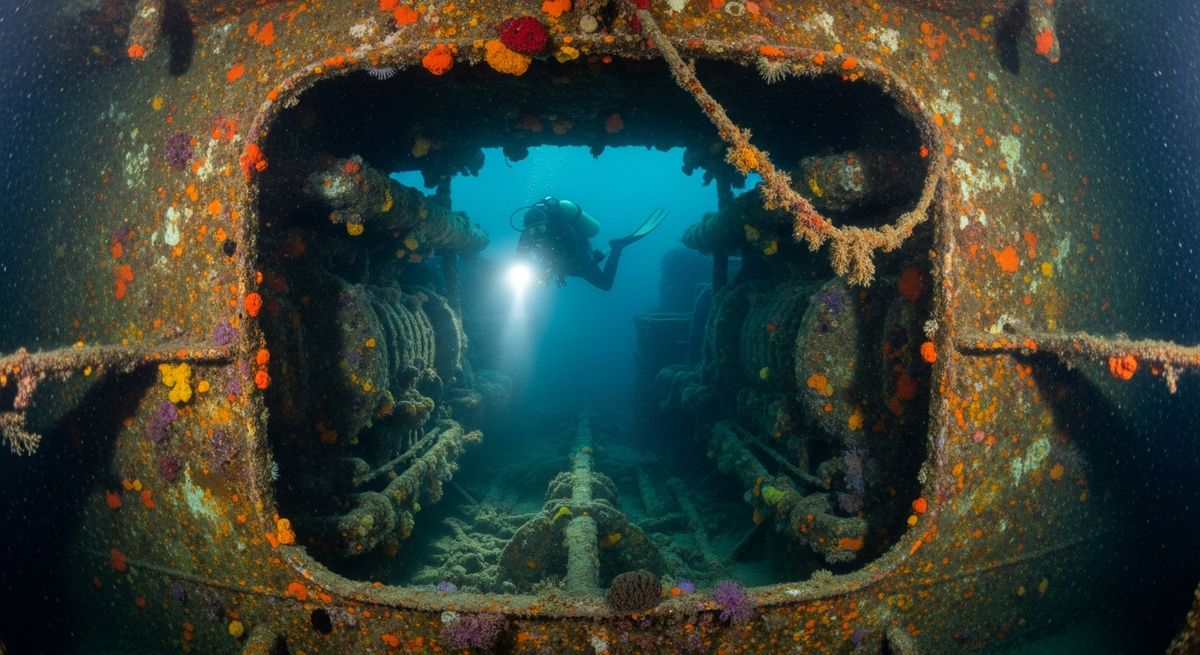
The Brisk, probably, sits deep at 53 metres, a proper technical dive in the often-chilly embrace of the English Channel. We love this wreck for its scale. She was an 81-metre steamship, sunk in 1918, and her bones are still impressively intact, even after more than a century on the seabed. Expect a proper deep dive, with decent bottom time if you're well-planned. When the visibility is good, which is never a guarantee off Cornwall, you can make out the huge boilers, a defining feature for us, and the triple-expansion engine. It’s a silent, eerie place. The wreck provides a huge structure for life, so we've seen everything from sprawling jewel anemones coating the metalwork to large conger eels lurking in shadowed compartments. For deep wreck enthusiasts, this is a real treat, offering exploration and a sense of history without the crowds. It's a proper expedition, not a casual dip.
Typical BRISK (PROBABLY) Dive Profile
Illustrative profile based on site depth and type. Actual dive profiles vary - always follow your dive computer and training.
Safety Notes
Maximum depth 53m exceeds recreational limits (40m). Technical diving certification and equipment required.
Wreck site - avoid penetration without wreck diving certification. Watch for sharp metal and entanglement hazards.
Always perform a 3-minute safety stop at 5m before surfacing.
BRISK (PROBABLY) Wreck History
Year Sunk
1918
Vessel Type
cargo ship
Cause
torpedo
The Norwegian steamship BRISK was built in Bergen in 1906 and served as a merchant vessel for the Acties. Bonheur company. Her fate was sealed during the final year of the First World War. In June 1918, while on passage from the vital coal-shipping port of Cardiff, she disappeared into the depths of the English Channel. While the official cause is not listed, her sinking is consistent with the thousands of other merchant ships lost in these waters during the war, making it almost certain she was the victim of a German U-boat attack.
Resting at a challenging depth of 53 meters, the wreck identified as the BRISK is a dive reserved for experienced technical divers. This is a journey back in time to the height of the Great War at sea. The wreck is a somber and atmospheric site, a steel casualty lying in the shipping graveyard off the coast of Cornwall. Exploring her remains offers a direct connection to a pivotal moment in world history, a testament to the merchant mariners who risked everything to keep supply lines open.
Nearest Dive Centres to BRISK (PROBABLY)
Dive shops near BRISK (PROBABLY)
Harlyn Dive School
Dive Newquay
Scuba 2000
Wavecrest Scuba
Reviews for BRISK (PROBABLY)
Conditions
Ocean conditions, forecast and tides for BRISK (PROBABLY)
BRISK (PROBABLY) Ocean Conditions
Monthly averages for BRISK (PROBABLY), sourced from Open-Meteo marine data - nearest station: Open-Meteo marine grid (50.44, -2.73) (3km away)
October Averages
Sea Temperature
17°C
62°F · Range: 15.1–17.5°C
Air Temperature
13°C
56°F
Wind Speed
8.14 m/s
15.8 knots
Atmospheric Pressure
1011 hPa
Based on 4 years of monitoring data · Data sources: Open-Meteo marine data
Plan & book
Ways to dive Cornwall & Devon, from day trips to liveaboards.
Day trips & courses
via GetYourGuideGuided dives, courses and snorkel trips with instant booking.
Find dive trips in Cornwall & DevonPlaces to stay
via Booking.comHotels and dive resorts near Cornwall & Devon.
Search stays in Cornwall & DevonDive insurance
Most travel insurance excludes or limits scuba. Check what you need before you go.
Dive insurance explainedPartner links: we may earn a commission if you book, at no extra cost to you. How we make money
Where to Stay near BRISK (PROBABLY)
Prices from Booking.com. We may earn a commission at no extra cost to you.