BRITANNIA
Protected Area
Western King
Why dive here
With 176+ marine species recorded in the area - including blue sharks, dolphins, dwarf minke whales, humpback whales and ocean sunfish (mola mola) - BRITANNIA offers some of Cornwall & Devon's richest wreck diving. Water ranges 10-18°C, warmest July, August, September.
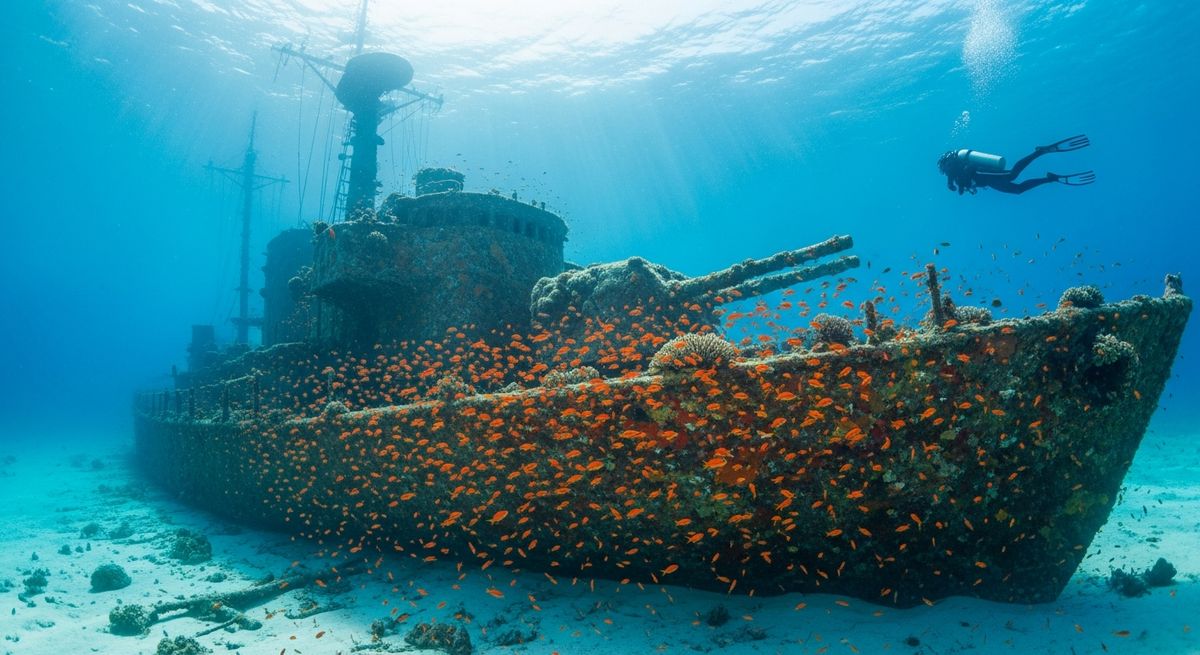
The Britannia, a trawler sunk after a collision in Plymouth Sound, offers a surprisingly engaging dive for its modest depth. We love this site for its accessibility and the way marine life has absolutely taken over the remains. You’ll weave through ribs draped in dead man’s fingers, each crevice home to blennies and crabs scuttling for cover. It's a fantastic spot for photographers looking for macro subjects, especially on a sunny day when the light penetrates right to the seabed, illuminating the rust-coloured hull plates. While it’s not a deep-wreck exploration, the Britannia provides plenty to poke around in, with sections of the superstructure still recognisable. We often find conger eels tucked into the larger openings, and the resident pollack will often eye you curiously. It’s a site that rewards a slow, deliberate dive, giving you time to appreciate the transformation from steel vessel to artificial reef. We'd suggest aiming for a slack tide, particularly if you’re trying to get that perfect shot of the anemones swaying on the mast.
Typical BRITANNIA Dive Profile
Illustrative profile based on site depth and type. Actual dive profiles vary - always follow your dive computer and training.
Safety Notes
Wreck site - avoid penetration without wreck diving certification. Watch for sharp metal and entanglement hazards.
BRITANNIA Wreck History
Vessel Type
fishing vessel
Cause
collision
The trawler Britannia came to a sudden end after a collision in the busy waters of Plymouth Sound. Now resting in just one meter of water, its remains serve as a stark reminder of the hazards of maritime navigation. As the wreck classification indicates, parts of the hull or superstructure are still visible above the water, particularly at low tide, making it a well-known feature for local boaters and divers.
This is an extremely shallow dive, ideal for a first-time wreck exploration, training dives, or even snorkeling. Divers can explore the scattered remains of this fishing vessel, which have become an artificial reef for the marine life of the Sound. It provides a unique opportunity to study the anatomy of a trawler in a calm, accessible environment without the need for significant depth or complex dive planning.
Nearest Dive Centres to BRITANNIA
Dive shops near BRITANNIA
Plymouth Diving Centre
Sound Diving Limited
Dive Looe
Scuba 2000
Viewpoint Diving Centre
Reviews for BRITANNIA
Conditions
Ocean conditions, forecast and tides for BRITANNIA
BRITANNIA Ocean Conditions
Monthly averages for BRITANNIA, sourced from Open-Meteo marine data - nearest station: Open-Meteo marine grid (50.44, -2.73) (3km away)
October Averages
Sea Temperature
17°C
62°F · Range: 15.1–17.5°C
Air Temperature
13°C
56°F
Wind Speed
8.14 m/s
15.8 knots
Atmospheric Pressure
1011 hPa
Based on 4 years of monitoring data · Data sources: Open-Meteo marine data
Plan & book
Ways to dive Cornwall & Devon, from day trips to liveaboards.
Day trips & courses
via GetYourGuideGuided dives, courses and snorkel trips with instant booking.
Find dive trips in Cornwall & DevonPlaces to stay
via Booking.comHotels and dive resorts near Cornwall & Devon.
Search stays in Cornwall & DevonDive insurance
Most travel insurance excludes or limits scuba. Check what you need before you go.
Dive insurance explainedPartner links: we may earn a commission if you book, at no extra cost to you. How we make money
Where to Stay near BRITANNIA
Prices from Booking.com. We may earn a commission at no extra cost to you.