BRITANNIA (POSSIBLY)
Protected Area
South of Portland
Why dive here
With 176+ marine species recorded in the area - including blue sharks, dolphins, dwarf minke whales, humpback whales and ocean sunfish (mola mola) - BRITANNIA (POSSIBLY) offers some of Cornwall & Devon's richest wreck diving. Water ranges 10-18°C, warmest July, August, September.
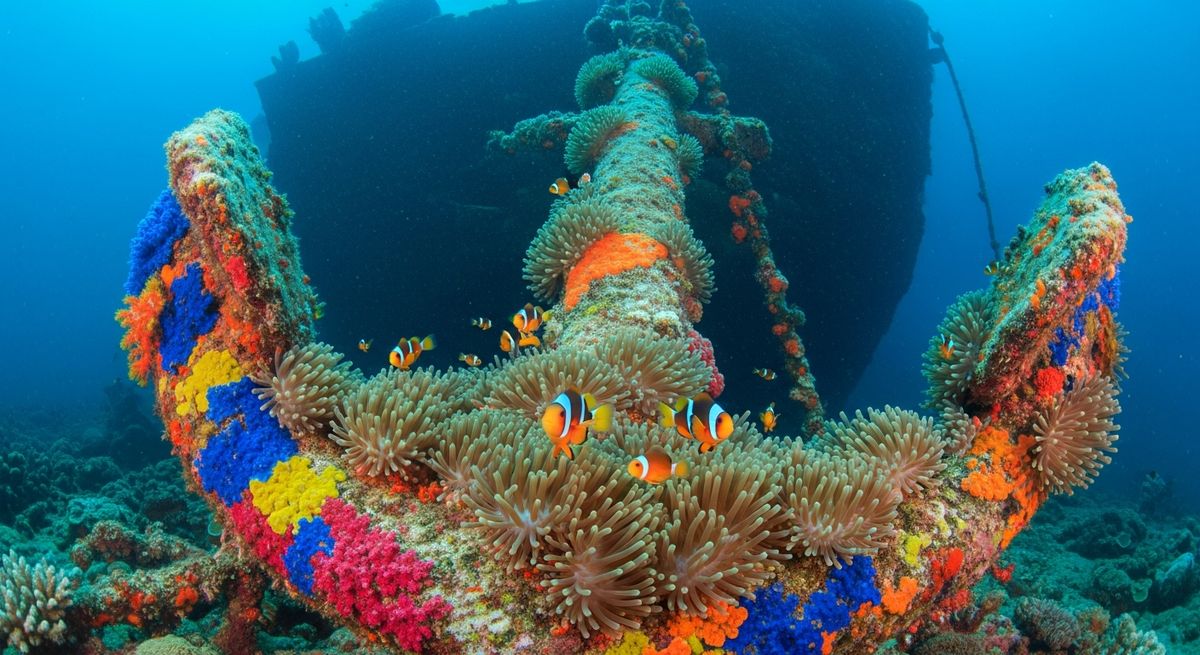
The Britannia, or what we strongly suspect is her, offers a deep dive for those comfortable with technical profiles. Dropping to 54 metres, this steamship wreck, built in 1883, presents a substantial structure for exploration. We love the way the light filters down, even at this depth, revealing the ship's bones, encrusted with a thick layer of plumose anemones that shimmer in the torch beam. You can pick out the massive compound inverted engine, still largely intact, and the single shaft stretching back. Visibility here can be surprisingly good on a calm day, and we've spent hours tracing the outline of her 91.4-metre length, imagining her final moments in 1884. Keep an eye out for conger eels peering from dark recesses, and those vivid orange jewel anemones that add splashes of colour to the monochrome depths. This is a dive for experienced wreck enthusiasts, a proper deep plunge into history, and our pick for a challenging yet rewarding exploration off the Cornish coast.
Typical BRITANNIA (POSSIBLY) Dive Profile
Illustrative profile based on site depth and type. Actual dive profiles vary - always follow your dive computer and training.
Safety Notes
Maximum depth 54m exceeds recreational limits (40m). Technical diving certification and equipment required.
Wreck site - avoid penetration without wreck diving certification. Watch for sharp metal and entanglement hazards.
Always perform a 3-minute safety stop at 5m before surfacing.
BRITANNIA (POSSIBLY) Wreck History
Year Sunk
1884
Vessel Type
cargo ship
Cause
unknown
The story of the steamship Britannia is one of tragic brevity. Built in 1883 by M. Pearse & Co. in Stockton-on-Tees, the brand-new vessel had a remarkably short career. Just over a year after its launch, on July 31, 1884, it sank off the coast of Devon. The exact cause of its loss is not recorded, leaving a mystery for the technical divers who venture down to its final resting place today. The wreck's uncertain identity, marked as 'Britannia (Possibly)', only adds to its allure.
Lying at a depth of 54 meters, this is a serious dive reserved for experienced technical or extended-range divers with the necessary training and equipment for decompression. Those who make the descent are rewarded with the sight of a classic Victorian-era steamship. Divers can identify key features like its compound inverted engine, a testament to the engineering of the time. The depth has helped preserve the wreck, making it an atmospheric and challenging dive into late 19th-century maritime history.
Nearest Dive Centres to BRITANNIA (POSSIBLY)
Dive shops near BRITANNIA (POSSIBLY)
View all dive centres in Cornwall & DevonReviews for BRITANNIA (POSSIBLY)
Conditions
Ocean conditions, forecast and tides for BRITANNIA (POSSIBLY)
BRITANNIA (POSSIBLY) Ocean Conditions
Monthly averages for BRITANNIA (POSSIBLY), sourced from Open-Meteo marine data - nearest station: Open-Meteo marine grid (50.44, -2.73) (3km away)
October Averages
Sea Temperature
17°C
62°F · Range: 15.1–17.5°C
Air Temperature
13°C
56°F
Wind Speed
8.14 m/s
15.8 knots
Atmospheric Pressure
1011 hPa
Based on 4 years of monitoring data · Data sources: Open-Meteo marine data
Plan & book
Ways to dive Cornwall & Devon, from day trips to liveaboards.
Day trips & courses
via GetYourGuideGuided dives, courses and snorkel trips with instant booking.
Find dive trips in Cornwall & DevonPlaces to stay
via Booking.comHotels and dive resorts near Cornwall & Devon.
Search stays in Cornwall & DevonDive insurance
Most travel insurance excludes or limits scuba. Check what you need before you go.
Dive insurance explainedPartner links: we may earn a commission if you book, at no extra cost to you. How we make money
Where to Stay near BRITANNIA (POSSIBLY)
Prices from Booking.com. We may earn a commission at no extra cost to you.