BROADMAYNE (PART OF)
Protected Area
Berry Head to Sharkham Point
Why dive here
With 176+ marine species recorded in the area - including blue sharks, dolphins, dwarf minke whales, humpback whales and ocean sunfish (mola mola) - BROADMAYNE (PART OF) offers some of Cornwall & Devon's richest wreck diving. Water ranges 10-18°C, warmest July, August, September.
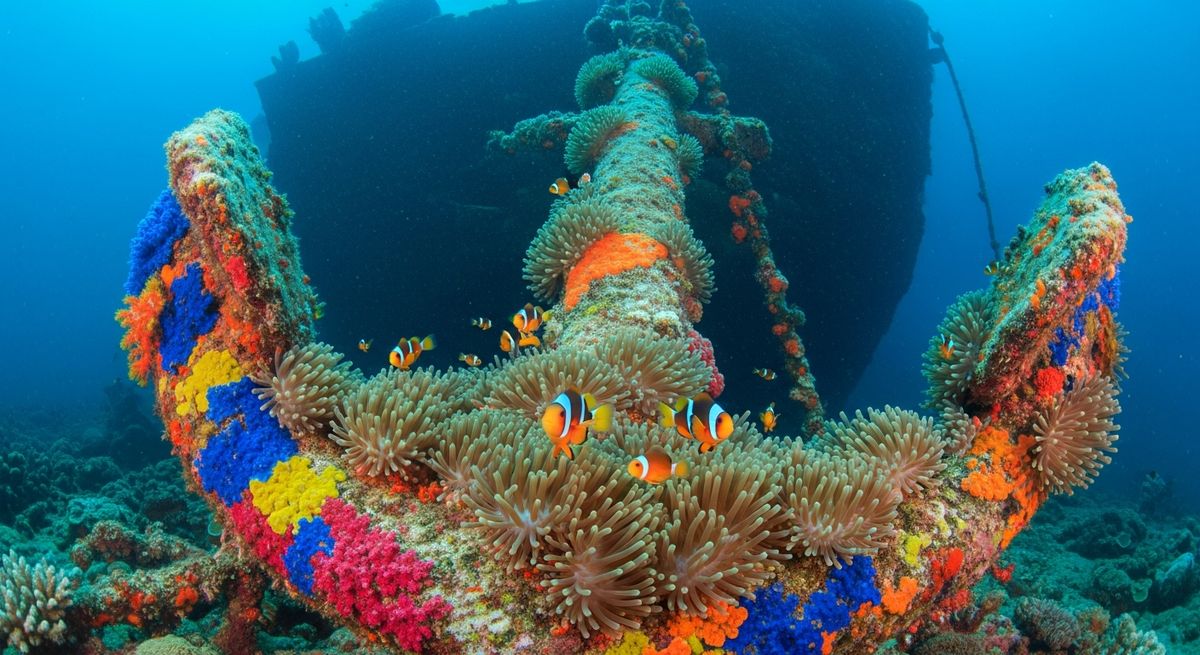
The Broadmayne is one of those wrecks we keep coming back to, especially if we’ve got newer divers on the boat. At just 8 metres deep, it’s remarkably accessible, sitting comfortably in recreational limits. You’ll find the remains pretty well spread out, but there’s enough structure to make it interesting. We love tracing the run of the hull plates, now largely colonised by plumose anemones that sway gently in the surge, looking like frosted trees in winter. Keep an eye out for the two massive boilers; they’re a real focal point and usually where you’ll find plenty of inquisitive ballan wrasse darting in and out. The triple-expansion engine is pretty broken up, but you can still make out its impressive scale. Our favourite tip for this site: head down on a sunny day with good visibility, preferably around slack water. When the light catches the anemones and the kelp fronds, it’s genuinely beautiful, and the calmer conditions make it a doddle to explore without fighting a current. It’s a great introduction to wreck diving in the UK, especially for those getting comfortable with a bit of ambient light penetration.
Typical BROADMAYNE (PART OF) Dive Profile
Illustrative profile based on site depth and type. Actual dive profiles vary - always follow your dive computer and training.
Safety Notes
Wreck site - avoid penetration without wreck diving certification. Watch for sharp metal and entanglement hazards.
BROADMAYNE (PART OF) Wreck History
Year Sunk
1921
Vessel Type
tanker
Cause
grounding
The remains of the Broadmayne tell a story from the dawn of the age of oil. Built in 1888 as the SS Oka by the renowned Palmers & Co. shipyard in Newcastle-upon-Tyne, she served for decades before being acquired by Associated Oil Tankers Ltd. Her career ended abruptly on January 2, 1921, when she was lost off the Devon coast. The exact circumstances are unclear, but it is likely she ran aground in heavy weather, causing the vessel to break apart.
Lying in just 8 meters of water, the scattered remains of the Broadmayne offer an excellent and accessible dive for all levels, including beginners. As the site name suggests, this is not an intact wreck, but rather a field of wreckage to explore. Divers can easily investigate the ship's two boilers and parts of her triple-expansion engine. Its shallow depth ensures long bottom times and great light, allowing plenty of opportunity to search the debris for artifacts and admire the marine life that has colonized this piece of industrial history.
Nearest Dive Centres to BROADMAYNE (PART OF)
Dive shops near BROADMAYNE (PART OF)
Teign Diving Centre
Edge Watersports
Sound Diving Limited
Plymouth Diving Centre
Reviews for BROADMAYNE (PART OF)
Conditions
Ocean conditions, forecast and tides for BROADMAYNE (PART OF)
BROADMAYNE (PART OF) Ocean Conditions
Monthly averages for BROADMAYNE (PART OF), sourced from Open-Meteo marine data - nearest station: Open-Meteo marine grid (50.44, -2.73) (3km away)
October Averages
Sea Temperature
17°C
62°F · Range: 15.1–17.5°C
Air Temperature
13°C
56°F
Wind Speed
8.14 m/s
15.8 knots
Atmospheric Pressure
1011 hPa
Based on 4 years of monitoring data · Data sources: Open-Meteo marine data
Plan & book
Ways to dive Cornwall & Devon, from day trips to liveaboards.
Day trips & courses
via GetYourGuideGuided dives, courses and snorkel trips with instant booking.
Find dive trips in Cornwall & DevonPlaces to stay
via Booking.comHotels and dive resorts near Cornwall & Devon.
Search stays in Cornwall & DevonDive insurance
Most travel insurance excludes or limits scuba. Check what you need before you go.
Dive insurance explainedPartner links: we may earn a commission if you book, at no extra cost to you. How we make money
Where to Stay near BROADMAYNE (PART OF)
Prices from Booking.com. We may earn a commission at no extra cost to you.