BROOMHILL (PROBABLY)
Protected Area
East of Start Point
Why dive here
With 176+ marine species recorded in the area - including blue sharks, dolphins, dwarf minke whales, humpback whales and ocean sunfish (mola mola) - BROOMHILL (PROBABLY) offers some of Cornwall & Devon's richest wreck diving. Water ranges 10-18°C, warmest July, August, September.
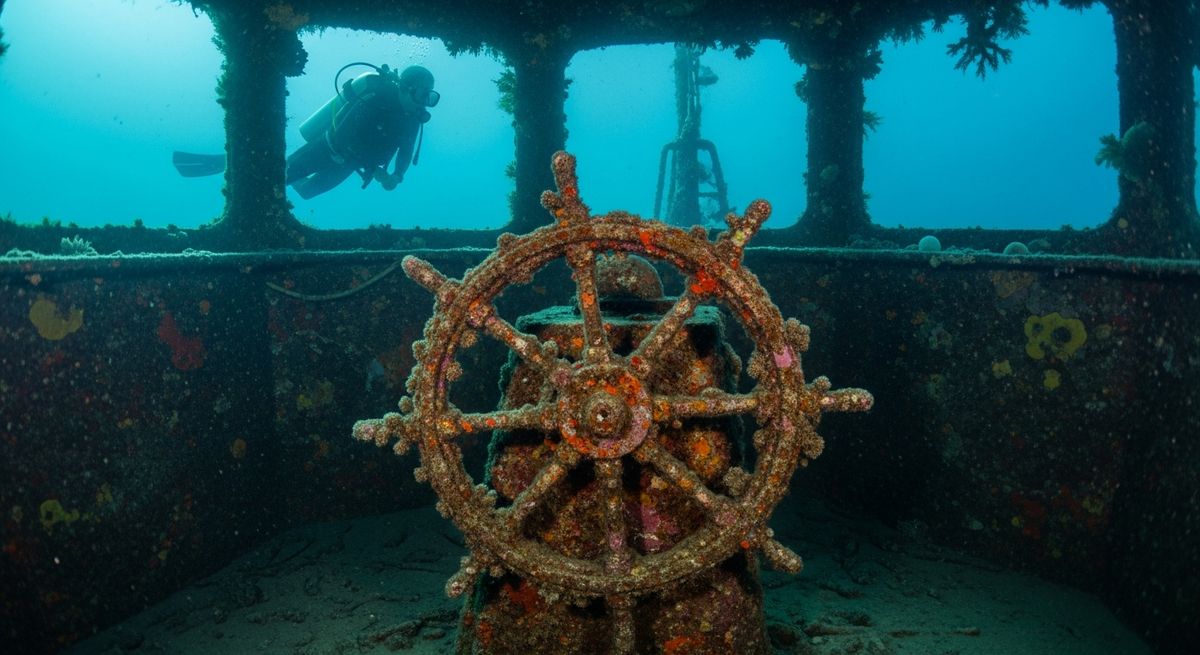
We’re going to level with you, the Broomhill is one of those wrecks we keep coming back to. Sitting deep at 47m, it’s not for the faint-hearted, but the reward is a truly magnificent piece of history. The twin boilers are still upright, dominating the midship section. You can swim through cavernous holds, imagining the cargo she once carried. The wreck itself is a magnet for life. We’ve seen conger eels coiled in every nook, their heads peeking out from behind corroded steel plates. Schools of pollack often swirl above the deck, dappling the light that penetrates this deep. Our favourite detail? The triple expansion engine, a beautiful piece of engineering still largely intact, a testament to its builders. This dive is best on a calm day with minimal current, allowing you to really take your time and soak in the atmosphere. It’s a proper expedition, demanding good planning and trimix, but always worth the effort for those who appreciate a substantial wreck.
Typical BROOMHILL (PROBABLY) Dive Profile
Illustrative profile based on site depth and type. Actual dive profiles vary - always follow your dive computer and training.
Safety Notes
Maximum depth 47m exceeds recreational limits (40m). Technical diving certification and equipment required.
Wreck site - avoid penetration without wreck diving certification. Watch for sharp metal and entanglement hazards.
Always perform a 3-minute safety stop at 5m before surfacing.
BROOMHILL (PROBABLY) Wreck History
Year Sunk
1917
Vessel Type
cargo ship
Cause
torpedo
Tonnage
1,392 GRT
The SS Broomhill was a steam-powered collier built in 1909 for the Brookhill Collieries Ltd., tasked with the vital role of transporting coal. Like many merchant vessels of its time, it was pressed into service during the First World War, braving the dangerous, submarine-infested waters around the British Isles to supply the Allied war effort.
Its final voyage came on May 10, 1917. While steaming from the Tyne to Rouen, France, with a full cargo of coal, the Broomhill was spotted by the German submarine UC-75. Approximately four miles off Prawle Point, Devon, the U-boat fired a single torpedo, which struck the collier and sent it to the seabed. The sinking was a stark reminder of the perils faced by the merchant navy during the Great War.
Today, the wreck tentatively identified as the Broomhill lies at a depth of 47 metres. This is a challenging dive reserved for experienced, deep-certified divers. Those who make the descent are rewarded with the sight of a classic WWI-era steamship. While time and the sea have taken their toll, key features such as the two large boilers and the triple-expansion engine are still clearly identifiable, standing as proud relics of a bygone age of steam power. The wreckage provides a rich habitat for marine life, with its metal structures often shrouded in colourful anemones and schooling fish.
Nearest Dive Centres to BROOMHILL (PROBABLY)
Dive shops near BROOMHILL (PROBABLY)
Dive Beyond Limited
Old Harbour Dive Centre
Edge Watersports
Teign Diving Centre
Reviews for BROOMHILL (PROBABLY)
Conditions
Ocean conditions, forecast and tides for BROOMHILL (PROBABLY)
BROOMHILL (PROBABLY) Ocean Conditions
Monthly averages for BROOMHILL (PROBABLY), sourced from Open-Meteo marine data - nearest station: Open-Meteo marine grid (50.44, -2.73) (3km away)
October Averages
Sea Temperature
17°C
62°F · Range: 15.1–17.5°C
Air Temperature
13°C
56°F
Wind Speed
8.14 m/s
15.8 knots
Atmospheric Pressure
1011 hPa
Based on 4 years of monitoring data · Data sources: Open-Meteo marine data
Plan & book
Ways to dive Cornwall & Devon, from day trips to liveaboards.
Day trips & courses
via GetYourGuideGuided dives, courses and snorkel trips with instant booking.
Find dive trips in Cornwall & DevonPlaces to stay
via Booking.comHotels and dive resorts near Cornwall & Devon.
Search stays in Cornwall & DevonDive insurance
Most travel insurance excludes or limits scuba. Check what you need before you go.
Dive insurance explainedPartner links: we may earn a commission if you book, at no extra cost to you. How we make money
Where to Stay near BROOMHILL (PROBABLY)
Prices from Booking.com. We may earn a commission at no extra cost to you.