BRUNETTE
Protected Area
Upper Fal Estuary and Woods
Why dive here
With 176+ marine species recorded in the area - including blue sharks, dolphins, dwarf minke whales, humpback whales and ocean sunfish (mola mola) - BRUNETTE offers some of Cornwall & Devon's richest wreck diving. Water ranges 10-18°C, warmest July, August, September.
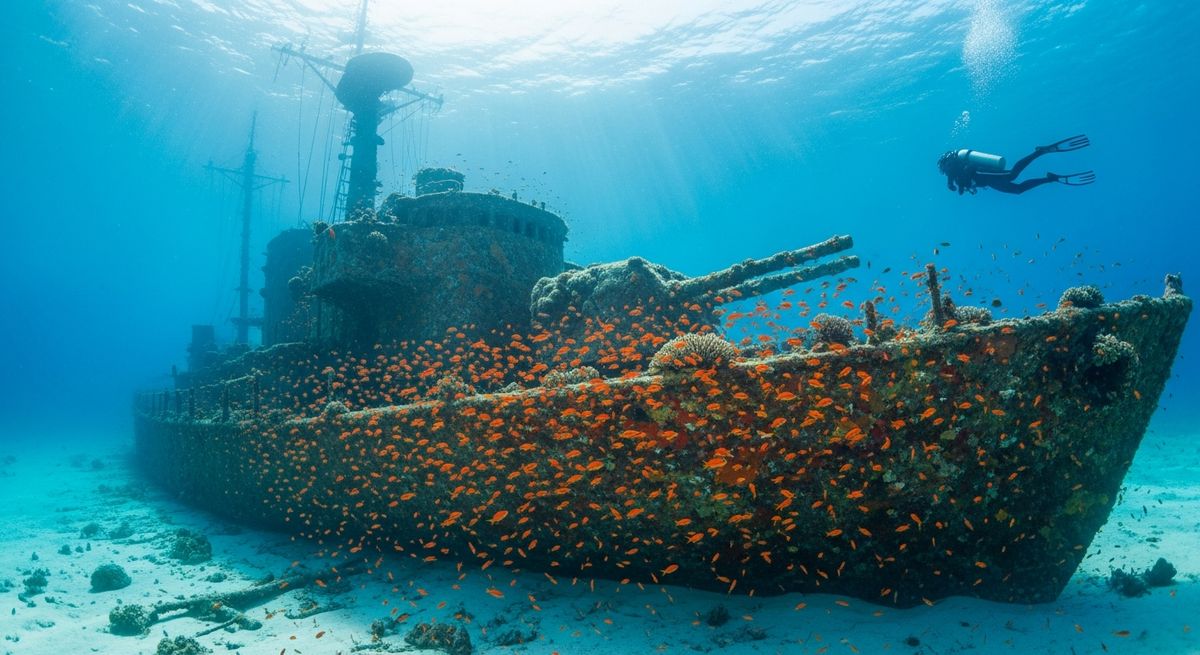
The Brunette is a bit of a local legend, and for good reason. We love this site for its accessibility and just how much character this old dredger has packed into its relatively shallow depth. Dropping onto the wreck, you'll immediately feel the chill of the UK waters, but the sheer volume of life makes you forget the cold pretty quickly. Shoals of bib and pouting absolutely swarm the superstructure, darting in and out of the rusted metal. This wreck, sunk in 1981, is now a proper artificial reef. You can spend a good chunk of time exploring the engine room, which is often full of conger eels peeking out from every nook, or peering into the hold where crabs scuttle across the seabed. Visibility here can vary wildly, from a murky five metres to a surprisingly clear fifteen, especially on a settled day with a slack tide. We’d suggest timing your dive around high slack for the best chance at calmer conditions and clearer water. It’s perfect for newer wreck divers looking to get their fins wet on something with a bit of history, without the intimidating depth.
Typical BRUNETTE Dive Profile
Illustrative profile based on site depth and type. Actual dive profiles vary - always follow your dive computer and training.
Safety Notes
Wreck site - avoid penetration without wreck diving certification. Watch for sharp metal and entanglement hazards.
BRUNETTE Wreck History
Year Sunk
1981
Vessel Type
barge
Cause
unknown
The Brunette was a dredger that sank off the coast of Cornwall in April 1981. Little is known about the specific circumstances of her loss, but her final resting place has made her a well-known site for local divers. Lying in just 10 meters of water, the Brunette is an ideal dive for beginners, those undertaking training, or as a relaxed second dive of the day. Its shallow depth allows for long bottom times and excellent light penetration on a clear day.
As a relatively modern wreck in a shallow, high-energy environment, the Brunette is significantly broken up. Divers will find scattered sections of hull plating, deck machinery, and the recognisable dredging equipment. Over the decades, these remains have transformed into a thriving artificial reef, providing a home for a rich variety of marine life, including wrasse, pollack, crabs, and lobsters. Its classification as a 'dangerous wreck' serves as a reminder to be cautious of sharp metal edges and potential entanglement hazards.
Nearest Dive Centres to BRUNETTE
Dive shops near BRUNETTE
Seaways Diving
DiveUK
Karleyth Diving Ltd.
Wavecrest Scuba
Porthkerris Divers
Viewpoint Diving Centre
Reviews for BRUNETTE
Conditions
Ocean conditions, forecast and tides for BRUNETTE
BRUNETTE Ocean Conditions
Monthly averages for BRUNETTE, sourced from Open-Meteo marine data - nearest station: Open-Meteo marine grid (50.44, -2.73) (3km away)
October Averages
Sea Temperature
17°C
62°F · Range: 15.1–17.5°C
Air Temperature
13°C
56°F
Wind Speed
8.14 m/s
15.8 knots
Atmospheric Pressure
1011 hPa
Based on 4 years of monitoring data · Data sources: Open-Meteo marine data
Plan & book
Ways to dive Cornwall & Devon, from day trips to liveaboards.
Day trips & courses
via GetYourGuideGuided dives, courses and snorkel trips with instant booking.
Find dive trips in Cornwall & DevonPlaces to stay
via Booking.comHotels and dive resorts near Cornwall & Devon.
Search stays in Cornwall & DevonDive insurance
Most travel insurance excludes or limits scuba. Check what you need before you go.
Dive insurance explainedPartner links: we may earn a commission if you book, at no extra cost to you. How we make money
Where to Stay near BRUNETTE
Prices from Booking.com. We may earn a commission at no extra cost to you.