BUCHANNESS
Protected Area
Gouliot Caves and Headland, Sark
Why dive here
With 176+ marine species recorded in the area - including blue sharks, dolphins, dwarf minke whales, humpback whales and ocean sunfish (mola mola) - BUCHANNESS offers some of Cornwall & Devon's richest wreck diving. Water ranges 10-18°C, warmest July, August, September.
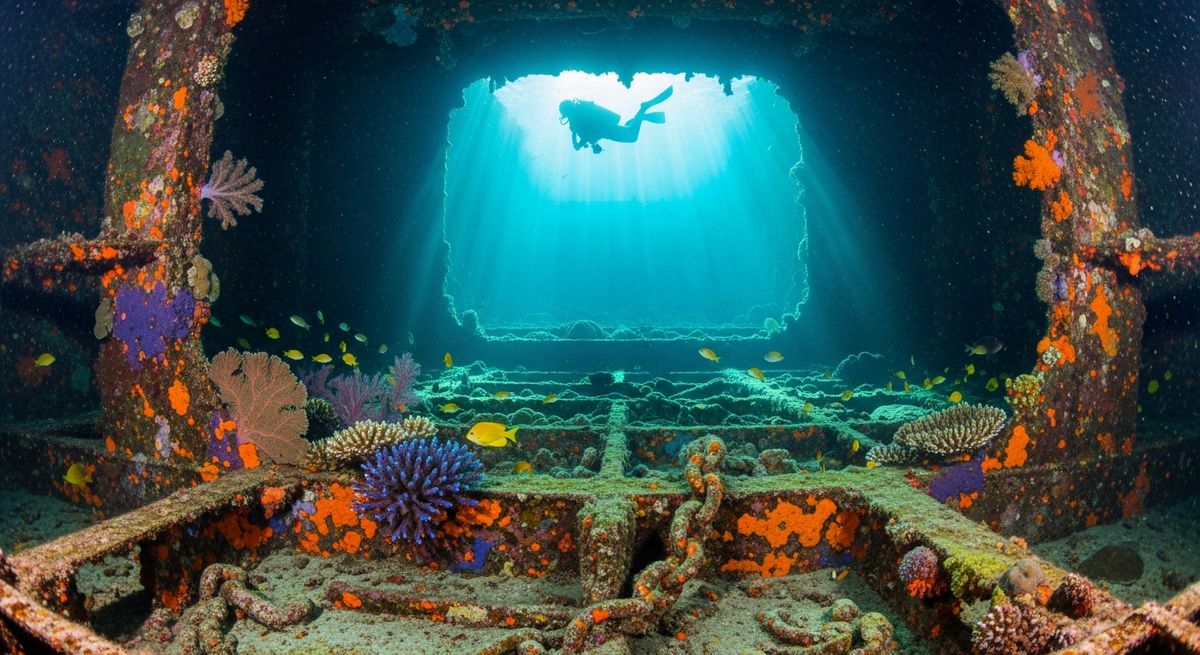
The Buchanness, what a cracking dive if you catch it right. This isn't a deep plunge, topping out at 5 metres, which makes it perfect for longer bottom times and really soaking in the details. We love the way she’s sprawled out, a steamship that went down in 1924 after losing her propeller shaft nut – imagine that, just drifting helplessly across the Channel. She’s broken up now, but the remains are substantial enough to give you a real sense of her scale. You’ll be finning over boilers and engine parts, a jumble of twisted metal that's become home to a surprising amount of life. Look closely in the nooks and crannies; you’ll often spot crabs scuttling and inquisitive blennies peering out. Our favourite is exploring the big, barnacle-encrusted plates, almost feeling the chill of the steel through your gloves. It's a fantastic site for newer wreck divers or those who just want a relaxed potter, exploring history that’s easily accessible. Just make sure to hit it on a calm day with good visibility, as strong tides can make it a bit silty.
Typical BUCHANNESS Dive Profile
Illustrative profile based on site depth and type. Actual dive profiles vary - always follow your dive computer and training.
Safety Notes
Wreck site - avoid penetration without wreck diving certification. Watch for sharp metal and entanglement hazards.
BUCHANNESS Wreck History
Year Sunk
1924
Vessel Type
cargo ship
Cause
grounding
The end for the steamship Buchanness was not a dramatic storm or wartime attack, but a simple, catastrophic mechanical failure. On April 12, 1924, while steaming from Dunkirk to Barry, the ship lost its propeller shaft nut while off Start Point in the English Channel. This seemingly minor event rendered the vessel completely helpless, leaving it without propulsion and at the mercy of the winds and tides. The powerless ship drifted across the busy shipping lanes until it ultimately met its end, running aground north of Burhou in the Channel Islands.
Resting in just 5 meters of water, the Buchanness is an incredibly accessible wreck, perfect for novice divers, trainees, and even snorkelers on a calm day. Due to its shallow depth and decades of exposure to the Channel's powerful currents and storms, the wreck is extensively broken up. Divers won't find an intact ship, but rather a fascinating debris field of boilers, hull plates, and machinery scattered across the seabed. This wreckage provides a fantastic habitat for the local marine life, including crabs, lobsters, and various species of fish that thrive in the sunlit shallow waters.
Nearest Dive Centres to BUCHANNESS
Dive shops near BUCHANNESS
View all dive centres in Cornwall & DevonReviews for BUCHANNESS
Conditions
Ocean conditions, forecast and tides for BUCHANNESS
BUCHANNESS Ocean Conditions
Monthly averages for BUCHANNESS, sourced from Open-Meteo marine data - nearest station: Open-Meteo marine grid (50.44, -2.73) (3km away)
October Averages
Sea Temperature
17°C
62°F · Range: 15.1–17.5°C
Air Temperature
13°C
56°F
Wind Speed
8.14 m/s
15.8 knots
Atmospheric Pressure
1011 hPa
Based on 4 years of monitoring data · Data sources: Open-Meteo marine data
Plan & book
Ways to dive Cornwall & Devon, from day trips to liveaboards.
Day trips & courses
via GetYourGuideGuided dives, courses and snorkel trips with instant booking.
Find dive trips in Cornwall & DevonPlaces to stay
via Booking.comHotels and dive resorts near Cornwall & Devon.
Search stays in Cornwall & DevonDive insurance
Most travel insurance excludes or limits scuba. Check what you need before you go.
Dive insurance explainedPartner links: we may earn a commission if you book, at no extra cost to you. How we make money
Where to Stay near BUCHANNESS
Prices from Booking.com. We may earn a commission at no extra cost to you.