BUESTEN
Protected Area
Berry Head to Sharkham Point
Why dive here
With 176+ marine species recorded in the area - including blue sharks, dolphins, dwarf minke whales, humpback whales and ocean sunfish (mola mola) - BUESTEN offers some of Cornwall & Devon's richest wreck diving. Water ranges 10-18°C, warmest July, August, September.
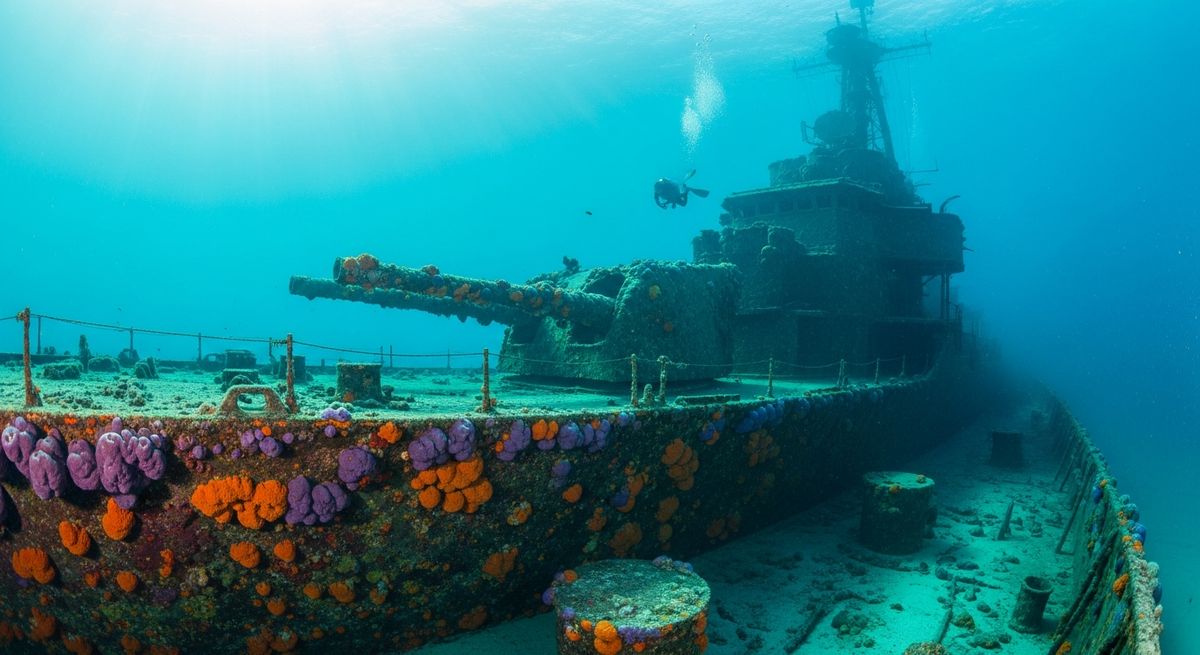
The *Buesten* is more than just a wreck; it’s a proper expedition dive, and we rate it highly for those with the right experience. Dropping onto her deck at 50 metres, you immediately feel the scale of this tanker, sunk by a bomb in 1941. We love exploring the huge engine room, an incredible space with machinery still largely intact, and the stern section where the prop shaft leads away into the gloom. The visibility here can be truly astounding on a good day, allowing you to appreciate the sheer length of the vessel stretching out before you. Look out for conger eels tucked into every crevice, and the vibrant jewel anemones that coat many of the exposed metal surfaces. This is a dive for experienced wreck enthusiasts who appreciate history and depth, not one for a quick splash. Plan your dive carefully; the currents can be playful, and that depth demands respect.
Typical BUESTEN Dive Profile
Illustrative profile based on site depth and type. Actual dive profiles vary - always follow your dive computer and training.
Safety Notes
Maximum depth 50m exceeds recreational limits (40m). Technical diving certification and equipment required.
Wreck site - avoid penetration without wreck diving certification. Watch for sharp metal and entanglement hazards.
Always perform a 3-minute safety stop at 5m before surfacing.
BUESTEN Wreck History
Year Sunk
1941
Vessel Type
tanker
Cause
torpedo
Tonnage
5,186 GRT
The MV Buesten was a Norwegian motor tanker built in 1927. During World War II, as part of the Allied merchant navy, she played a crucial role in the Battle of the Atlantic, bravely ferrying vital fuel supplies across the U-boat-infested ocean. In the spring of 1941, the Buesten was on the final leg of a perilous journey from Baytown, Texas, to Southampton, her tanks filled with precious cargo. On April 9, 1941, while off the coast of Cornwall, her luck ran out. She was spotted by the German submarine U-107, which fired a single torpedo that struck the tanker, sealing her fate.
Lying at a depth of 50 meters, the Buesten is now a classic deep wreck dive for experienced and technically qualified divers. The wreck is a formidable sight, largely intact and sitting upright on the seabed. As a tanker, her most impressive features are located at the stern, where divers can explore the large, distinct superstructure and the powerful three-cylinder oil engine that once drove her. The depth means bottom time is limited and conditions can be challenging, but for those with the right training, the MV Buesten offers a haunting and unforgettable dive into the history of World War II.
Nearest Dive Centres to BUESTEN
Dive shops near BUESTEN
View all dive centres in Cornwall & DevonReviews for BUESTEN
Conditions
Ocean conditions, forecast and tides for BUESTEN
BUESTEN Ocean Conditions
Monthly averages for BUESTEN, sourced from Open-Meteo marine data - nearest station: Open-Meteo marine grid (50.44, -2.73) (3km away)
October Averages
Sea Temperature
17°C
62°F · Range: 15.1–17.5°C
Air Temperature
13°C
56°F
Wind Speed
8.14 m/s
15.8 knots
Atmospheric Pressure
1011 hPa
Based on 4 years of monitoring data · Data sources: Open-Meteo marine data
Plan & book
Ways to dive Cornwall & Devon, from day trips to liveaboards.
Day trips & courses
via GetYourGuideGuided dives, courses and snorkel trips with instant booking.
Find dive trips in Cornwall & DevonPlaces to stay
via Booking.comHotels and dive resorts near Cornwall & Devon.
Search stays in Cornwall & DevonDive insurance
Most travel insurance excludes or limits scuba. Check what you need before you go.
Dive insurance explainedPartner links: we may earn a commission if you book, at no extra cost to you. How we make money
Where to Stay near BUESTEN
Prices from Booking.com. We may earn a commission at no extra cost to you.