CALVADOS
Protected Area
Gouliot Caves and Headland, Sark
Why dive here
With 176+ marine species recorded in the area - including blue sharks, dolphins, dwarf minke whales, humpback whales and ocean sunfish (mola mola) - CALVADOS offers some of Cornwall & Devon's richest wreck diving. Water ranges 10-18°C, warmest July, August, September.
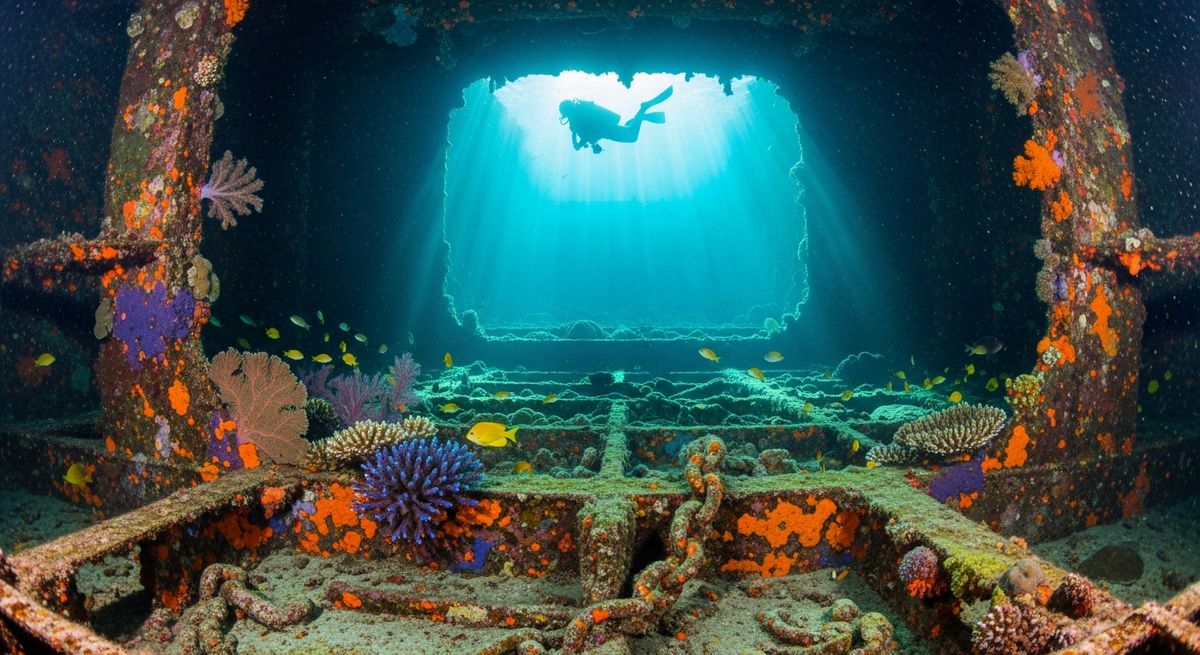
The *Calvados* is a proper piece of history, and we love a wreck that tells a story even in its broken state. Sunk way back in 1976 after striking rocks off Cap La Hague, this 15.2-metre sailing vessel now lies scattered at 30 metres, a stark reminder of the sea’s power. You won't find an intact hull here, but what you *will* find are spread-out sections of framework, plates, and timbers, all completely encrusted. This isn’t a rummage-through-the-ship site; it's more of an archaeological treasure hunt. We enjoy the challenge of identifying what’s what among the debris, picturing the ship as she once was. Look closely at the metalwork; you'll often see velvet swimming crabs tucked into crevices, their red eyes peering out. Conger eels are regulars, too, especially around the larger, more sheltered pieces of structure. It’s a site that suits divers who appreciate the quiet dignity of a wreck slowly being reclaimed by the ocean, rather than those chasing big pelagics. Early morning dives often bring the best visibility before any boat traffic stirs up the silty seabed. Bring a good torch; the light at 30 metres, even on a sunny day, brings out the surprising colours of the anemones and sponges.
Typical CALVADOS Dive Profile
Illustrative profile based on site depth and type. Actual dive profiles vary - always follow your dive computer and training.
Safety Notes
Depth of 30m - Advanced Open Water certification recommended.
Wreck site - avoid penetration without wreck diving certification. Watch for sharp metal and entanglement hazards.
Always perform a 3-minute safety stop at 5m before surfacing.
CALVADOS Wreck History
Year Sunk
1976
Vessel Type
sailing vessel
Cause
grounding
The final voyage of the sailing vessel Calvados ended abruptly on a stormy day in October 1976. While navigating near the treacherous rocks of Cap la Hague, the 15-meter vessel was driven onto the shore. Fortunately, the entire crew was recovered safely, but the sea was not finished with the Calvados. The severe weather conditions that followed made any salvage attempt impossible, and the vessel was abandoned to its fate.
Now resting at a depth of 30 meters, the Calvados offers a fascinating dive on a relatively modern wreck. Unlike heavily decayed historical vessels, its structure is likely more intact, giving divers a clearer picture of a small sailing craft. The site provides a unique opportunity to explore a vessel lost to the raw power of the sea, a poignant reminder of the challenges of navigating the British coastline.
Reviews for CALVADOS
Conditions
Ocean conditions, forecast and tides for CALVADOS
CALVADOS Ocean Conditions
Monthly averages for CALVADOS, sourced from Open-Meteo marine data - nearest station: Open-Meteo marine grid (50.44, -2.73) (3km away)
October Averages
Sea Temperature
17°C
62°F · Range: 15.1–17.5°C
Air Temperature
13°C
56°F
Wind Speed
8.14 m/s
15.8 knots
Atmospheric Pressure
1011 hPa
Based on 4 years of monitoring data · Data sources: Open-Meteo marine data
Plan & book
Ways to dive Cornwall & Devon, from day trips to liveaboards.
Day trips & courses
via GetYourGuideGuided dives, courses and snorkel trips with instant booking.
Find dive trips in Cornwall & DevonPlaces to stay
via Booking.comHotels and dive resorts near Cornwall & Devon.
Search stays in Cornwall & DevonDive insurance
Most travel insurance excludes or limits scuba. Check what you need before you go.
Dive insurance explainedPartner links: we may earn a commission if you book, at no extra cost to you. How we make money
Where to Stay near CALVADOS
Prices from Booking.com. We may earn a commission at no extra cost to you.