CAMBRIAN
Protected Area
St Helen's Duver & Priory Wood
Why dive here
With 176+ marine species recorded in the area - including blue sharks, dolphins, dwarf minke whales, humpback whales and ocean sunfish (mola mola) - CAMBRIAN offers some of Cornwall & Devon's richest wreck diving. Water ranges 10-18°C, warmest July, August, September.
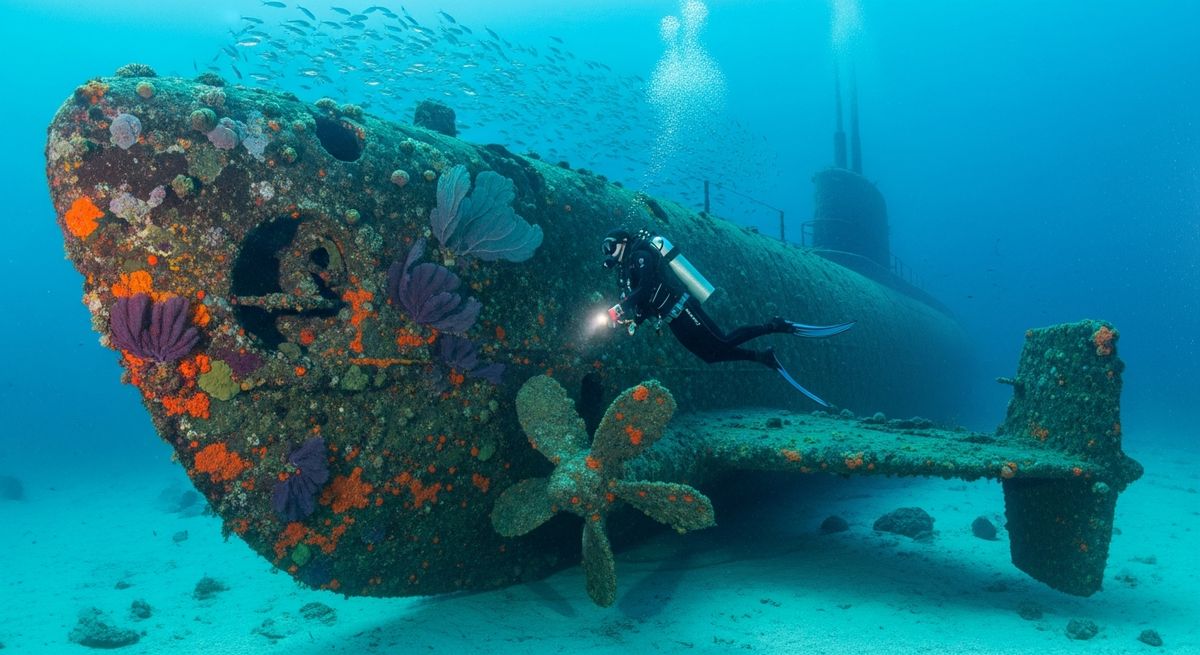
The Cambrian isn't about deep diving; it's about history you can touch, right in the shallows. Sunk during the Dunkirk evacuation in 1940, this former trawler turned naval auxiliary vessel now lies broken but still recognisable in just four metres of water. We love popping down here on a calm day, especially with a bit of sun – the light play through the kelp can be incredible. You’ll find the bow and stern mostly intact, with the midships section more collapsed. Look for the engine block, still pretty solid, and the boiler, which often has conger eels tucked inside. It’s our favourite kind of shallow wreck: easily accessible, full of character, and teeming with life that’s made it home. Shoals of bib dart through the broken plates, spider crabs scuttle across the rusty framework, and we’ve often spotted dogfish resting in the sand nearby. If you’re into underwater photography, the Cambrian offers fantastic wide-angle opportunities, especially when the visibility is good, which averages around 5-10 metres here. Aim for a slack tide an hour or so before high water for the best conditions and minimal current. It's a perfect site for newer divers looking for their first wreck experience or for snorkelers who want more than just reef.
Typical CAMBRIAN Dive Profile
Illustrative profile based on site depth and type. Actual dive profiles vary - always follow your dive computer and training.
Safety Notes
Wreck site - avoid penetration without wreck diving certification. Watch for sharp metal and entanglement hazards.
CAMBRIAN Wreck History
Year Sunk
1940
Vessel Type
fishing vessel
Cause
mine
Before her military career, HMS Cambrian began life in 1924 as the steam trawler Lord Derby, built by Cochrane & Sons in Selby. She served in the fishing fleets under several different names, including Ocean Knight and Stella Procyon. With the outbreak of the Second World War in 1939, she was requisitioned by the Admiralty for naval service, armed, and commissioned as HMS Cambrian, tasked with the vital role of a boom defence vessel.
Her naval career was short-lived. On May 30, 1940, while on patrol, HMS Cambrian struck a German-laid mine. The explosion was catastrophic, and the vessel sank quickly, becoming an early casualty of the war at sea. Her loss highlighted the constant danger faced by even the smallest support vessels of the Royal Navy.
Today, the wreck of HMS Cambrian rests in just 4 metres of water, making it a fantastic and highly accessible dive for all experience levels. The shallow depth ensures excellent light and long bottom times. While the mine explosion and subsequent years underwater have left the wreck well broken, divers can easily identify key features like her boiler, parts of the triple-expansion engine, and scattered hull plating. It's a perfect site for a relaxed second dive, underwater photography, or for new divers to experience their first wreck.
Nearest Dive Centres to CAMBRIAN
Dive shops near CAMBRIAN
In2 Diving
Sussex Diving & Leisure
Mulberry Marine Experiences CIC
Andark Diving
Abyss Scuba School
Sunken Dreams Scuba Diving Academy
Reviews for CAMBRIAN
Conditions
Ocean conditions, forecast and tides for CAMBRIAN
CAMBRIAN Ocean Conditions
Monthly averages for CAMBRIAN, sourced from Open-Meteo marine data - nearest station: Open-Meteo marine grid (50.44, -2.73) (3km away)
October Averages
Sea Temperature
17°C
62°F · Range: 15.1–17.5°C
Air Temperature
13°C
56°F
Wind Speed
8.14 m/s
15.8 knots
Atmospheric Pressure
1011 hPa
Based on 4 years of monitoring data · Data sources: Open-Meteo marine data
Plan & book
Ways to dive Cornwall & Devon, from day trips to liveaboards.
Day trips & courses
via GetYourGuideGuided dives, courses and snorkel trips with instant booking.
Find dive trips in Cornwall & DevonPlaces to stay
via Booking.comHotels and dive resorts near Cornwall & Devon.
Search stays in Cornwall & DevonDive insurance
Most travel insurance excludes or limits scuba. Check what you need before you go.
Dive insurance explainedPartner links: we may earn a commission if you book, at no extra cost to you. How we make money
Where to Stay near CAMBRIAN
Prices from Booking.com. We may earn a commission at no extra cost to you.