CAMBRIAN (PART OF)
Protected Area
St Helen's Duver & Priory Wood
Why dive here
With 176+ marine species recorded in the area - including blue sharks, dolphins, dwarf minke whales, humpback whales and ocean sunfish (mola mola) - CAMBRIAN (PART OF) offers some of Cornwall & Devon's richest wreck diving. Water ranges 10-18°C, warmest July, August, September.
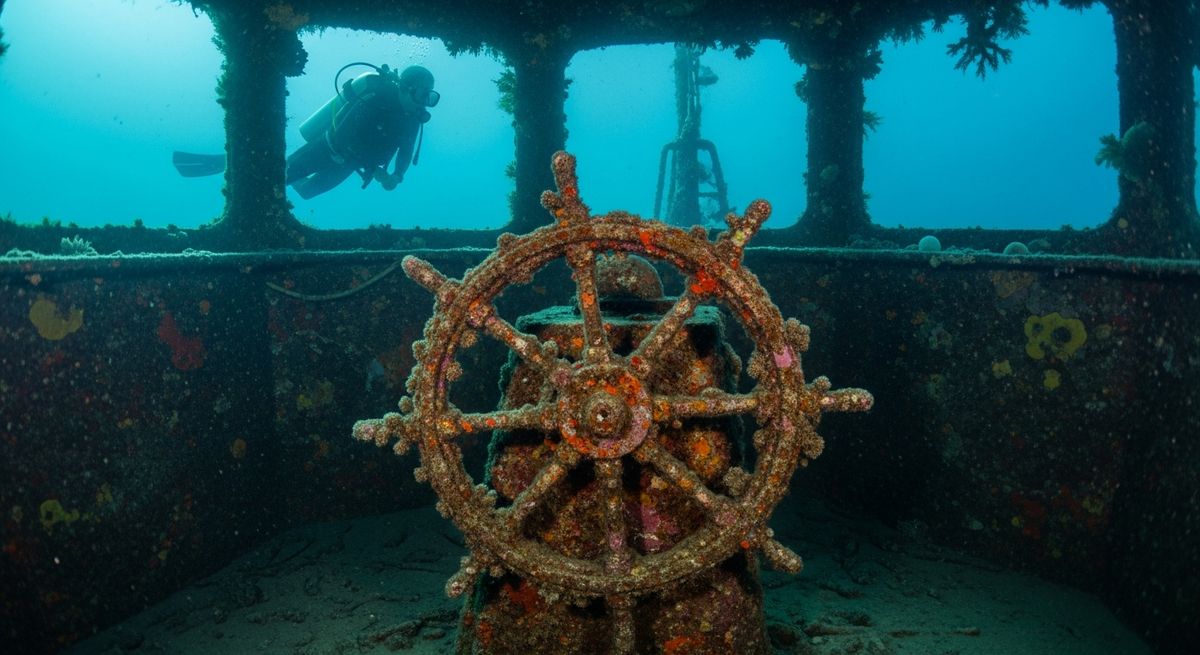
The *Cambrian* is one of those wrecks we keep coming back to. Sitting in just three metres of water, it’s not about depth or dramatic currents, it’s about accessibility and the sheer amount of time you can spend poking around. This steam trawler, sunk in 1940, is pretty broken up, but its bones are still there, scattered across the seabed. We love drifting over the remains, spotting the boiler and engine block, which are often swarming with small fish. It’s perfect for a long, relaxed dive, or even multiple dives, especially on a calm day when the sun really lights up the shallows. Our favourite part is finding the discarded fishing gear that gives the wreck a real sense of its working life. Look out for the resident wrasse darting between the metal plates and the odd crab scuttling for cover. It’s a gentle introduction to wreck diving, ideal for those who want to practice their buoyancy without the pressure of depth.
Typical CAMBRIAN (PART OF) Dive Profile
Illustrative profile based on site depth and type. Actual dive profiles vary - always follow your dive computer and training.
Safety Notes
Wreck site - avoid penetration without wreck diving certification. Watch for sharp metal and entanglement hazards.
CAMBRIAN (PART OF) Wreck History
Year Sunk
1940
Vessel Type
fishing vessel
Cause
mine
The vessel known as HMS Cambrian was originally a civilian fishing trawler built in 1924. After being requisitioned by the Royal Navy at the start of World War II, she was converted into a boom defence vessel. Her mission was to protect harbours and anchorages from enemy submarines and torpedoes. Unfortunately, she met her end on May 30, 1940, when she fell victim to an enemy mine.
Lying in just 3 metres of water, this site represents a section of the scattered remains of HMS Cambrian. The designation "(Part Of)" indicates that the vessel is not intact; the initial explosion and decades of storms have spread the wreckage across a wide area of the seabed. This creates a fascinating site for exploration, where divers can move between different sections of the ship's structure.
This shallow dive is ideal for training, long photo shoots, or simply enjoying a relaxed exploration. Divers can expect to find the vessel's large boiler, which often stands proud of the seabed, along with twisted frames, hull plates, and various pieces of machinery. The wreckage has become a thriving artificial reef, offering shelter to a variety of local marine life and adding a splash of colour to this piece of wartime history.
Nearest Dive Centres to CAMBRIAN (PART OF)
Dive shops near CAMBRIAN (PART OF)
In2 Diving
Sussex Diving & Leisure
Mulberry Marine Experiences CIC
Andark Diving
Abyss Scuba School
Sunken Dreams Scuba Diving Academy
Reviews for CAMBRIAN (PART OF)
Conditions
Ocean conditions, forecast and tides for CAMBRIAN (PART OF)
CAMBRIAN (PART OF) Ocean Conditions
Monthly averages for CAMBRIAN (PART OF), sourced from Open-Meteo marine data - nearest station: Open-Meteo marine grid (50.44, -2.73) (3km away)
October Averages
Sea Temperature
17°C
62°F · Range: 15.1–17.5°C
Air Temperature
13°C
56°F
Wind Speed
8.14 m/s
15.8 knots
Atmospheric Pressure
1011 hPa
Based on 4 years of monitoring data · Data sources: Open-Meteo marine data
Plan & book
Ways to dive Cornwall & Devon, from day trips to liveaboards.
Day trips & courses
via GetYourGuideGuided dives, courses and snorkel trips with instant booking.
Find dive trips in Cornwall & DevonPlaces to stay
via Booking.comHotels and dive resorts near Cornwall & Devon.
Search stays in Cornwall & DevonDive insurance
Most travel insurance excludes or limits scuba. Check what you need before you go.
Dive insurance explainedPartner links: we may earn a commission if you book, at no extra cost to you. How we make money
Where to Stay near CAMBRIAN (PART OF)
Prices from Booking.com. We may earn a commission at no extra cost to you.