CAMBRONNE
Protected Area
Lundy
Why dive here
With 176+ marine species recorded in the area - including blue sharks, dolphins, dwarf minke whales, humpback whales and ocean sunfish (mola mola) - CAMBRONNE offers some of Cornwall & Devon's richest wreck diving. Water ranges 10-18°C, warmest July, August, September.
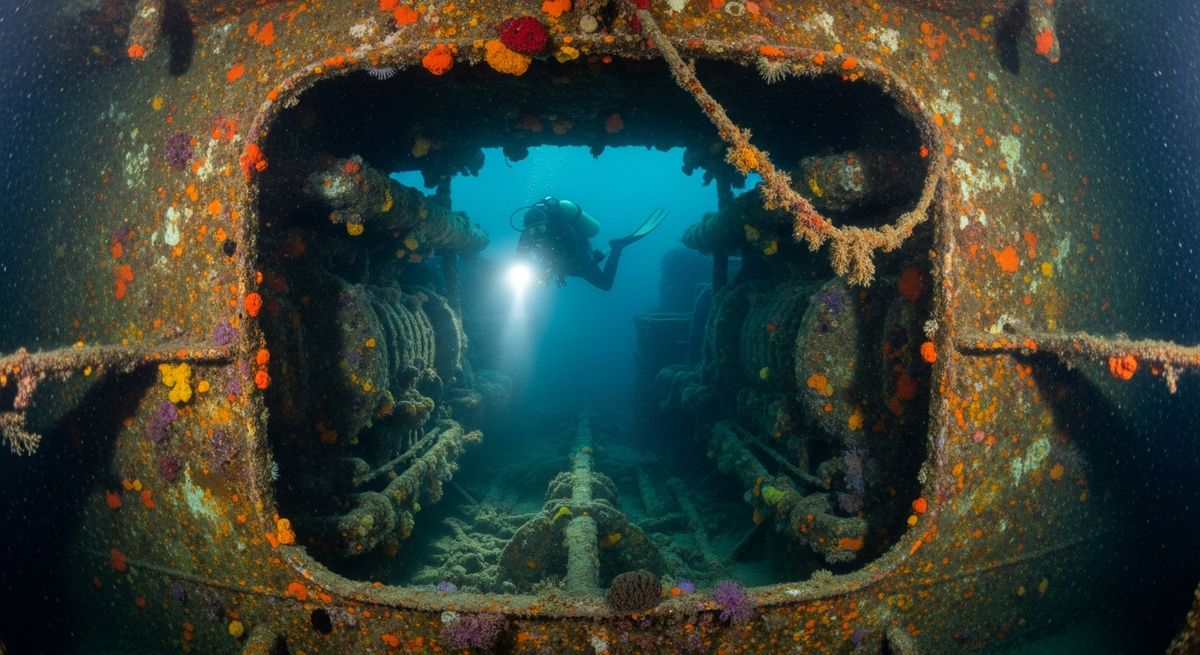
The Cambronne sits deep, a proper technical dive at 40 metres, and she’s a beauty for it. You’ll find her off Lundy Island, broken but still substantial for a ship of her size. We love the engine room here, easily penetrable if you’re comfortable with overhead environments, and it still feels remarkably intact. The hold is another favourite, a cavern now, filled with the shifting shapes of bib and pollack darting between the light shafts. Look for dogfish resting on the sandy bottom nearby, blending in perfectly. Our pick for timing this dive is slack water; the currents around Lundy can be fierce, making the descent and ascent a real challenge otherwise. The hull plates are thick with jewel anemones and dead man’s fingers, an explosion of colour in the beam of your torch, a stark contrast to the shadowy steel. This dive suits experienced wreck divers who appreciate a deeper challenge and the quiet solitude of a less-frequented site.
Typical CAMBRONNE Dive Profile
Illustrative profile based on site depth and type. Actual dive profiles vary - always follow your dive computer and training.
Safety Notes
Deep dive (40m) - monitor air consumption closely. Advanced certification recommended.
Wreck site - avoid penetration without wreck diving certification. Watch for sharp metal and entanglement hazards.
Always perform a 3-minute safety stop at 5m before surfacing.
CAMBRONNE Wreck History
Year Sunk
1942
Vessel Type
cargo ship
Cause
grounding
The Cambronne was a small, modern Dutch motor coaster built in 1938. Unlike the steamships of a previous era, she was powered by an oil engine, representing the future of coastal cargo transport. During the Second World War, vessels like the Cambronne were vital for moving essential supplies around the British Isles, often sailing in dangerous waters under the constant threat of enemy attack.
Despite the wartime dangers, the Cambronne's demise was not a result of enemy action. On October 10, 1942, while on a routine passage from Hayle in Cornwall to Newport in Wales, the vessel navigated too close to Lundy Island in the Bristol Channel. In challenging conditions, she struck submerged rocks and sank, becoming a victim of a simple maritime accident.
Today, the Cambronne lies at a depth of 40 metres, making her a dive reserved for experienced and suitably qualified divers. The wreck is reported to be remarkably intact and sits upright on the seabed, offering a superb subject for exploration. Due to the depth, bottom times are limited, and the site can be subject to strong currents, demanding careful dive planning. For those who can make the dive, the Cambronne offers a rewarding glimpse of a well-preserved WWII-era coaster.
Nearest Dive Centres to CAMBRONNE
Dive shops near CAMBRONNE
View all dive centres in Cornwall & DevonReviews for CAMBRONNE
Conditions
Ocean conditions, forecast and tides for CAMBRONNE
CAMBRONNE Ocean Conditions
Monthly averages for CAMBRONNE, sourced from Open-Meteo marine data - nearest station: Open-Meteo marine grid (50.44, -2.73) (3km away)
October Averages
Sea Temperature
17°C
62°F · Range: 15.1–17.5°C
Air Temperature
13°C
56°F
Wind Speed
8.14 m/s
15.8 knots
Atmospheric Pressure
1011 hPa
Based on 4 years of monitoring data · Data sources: Open-Meteo marine data
Plan & book
Ways to dive Cornwall & Devon, from day trips to liveaboards.
Day trips & courses
via GetYourGuideGuided dives, courses and snorkel trips with instant booking.
Find dive trips in Cornwall & DevonPlaces to stay
via Booking.comHotels and dive resorts near Cornwall & Devon.
Search stays in Cornwall & DevonDive insurance
Most travel insurance excludes or limits scuba. Check what you need before you go.
Dive insurance explainedPartner links: we may earn a commission if you book, at no extra cost to you. How we make money
Where to Stay near CAMBRONNE
Prices from Booking.com. We may earn a commission at no extra cost to you.