CAMELOT CHALLENGER (POSSIBLY)
Protected Area
Trebetherick Point
Why dive here
With 176+ marine species recorded in the area - including blue sharks, dolphins, dwarf minke whales, humpback whales and ocean sunfish (mola mola) - CAMELOT CHALLENGER (POSSIBLY) offers some of Cornwall & Devon's richest wreck diving. Water ranges 10-18°C, warmest July, August, September.
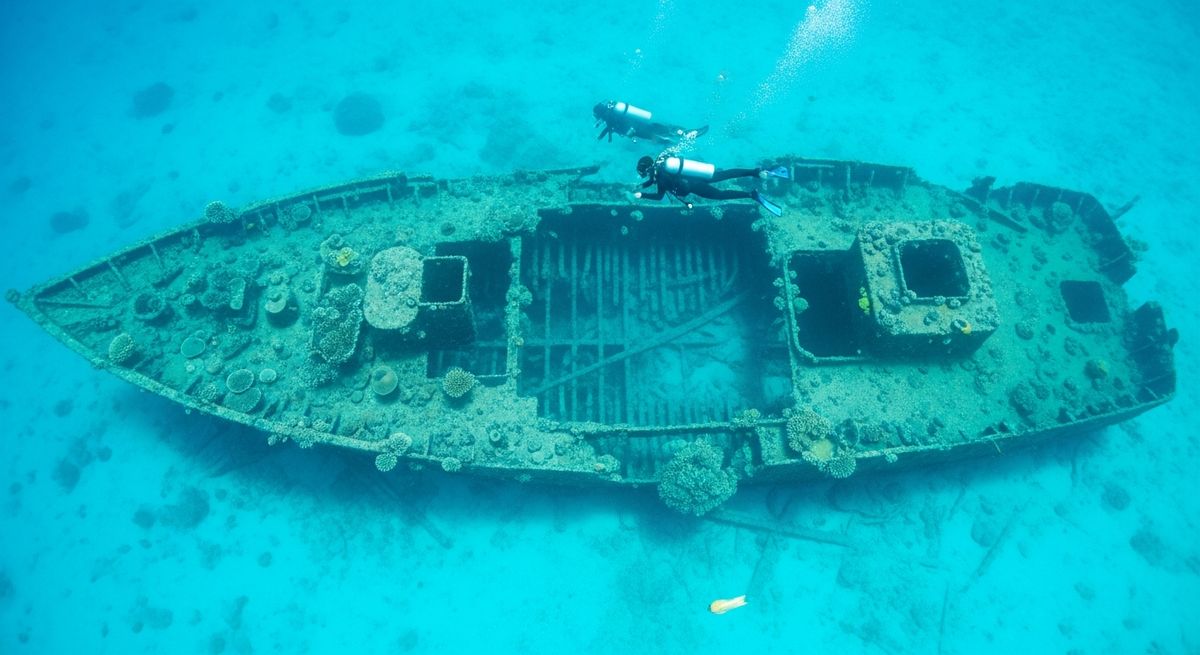
The Camelot Challenger, or what we believe is the Camelot Challenger, sits in a shallow eight metres, making it a great dive for anyone comfortable in temperate waters. We love the ambiguity of this wreck; it adds a layer of mystery. Sunk in 1982 after being sighted going down in a rough sea from shore, you can almost feel the chill of that winter day. The fishing vessel is only 7.6m long, so it's a quick tour, but we find ourselves lingering over the details. This wreck is a real lesson in how quickly the sea reclaims its own. Barely four decades on, and it’s completely encrusted with plumose anemones, their white tentacles swaying gently in the surge. You’ll spot crabs scuttling into crevices, and sometimes, if you’re lucky, a curious dogfish might eye you from the sand. It’s a perfect site for wreck novices or photographers looking to capture the soft-focus blues of the Cornish coast. We’d suggest timing your dive for slack water to truly appreciate the delicate anemones without battling a strong current.
Typical CAMELOT CHALLENGER (POSSIBLY) Dive Profile
Illustrative profile based on site depth and type. Actual dive profiles vary - always follow your dive computer and training.
Safety Notes
Wreck site - avoid penetration without wreck diving certification. Watch for sharp metal and entanglement hazards.
CAMELOT CHALLENGER (POSSIBLY) Wreck History
Year Sunk
1982
Vessel Type
fishing vessel
Cause
storm
The Camelot Challenger was a small, 7.6-metre fishing vessel that met its end on a tumultuous day in January 1982. Eyewitnesses on the shore watched helplessly as the boat succumbed to the rough seas off the coast of Cornwall, a region known for its dramatic and often unforgiving weather. The vessel sank and was later classified as a dangerous wreck, a stark reminder of the sea's power.
Resting in just 8 metres of water, this is an extremely shallow wreck dive, accessible to divers of all levels. However, its classification as 'dangerous' suggests the structure is likely broken and scattered, requiring careful navigation. The wreck's intriguing name, 'Camelot Challenger', offers a fun piece of local speculation. It may be a nod to the legendary actor Richard Burton, who famously played King Arthur in the musical 'Camelot' and had strong ties to the Celtic regions. For divers, it’s a chance to explore the remains of a local tragedy while pondering a possible link to theatrical royalty.
Nearest Dive Centres to CAMELOT CHALLENGER (POSSIBLY)
Dive shops near CAMELOT CHALLENGER (POSSIBLY)
Harlyn Dive School
Dive Newquay
Scuba 2000
Wavecrest Scuba
Viewpoint Diving Centre
Karleyth Diving Ltd.
Reviews for CAMELOT CHALLENGER (POSSIBLY)
Conditions
Ocean conditions, forecast and tides for CAMELOT CHALLENGER (POSSIBLY)
CAMELOT CHALLENGER (POSSIBLY) Ocean Conditions
Monthly averages for CAMELOT CHALLENGER (POSSIBLY), sourced from Open-Meteo marine data - nearest station: Open-Meteo marine grid (50.44, -2.73) (3km away)
October Averages
Sea Temperature
17°C
62°F · Range: 15.1–17.5°C
Air Temperature
13°C
56°F
Wind Speed
8.14 m/s
15.8 knots
Atmospheric Pressure
1011 hPa
Based on 4 years of monitoring data · Data sources: Open-Meteo marine data
Plan & book
Ways to dive Cornwall & Devon, from day trips to liveaboards.
Day trips & courses
via GetYourGuideGuided dives, courses and snorkel trips with instant booking.
Find dive trips in Cornwall & DevonPlaces to stay
via Booking.comHotels and dive resorts near Cornwall & Devon.
Search stays in Cornwall & DevonDive insurance
Most travel insurance excludes or limits scuba. Check what you need before you go.
Dive insurance explainedPartner links: we may earn a commission if you book, at no extra cost to you. How we make money
Where to Stay near CAMELOT CHALLENGER (POSSIBLY)
Prices from Booking.com. We may earn a commission at no extra cost to you.